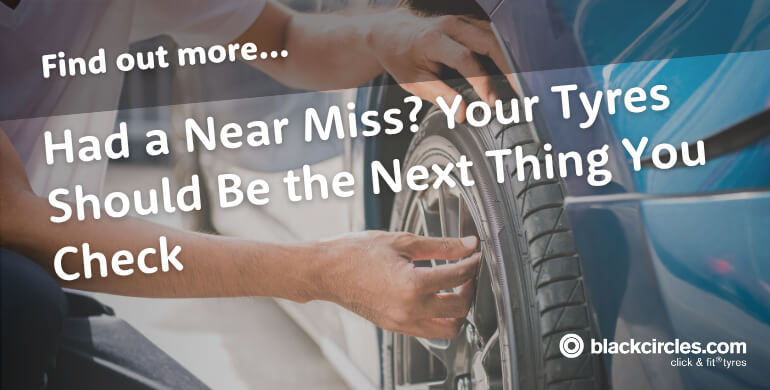
Most of us know the feeling. A car pulls out without looking, the traffic ahead stops dead, or a cyclist appears from nowhere. You brake hard or swerve, your heart rate jumps, and a second later it's over.
Then what? For most drivers, the answer is to take a breath and carry on, without a second thought for their tyres.
Near miss statistics: what TyreSafe's 2026 research found
New research for
Tyre Safety Month 2026 suggests that close calls on the road are not a rare occurrence.
According to road safety charity
TyreSafe, 38% of drivers have had a near miss in the last 12 months. Of that number, only 11% then went on to check the condition of their tyres afterwards.
TyreSafe also found that drivers are far more likely to sound the horn or commit a rude gesture after they are involved in a near miss - than look at their tyres.
This is understandable in the moment, but once the adrenaline wears off and you have stopped the car in a safe spot, it is advisable that you do some quick tyre check.
Why should check your tyres after a near miss?
There are two good reasons to check your tyres after a close call.
The first is that the near miss might be telling you something. If the car took longer to stop than it normally does - i.e. slid a little, or unresponsive when you tried to turn - your tyres may have less grip than they should.
Also, low pressure or worn tread won't always be obvious day to day. But when you are in an emergency situation, this is exactly when it shows.
The other reason is that the near miss may have affected your tyres. Swerving could lead to clipping a kerb or catching the edge of a pothole. Possibly even running over debris.
These could have caused damage a tyre in ways you won't feel or see straight away. This could be a small cut or a bulge in the sidewall. Even a slow puncture that only shows up days later.
This is why you should check before you rely on the same tyres for the next emergency.
How to check your tyres after a near miss
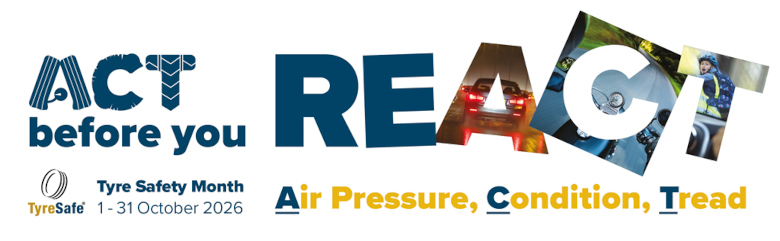
TyreSafe's campaign is built around three letters. As TyreSafe chair Stuart Lovatt puts it in his
tyre safety advice for Blackcircles,
"Our message is deliberately simple: ACT – Air Pressure, Condition and Tread."
Each one of these is worth a closer look.
Air pressure: check for a slow puncture
Pull in somewhere safe and check all four tyres against the pressures recommended by the car manufacturer. This can be found in either your handbook, or on the driver's door frame.
If one tyre is noticeably lower than the others, or keeps dropping after you have topped it up, it could have been damaged when you swerved.
Condition: look for cuts, bulges and flat spots
Walk round the car and look at each tyre properly, especially on the side that came closest to the kerb or pothole.
In particular you should be on the look out for cuts, cracks or anything stuck in the tread and, most importantly, any bulge or bubble in the sidewall.
Tread: check your tread depth is legal
Check the tread depth with a gauge or a 20p coin. Put the coin into the main grooves - if you can see its outer band, have the tyres checked by a professional.
The
legal minimum for cars is 1.6mm across the central three-quarters of the tread and around the whole circumference. If the car didn't grip the way you expected, low tread is one of the first things to rule out.
Signs your tyre isn't safe to drive on
Some signs mean the tyre needs looking at before you go any further:
- a bulge or bubble anywhere on the sidewall, which usually means internal damage and a real risk of the tyre failing
- a cut deep enough to show the cords underneath
- a tyre that's visibly flat or losing pressure as you watch
- a new vibration, a pull to one side, or steering that feels different from before
If you spot any of these, don't drive on the tyre. Fit the spare if you have one and it's safe to do so, or call for help. A puncture repair kit won't fix sidewall damage. If you're not sure what you're looking at, a tyre professional can inspect it for you, and that's far better than guessing.
Check your tyres before the next near miss
Tyre problems are a bigger factor on UK roads than many people realise. According to TyreSafe, 201 people were killed or seriously injured in incidents involving defective tyres in 2025, a 19% rise on the year before.
You can't control what other drivers do - and some near misses will always be down to someone else.
What you can control is whether your tyres are ready to perform correctly when it matters. A near miss is a useful nudge, but the best time to check is before you need them. It’s best to do so at least once a month, and before any long journey.
If your checks turn up a problem, you can find the right tyres for your car on Blackcircles by entering your registration, then book fitting at a local garage or with a mobile fitter.
Frequently Asked Questions
Should I check my tyres after a near miss?
Yes. A near miss can reveal tyres that didn't grip as well as they should, and swerving can damage a tyre on a kerb, pothole or debris. Check the air pressure, condition and tread as soon as you can safely stop.
How many drivers check their tyres after a near miss?
TyreSafe's 2026 research found 38% of drivers had a near miss in the last 12 months, but only 11% checked their tyres afterwards. 22% did nothing at all.
Can hitting a kerb or pothole damage a tyre?
Yes. Hitting a kerb or pothole can cut the tyre or damage it internally, which often shows up as a bulge in the sidewall. A tyre with a bulge needs replacing and shouldn't be driven on.
Is it safe to drive with a bulge in my tyre?
No. A bulge means the tyre's internal structure is damaged and it could fail without warning. Fit your spare or call for help, and have the tyre replaced.
What is The Near-Miss Nation?
It's the week 3 theme of TyreSafe's Tyre Safety Month 2026 campaign, Act Before You REact. It encourages drivers to treat a near miss as a prompt to check their tyres.
How often should I check my tyres?
At least once a month and before long journeys, using TyreSafe's ACT checks: Air pressure, Condition and Tread.