
Join the conversation
We love to hear from our customers. Connect with us today and let’s start a conversation.
...searching


Tyres are the only part of your car in contact with the road, yet for many motorists they can be easy to overlook until something goes wrong.
The latest figures highlighted by TyreSafe show why that needs to change.
According to Stuart Lovatt, Chairman of TyreSafe, 201 people were killed or seriously injured in incidents involving defective tyres in 2025 – a 19% increase on the previous year and 38 above the five-year average.
For powered two-wheelers, 39 tyre-related killed or seriously injured (KSI) casualties were recorded, the highest figure in a decade, while car occupant KSIs increased to 120.
But behind those numbers are real people.
“These are not simply statistics; behind every figure is a person, a family and a life affected by something that in many cases could have been prevented,” says Stuart.
As a supporter of TyreSafe, Blackcircles.com wants to help keep tyre safety in the conversation throughout the year – not only when motorists need to replace their tyres.
And one of the most important messages is also one of the simplest: regular tyre maintenance matters.
One of the most striking points raised by TyreSafe is the connection between tyre defects and maintenance.
“Research into fatal incidents has found that 75% of tyre defects where car tyres were a causal factor were attributed to a lack of maintenance,” Stuart explains.
“That tells us there is a very real opportunity to prevent harm through simple checks and better awareness.”
Checking your tyres might only take a few minutes, but those few minutes could reveal problems that affect how safely your vehicle can brake, steer and maintain grip.
And while many motorists may associate tyre safety primarily with tread depth, there’s more to consider.
UK law sets a minimum tread depth for car tyres at 1.6mm, but TyreSafe is keen to challenge the idea that being above the legal limit is the only consideration when assessing tyre safety.
“There is also a misconception that a tyre is safe simply because it is legal. The legal minimum tread depth is not a target for motorists, and tyre performance can deteriorate through underinflation, damage, age, uneven wear and other factors long before a road user considers the tyre to be worn out.”
This can become particularly important in challenging conditions.
Your tyres are responsible for transmitting braking, steering and acceleration forces to the road. Their condition therefore has a direct relationship with the way your vehicle behaves.
“In wet conditions, the consequences can be particularly serious because tyres play such a critical role in braking, grip and handling,” Stuart adds.
Rather than waiting until an MOT, service or warning light prompts action, motorists should make tyre checks part of routine vehicle ownership.
The scale of the issue becomes clearer when looking at MOT results.
According to TyreSafe, more than two million vehicles fail their MOT each year because of tyre defects.
For Stuart, this points to a wider behavioural challenge.
“We need to move from a culture of reacting to problems to one of prevention.”
That doesn’t mean motorists need specialist tyre knowledge.
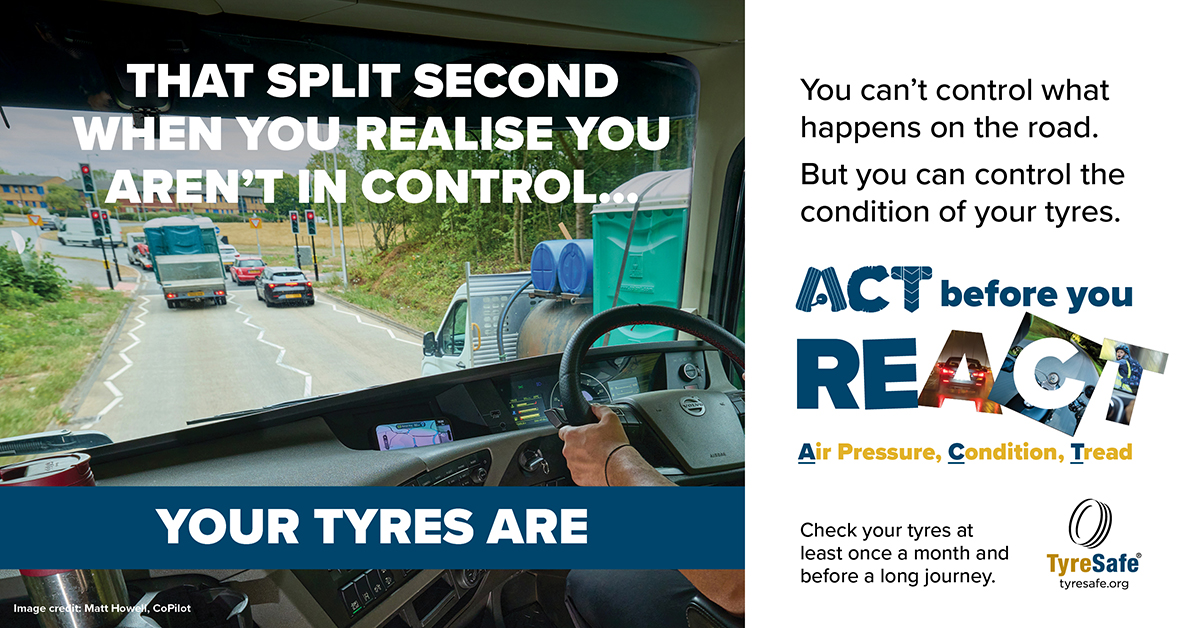
Instead, TyreSafe encourages drivers to remember three letters: ACT.
TyreSafe’s ACT message provides a straightforward way of remembering the basic checks every motorist can carry out.
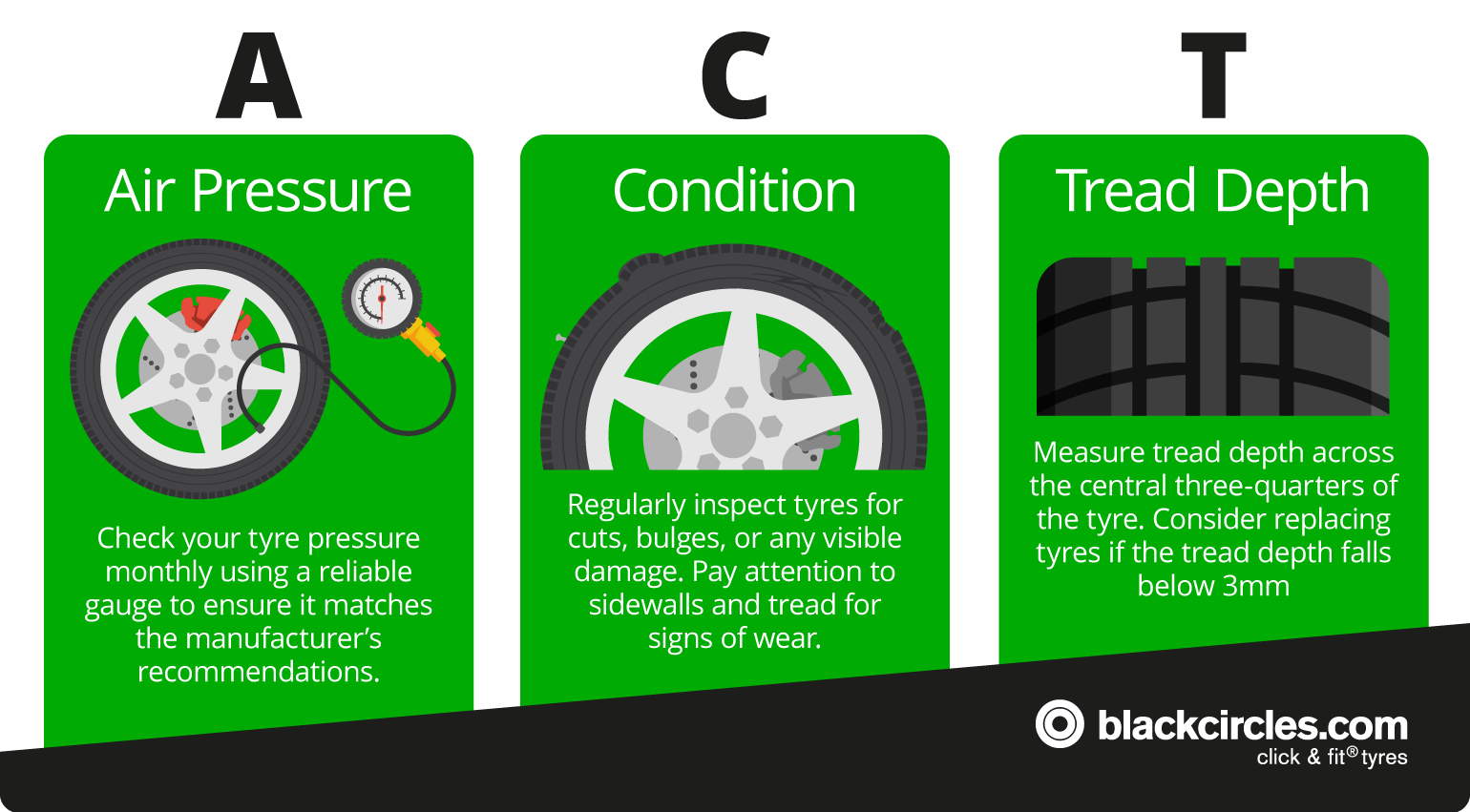
Check your tyre pressures against the vehicle manufacturer’s recommended settings.
Remember that the correct pressures can vary depending on vehicle load, so consult your vehicle handbook or the information provided by the manufacturer.
Take a good look around each tyre.
Look for visible cuts, cracks, bulges or other signs of damage and deterioration. If you find something you’re unsure about, have the tyre inspected by a professional.
Regularly check the tread across your tyres and make sure they remain within UK legal requirements.
Stuart recommends carrying out these checks at least once a month and before longer journeys.
“Our message is deliberately simple: ACT – Air Pressure, Condition and Tread. Check your pressures regularly, look for cuts, cracks, bulges and other signs of damage or deterioration, and check your tread depth.”
Turning that into a monthly habit could help motorists spot developing problems before they become more serious.
Every October, Tyre Safety Month provides an important opportunity to put tyres and preventative maintenance in the spotlight.
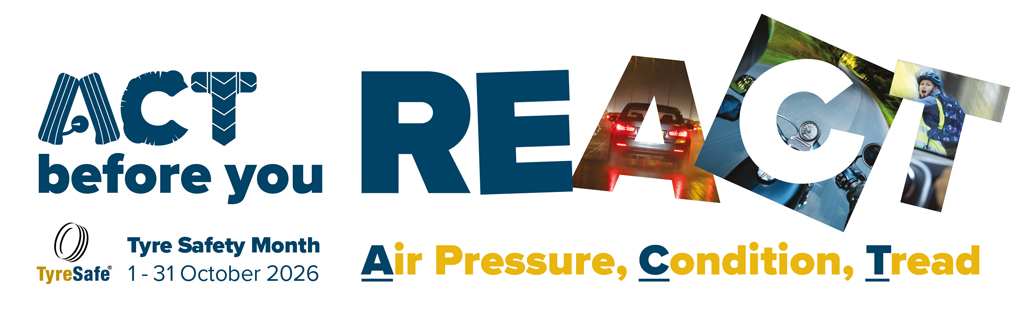
But road safety doesn’t follow the calendar.
“Tyre Safety Month is an incredibly valuable opportunity to put the issue in the spotlight, but tyres don’t become safety-critical in October and stop being safety-critical in November.
Road users need to be reminded throughout the year that a few minutes spent checking their tyres can make a significant difference.”
Improving tyre safety isn’t something one organisation can achieve alone.
TyreSafe works with more than 260 government, enforcement, road safety and local authority organisations, alongside manufacturers, retailers, wholesalers and other automotive businesses.
Blackcircles.com is proud to be part of that wider effort.
“Organisations such as TyreSafe and Blackcircles.com have an important role to play in making those checks part of normal vehicle ownership,” says Stuart.
“By providing road users with accurate, practical information throughout the year – not simply when they are thinking about buying tyres – we can help make preventative maintenance a habit.”
That last point is particularly important.
For Blackcircles.com, our responsibility to motorists doesn’t have to begin when someone searches for new tyres and end when those tyres are fitted.
We have an opportunity to use our platform to help drivers better understand the tyres already fitted to their vehicles – how to look after them, what to check and when to seek professional advice.
Nyo Logan, SEO, Content & PR Manager at Blackcircles.com, adds:
“As a trusted platform for motorists in the UK, we have a responsibility that goes beyond simply helping people buy the right tyres. We also have a responsibility to educate our customers and use our reach to spread important tyre safety messages. By giving drivers practical, easy-to-understand information throughout the year, we can help make regular tyre checks a normal part of vehicle ownership and ultimately contribute to safer roads.”
“Our partnership with TyreSafe is a key part of that. The work they do to raise awareness, educate road users and keep tyre safety front of mind is incredibly important. By combining their expertise and campaigning work with our ability to reach millions of motorists, we can help ensure those messages reach as many drivers as possible – and encourage people to make regular tyre checks a normal part of vehicle ownership.”
Tyre safety also forms part of a much wider road-safety picture.
“No single organisation can deliver the Government’s ambitious road safety targets on its own,” Stuart explains.
“That collaborative approach is exactly what the Safe System is about. Road safety is a shared responsibility. We need safer roads, safer vehicles, effective enforcement, better education and road users who understand the risks.”
Tyres are one part of that system, but an essential one.
Whatever safety technology a vehicle has, ultimately its tyres provide its contact with the road.
As Stuart says:
“Tyres are vital to vehicle safety, and their condition is fundamental to braking, grip, handling and overall vehicle control.”
The ultimate measure isn’t how many people read an article about tyre safety, see a campaign or remember a slogan.
It’s whether fewer people are harmed.
“Ultimately, meaningful progress for TyreSafe against its goals would see a sustained reduction in tyre-related deaths and serious injuries and overall incidents, alongside a significant reduction in the number of defective and poorly maintained tyres on our roads.”
Achieving that requires manufacturers, retailers, road-safety organisations, government and motorists themselves to play their part.
For drivers, that contribution can begin with something remarkably simple.
Once a month, remember ACT: Air Pressure, Condition and Tread.
Because a few minutes spent checking your tyres today could make a much bigger difference tomorrow.
“The more consistently the industry can communicate these simple messages, the better chance we have of turning tyre checks into an everyday habit – and ultimately preventing avoidable collisions, injuries and deaths.”

We love to hear from our customers. Connect with us today and let’s start a conversation.