

TyreSafe.
The UK's tyre safety charity.
...searching
If you've ordered the wrong tyres, we'll correct your order free of charge. No hidden fees, just excellent value.

From £6.99 per tyre our Tyre Guarantee covers accidental damage, punctures and bulges. T&Cs apply.

Your tyres are the only part of your car that touches the road. Good tyres shorten stopping distances, improve grip in wet weather and reduce the risk of aquaplaning. Worn or damaged tyres can increase braking distance, affect steering and stability, and raise the chance of a blowout.
Keeping tyres in good condition also saves money. Correct pressures reduce fuel consumption and help tyres wear evenly, so they last longer. Regular checks take minutes and can prevent MOT failures or unexpected repair bills.
Make a habit of checking: tread depth, pressure, and overall condition (cuts, bulges, objects in the tread). If in doubt, ask a professional to inspect your tyres.
The legal minimum for cars and light vans is 1.6 mm of tread depth across the central three-quarters of the tread, around the entire circumference of the tyre.
For best safety - especially in wet weather - many experts recommend that you start to consider a replacement tyre once your current set drop below 3 mm. Tread helps disperse water; once it’s low, stopping distances increase significantly on wet roads.
Driving with tyres below the legal limit can result in a fine of up to £2,500 and 3 penalty points per tyre. That means four illegal tyres could, in theory, lead to a £10,000 fine and 12 points.
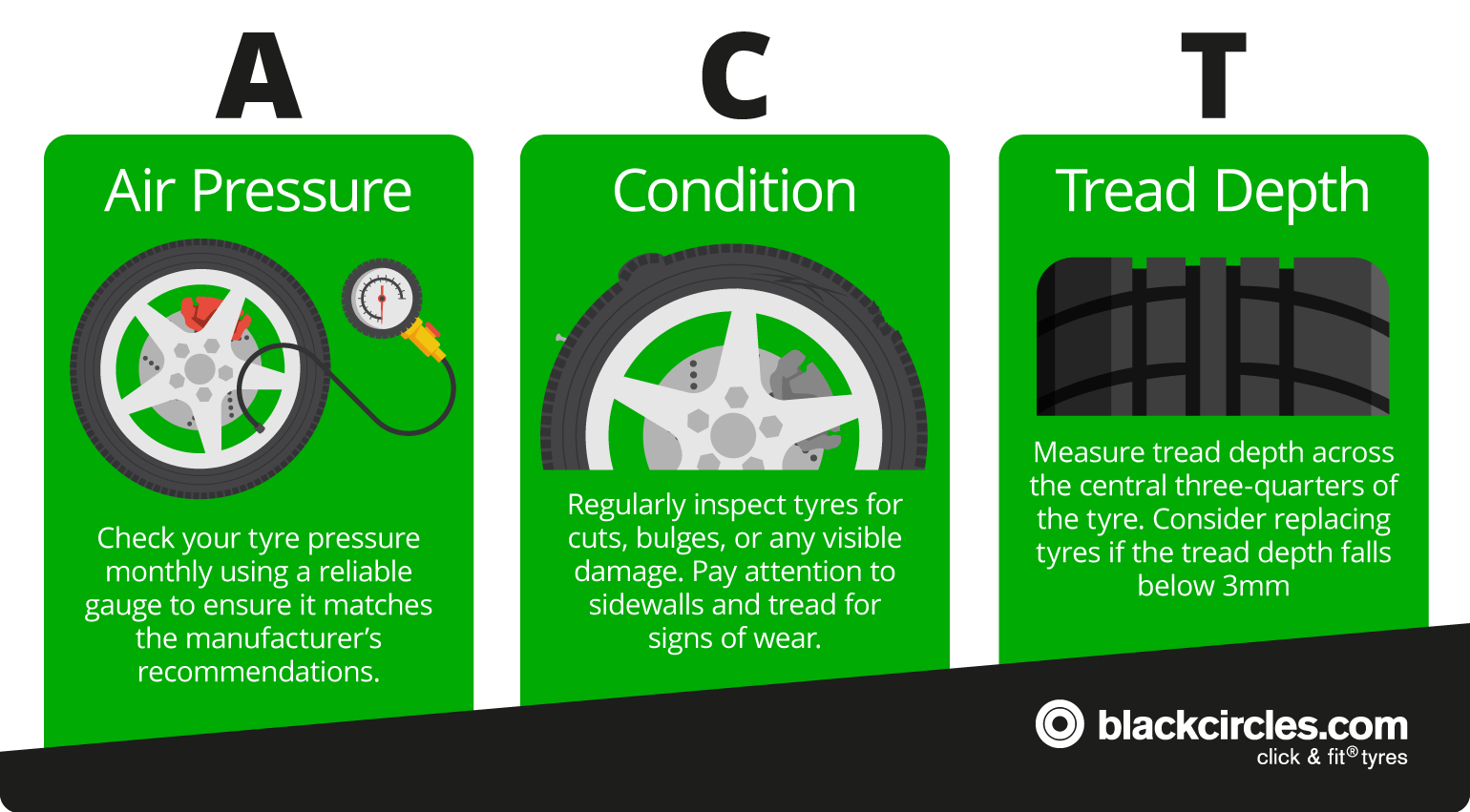
Carry out these quick checks every month and before long journeys:

October is Tyre Safety month - an annual campaign championed by the charity TyreSafe to raise awareness...
Tyre safety
Every year, thousands of people are involved in accidents that were caused by under-inflated tyres or worn-out car tyres.
How To Check Tyres
Checking the tread depth of a car tyre is one of the easiest and quickest things you can do and could save you a small fortune in the long run.
Check Your Tread Depth
Tyres are an important component of any vehicle – and looking after them can help to save you money in the long run.
Tyre MaintenanceFollow these simple steps to assess your tyres at home. If you spot damage or are unsure about a result, book a professional inspection.
Tyre Safety Month takes place every October in the UK. It’s a national campaign led by TyreSafe to raise awareness about tyre checks, focusing on tread depth, air pressure, and overall condition. Many garages and retailers offer free tyre safety checks during this time.
Every October, TyreSafe runs the “Caught in the A.C.T.” campaign as part of Tyre Safety Month. A.C.T. stands for Air Pressure, Condition, and Tread. The aim is to get drivers checking these three things every month and before long journeys.
Tyre Safety Month raises awareness because many serious crashes involve tyres that are under-inflated, worn, or damaged. Regular checks during this campaign can prevent accidents, improve braking, reduce fuel consumption, and help you avoid legal penalties or failed MOTs. For example, in 2023 there were approximately 190 people killed or seriously injured due to defective tyres in the UK.
You should perform three checks:
Air Pressure: Ensure tyres are inflated to the correct pressure when cold. Under- or over-inflation affects safety, handling, wear, and fuel usage.
Condition: Look for cuts, cracks, bulges, embedded objects, or damage to sidewalls. Don’t forget to check the spare.
Tread Depth: The legal minimum is 1.6 mm across the central ¾ of the tyre around the entire circumference. Many experts recommend replacing at around 3 mm (especially for wet grip). Use the 20p coin test or a depth gauge.
In the UK, illegal tyres (e.g., tread below 1.6 mm or serious damage) can result in fines of up to £2,500 per tyre, three penalty points per tyre, and MOT failures. Insurance claims can also be affected if a tyre defect contributes to an accident.
One of the quickest ways you can check whether or not your tyres have a legally acceptable tread depth - if you do not have a tread depth gauge - is to use a 20 pence piece.
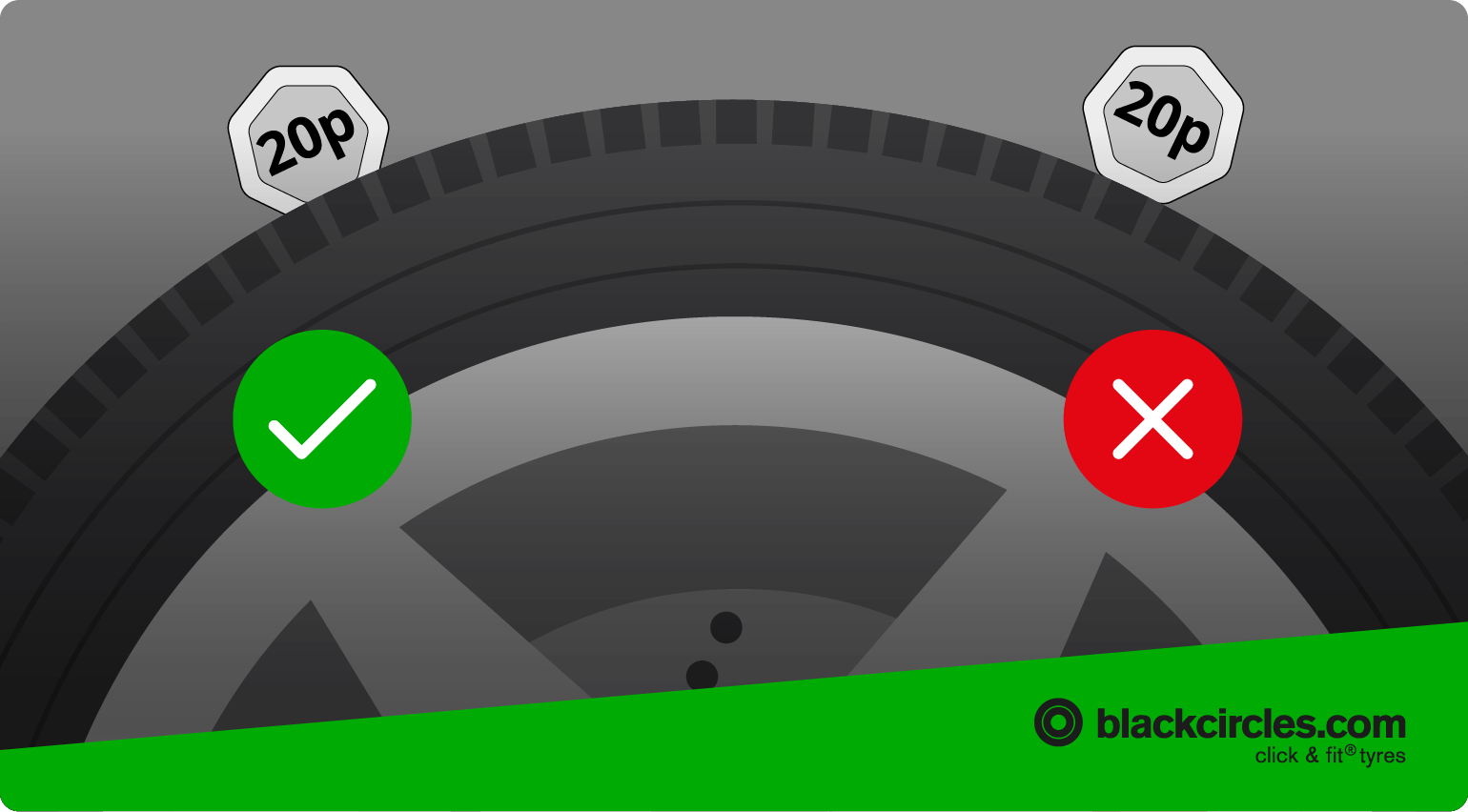
The 20p test as a quick guide. It works in the following way:
Warning: Driving with illegal tread can lead to fines of up to £2,500 and 3 penalty points per tyre, plus increased stopping distances—especially in the wet.
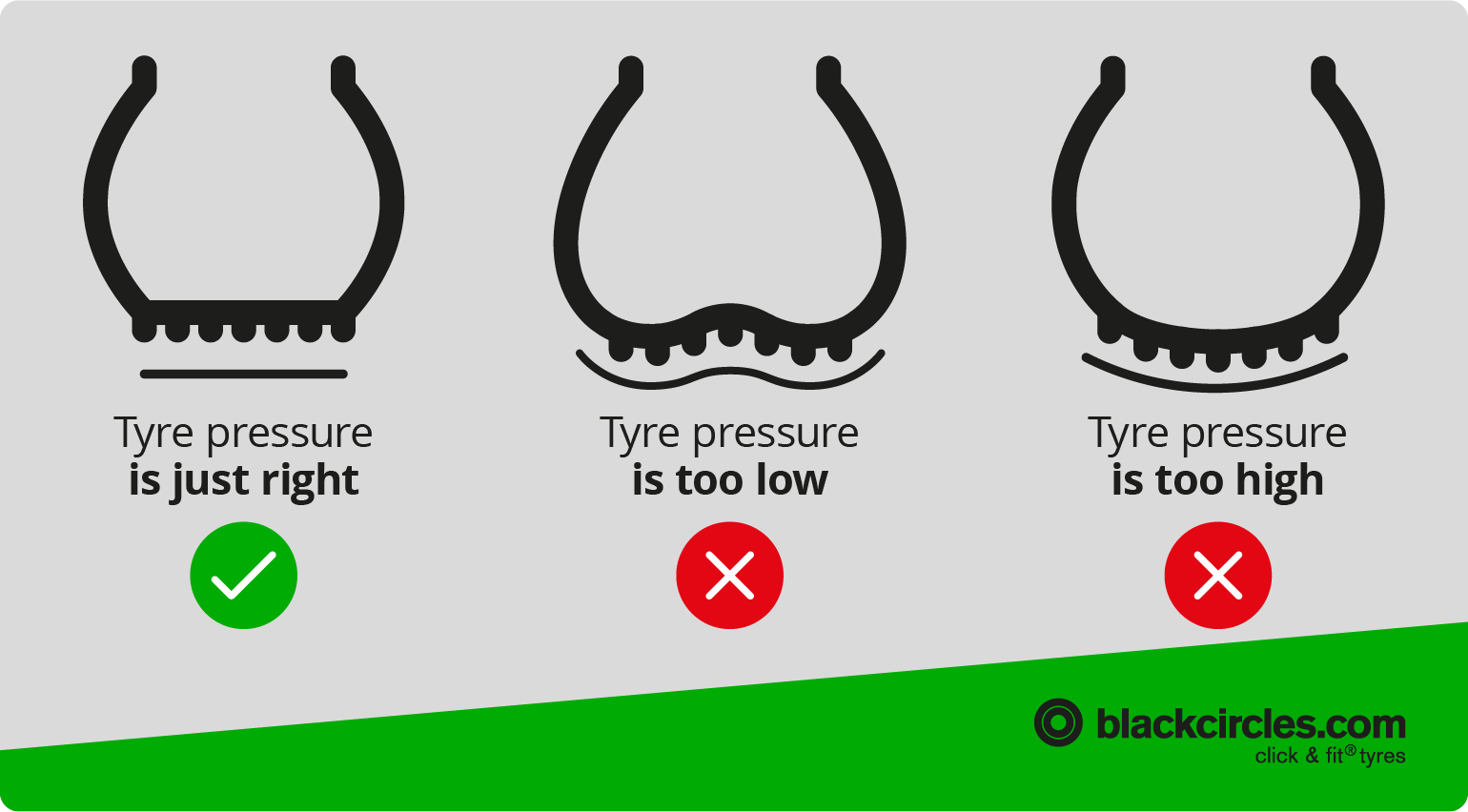
Incorrect pressures reduce safety and increase costs. Here’s what to watch for:
If you see uneven wear patterns (edges or centre), check pressures and consider a wheel alignment check.
Tyre pressures are vehicle-specific. You’ll find the correct (cold) pressures on a sticker in the driver’s door jamb, inside the fuel flap or in your owner’s manual. Some cars list different pressures for light and heavily laden driving - use the right setting for your trip.
Never guess: running the wrong pressure affects safety, handling, fuel economy and tyre wear. If you can’t find the figures, search our tyre pressure guide by make and model.
Explore our make-and-model specific tyre pressure pages:

Your MOT result can reveal a lot about your vehicle’s reliability and safety. Find out the most likely to pass or fail…
Read MOT Report
Faulty car tyres are a serious road safety hazard that can cause vehicle problems such as longer braking distances...
Illegal Tyre Report
Which areas have the most potholes, and which local authorities are the most proactive regarding repairing roads?
Read Pothole Report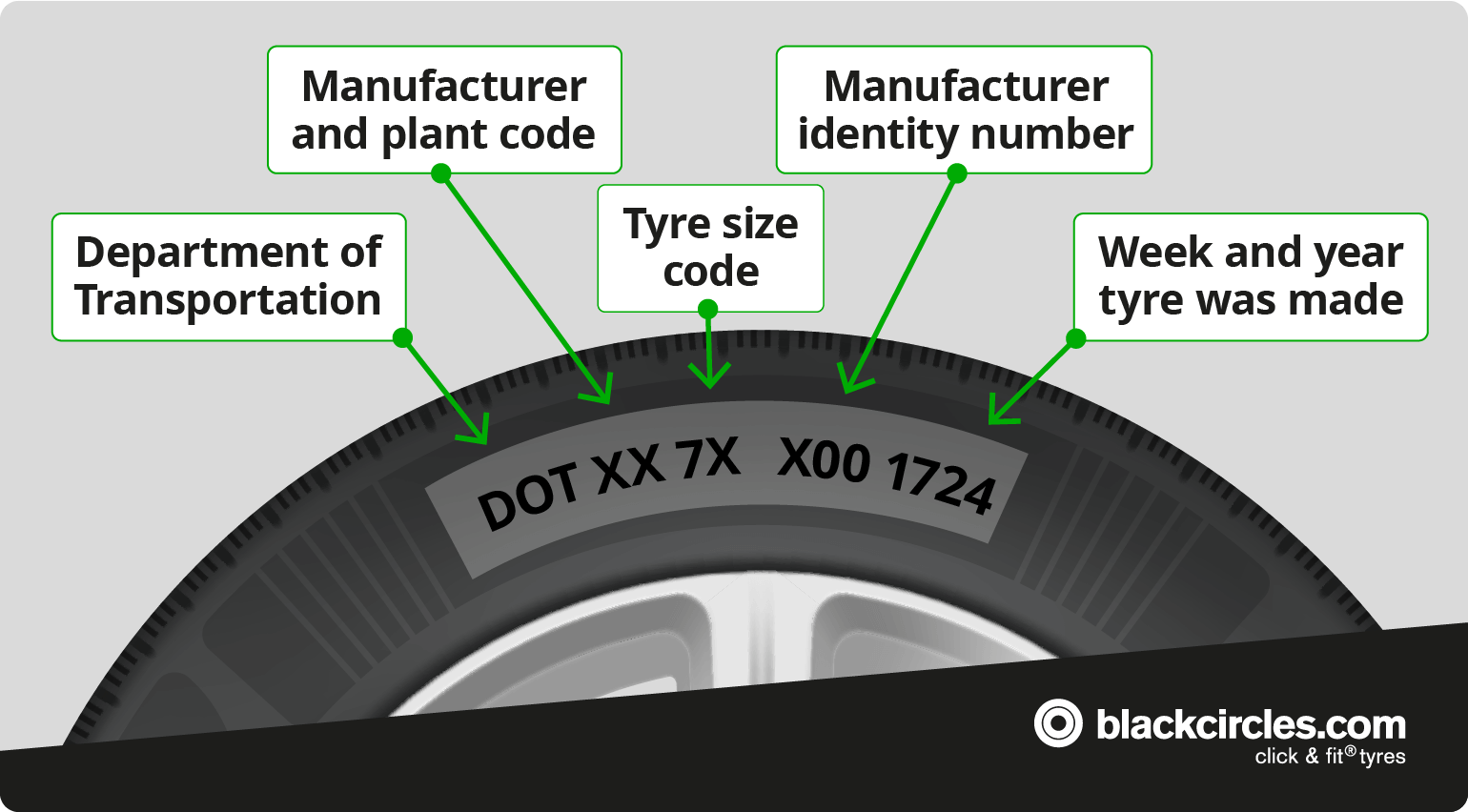
The tyre’s manufacture date is in the DOT code on the sidewall. The last four digits show week and year. For example, 1724 means week 17 of 2024.
Please note. Rubber hardens over time. If a tyre is showing cracks, perishing, or poor grip - especially at 6-10 years old - have it professionally inspected as it is likely you will need a replacement.
Part-worn tyres might seem like a cheap deal, but you can never be sure where they’ve come from or what they’ve been through. Hidden damage like internal cracks, weak spots, or dodgy repairs often isn’t visible to the eye. Those problems usually show up when you’re driving at speed, when it’s most dangerous.
By law, part-worn tyres must be marked “PART-WORN” and be free from defects, with a minimum tread depth of 2 mm when sold. In reality, many do not meet these standards.
Investigations by TyreSafe found that over 93% of part-worn tyres sold in the UK failed to meet legal standards. Even more worrying, between one-third and one-half of them had dangerous defects that made them unsafe to drive on.
At Blackcircles, we strongly advise against second-hand tyres. They might look like a bargain, but hidden damage or poor repairs can make them a real danger on the road. Tyres are your car’s only contact with the road surface — so why take the risk?
With our wide range of new tyres, safety doesn’t have to cost a fortune. From premium to budget options, we’ve got reliable tyres to suit every driver and every wallet.



Tyre safety is the practice of keeping your tyres in good condition so your car can grip the road, stop quickly, and handle safely in all weather conditions.
Safe tyres have the correct tread depth, are free from damage, and are inflated to the right pressure. Poor maintenance can lead to longer stopping distances, increased risk of aquaplaning, and even MOT failures.
Checking your tyres is quick and easy:
The legal minimum is 1.6 mm across the central three-quarters of the tyre. Driving below this limit is illegal and could result in fines of up to £2,500 and three penalty points per tyre.
Insert a 20p coin into the tyre’s main grooves. If the outer band of the coin is not visible, your tread is above the legal limit (1.6 mm). If the band is visible, your tyres may be illegal and unsafe, and you should replace them as soon as possible.
The legal minimum tread depth is 1.6 mm across the central three-quarters of the tyre.
You must legally replace tyres at 1.6 mm. Replacing earlier can improve stopping distances and overall handling, especially in wet conditions.
Following these checks reduces accident risk and helps with MOT compliance.
Signs include tread below 1.6 mm, uneven wear, incorrect pressure, bulges, cracks, or other visible damage. While driving, watch for vibrations, longer stopping distances, or poor wet-weather grip. If unsure, book a free tyre check for professional advice.