With there being various classes for different vehicle types, you may be wondering what each class represents.
Class 4s are the most common that targets standard passenger cars, followed by Class 7 MOTs that focus on heavier, light commercial vehicles (LCVs).
Class 5 MOTs, however, differ heavily from the more common classes – explore what this MOT type means for your vehicle today.
What Is a Class 5 MOT?
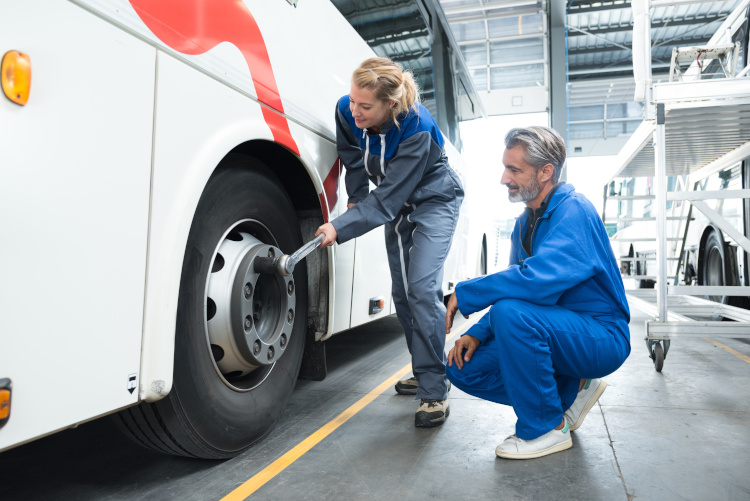
A Class 5 MOT applies to large passenger vehicles and other specialist types that can carry more than 12 passengers.
The vehicles in this category are bigger and often used for commercial or community purposes – for example, minibuses, ambulances, or play buses.
A Class 5 MOT follows the same core principles as any MOT test, checking that the vehicle is structurally sound, safe to operate, and meets DVSA emissions standards.
However, the inspection is more extensive due to the additional safety considerations involved in transporting multiple passengers.
Class 5 Vehicle Types
Class 5 MOTs cover a range of larger vehicles that exceed the size and seating capacity limits of Class 4 MOTs.
These typically include:
- Private passenger vehicles with 13 or more passenger seats
- Ambulances designed to transport patients or medical equipment
- Playbuses and community transport vehicles
- Coaches and large minibuses
Within this category, there’s also a subclass known as Class 5L, which applies to lighter vehicles weighing up to 5,000kg.
These can sometimes be tested at MOT centres authorised for Class 7 MOTs, provided the site has DVSA approval.
What Is a Class 5a MOT?
Much like how Class 4a MOTs apply to smaller passenger vehicles with additional seatbelt checks, a Class 5a MOT applies to large passenger vehicles that have 13 or more seats and require enhanced seatbelt inspections.
This ensures every seatbelt – across all rows and positions – meets the correct safety and installation standards, helping protect all passengers in the event of an accident.
What Does a Class 5 MOT Involve?
The test follows the same structure as other MOTs but includes a broader range of checks due to the complexity and capacity of Class 5 vehicles.
During a Class 5 MOT, examiners inspect:
- Braking and suspension systems – to confirm the vehicle can stop and handle safely under full load.
- Steering and controls – ensuring stability and responsiveness at all speeds.
- Seatbelts and seating – checking the integrity of every seat and restraint system.
- Doors and exits – verifying that all entry and exit points operate correctly and allow passengers to evacuate quickly in an emergency.
- Lighting and signalling equipment – confirming all lights, indicators, and emergency exits are properly illuminated and operational.
- Emissions and exhaust systems – making sure emissions fall within DVSA-approved environmental limits.
- Bodywork and structure – inspecting for damage, corrosion, or weakness that could compromise safety.
Ambulances or community vehicles may also undergo specialist equipment checks, such as the secure mounting of medical or electrical systems.
Why Class 5 MOTs Are Important
With larger passenger capacities comes greater responsibility
– Class 5 MOT ensures that these vehicles meet the highest safety and operational standards before being allowed on the road.
Undergoing a Class 5 MOT helps:
- Ensure passenger safety – vital for vehicles carrying multiple people.
- Maintain performance and reliability – preventing mechanical issues that could lead to breakdowns.
- Meet legal requirements – as driving without a valid MOT certificate can result in fines, penalty points, or prosecution.
Staying up to date with MOT testing is essential for both public safety and compliance with UK transport law.
What Is the Cost of a Class 5 MOT?
The maximum DVSA fee for a Class 5 MOT is £59.55.
Garages can charge less, but this is the official limit for vehicles in this category.
The price covers only the test itself – any repairs or re-tests following a failure will incur additional costs.
At present, Blackcircles.com only offers Class 4 MOT bookings and does not currently provide testing for Class 5 vehicles.
Class 5 MOT: Frequently Asked Questions
Do minibuses need a Class 5 MOT?
The MOT test can take anywhere between 45 minutes and an hour. However, if your car fails and needs repairs to rectify any issues, it will take significantly longer.
Can a car have a Class 5 MOT?
No, cars require a class 4 MOT. Class 5 MOTs only apply to larger vehicles like motorhomes, ambulances, and those with 13 or more passenger seats.
Is a Class 5 MOT more expensive than a Class 4 MOT?
Yes. Where class 4 MOT’s are generally capped at £54.85, Class 5 MOTs can range from £59.55 to £124.50 depending on the size of the vehiclee and the number of seats.