MOT classes are designed to designate vehicle types to their respective testing requirements.
Every vehicle type that’s eligible for an
MOT test falls under a category ranging from 1-7 (excluding class 6 which doesn’t exist).
Wondering what vehicles fall under the class 7 MOT category? This guide will be exploring what a Class 7 test is, the requirements and key aspects of an MOT.
Class 7 MOTs
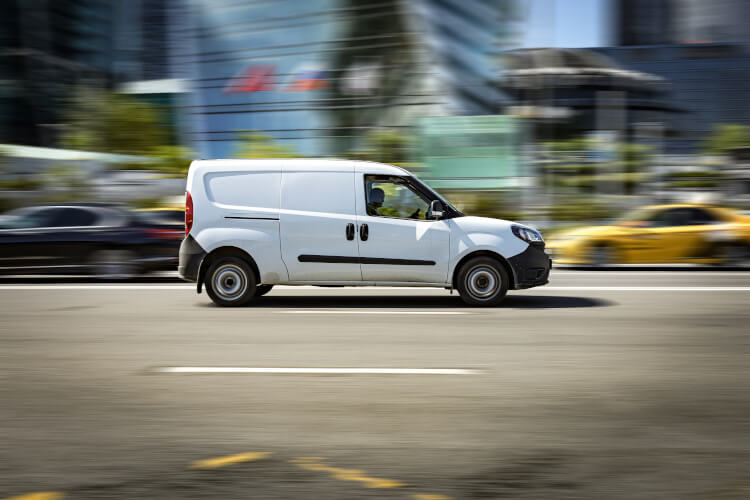
The Class 7 MOT is an annual test that is a legal requirement for all light commercial vehicles (LCVs).
Qualifying light commercial vehicles include larger vans, light trucks, and some pickup trucks.
Vehicles with a Design Gross Weight (DGW) between 3,001kg and 3,500kg fall under Class 7 and must be tested by specialist MOT examiners at approved centres across the UK.
In essence, a Class 7 MOT ensures that heavier light commercial vehicles meet the same strict safety and environmental standards as other MOT classes.
If your van, pickup, or light truck falls within this weight range, keeping up with the annual test is essential to stay compliant and roadworthy.
What Is the Difference Between Class 4 and Class 7 MOTs?
The most common MOT category is Class 4, which applies to the majority of standard cars, smaller vans, and passenger vehicles with up to 12 seats. These are the tests most drivers are familiar with, with the vehicles being covered having to weigh up to 3,000kg in DGW.
Class 7, on the other hand, is designed specifically for heavier light commercial vehicles with a DGW between 3,001kg and 3,500kg.
The difference lies in both the size and weight of the vehicles being tested, as well as the testing equipment required.
While the inspection points are broadly similar – covering the likes of safety, emissions, brakes, lights, and overall roadworthiness – the scale of the vehicle means a Class 7 MOT needs specialist bays and examiners trained to assess larger LCVs.
If your van falls into the higher weight bracket, you’ll need to book a Class 7 rather than a Class 4 MOT to remain compliant.

List of Class 7 Vehicle Models
While not as common as a Class 4 MOT, many popular vehicles fall under the Class 7 bracket, such as:
It’s important to note that some of these vehicle models may have versions that fall under the weight minimum for being a Class 7 (3,001kg), therefore may be considered a Class 4.
Class 7 MOT Test Requirements
To pass a Class 7 MOT, your vehicle must meet a set of strict safety and environmental standards. These requirements include:
- Brakes and Suspension – ensuring effective stopping power and stable handling under load.
- Lighting and Signalling – checking all lights, indicators, and reflectors are fully operational.
- Tyres and Wheels – verifying correct tread depth (at least 1.6mm across the central three-quarters) and no damage that could compromise safety.
- Emissions – testing exhaust emissions to ensure compliance with environmental regulations.
- Steering and Visibility – ensuring wipers, washers, mirrors, and steering components are in proper working order.
If any faults are identified during the MOT, they’ll be classified as dangerous, major, or minor, following DVSA guidelines.
Dangerous and major faults will result in a failed MOT, while minor issues will be recorded but won’t prevent your vehicle from passing.
Class 7 MOT Bay Dimensions
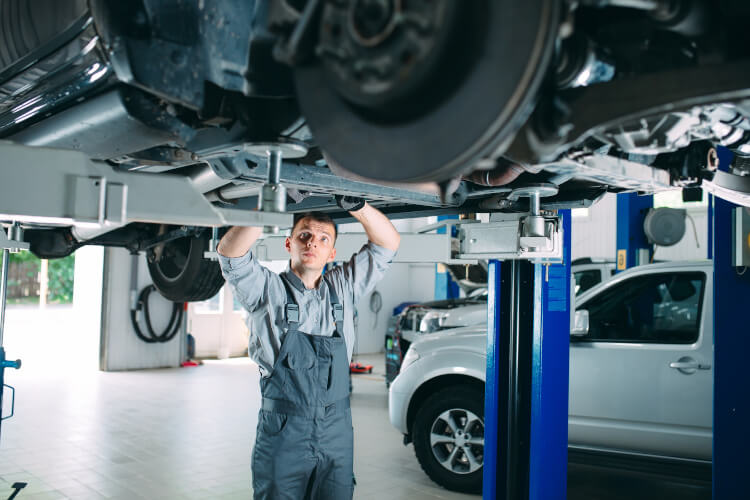
Because Class 7 MOTs apply to larger vans and trucks, they require specialist testing bays big enough to safely accommodate them.
A typical Class 7 MOT bay is larger and reinforced to handle vehicles weighing up to 3,500 kg.
Regarding the overall width, Class 7 MOT bays should be a minimum of 4,200mm, with vehicle entrances and exits being at least 3,200mm high and 3,000mm wide.
This ensures there is enough room for both the vehicle and the necessary inspection equipment.
Approved bays usually include extended ramps and heavy-duty rollers for brake testing, tailored specifically for bigger light commercial vehicles.
How Much Do Class 7 MOTs Cost?
The cost of a Class 7 MOT is slightly higher than a Class 1-4, reflecting the larger scale of the inspection and the specialist equipment required.
The maximum test fee set by the DVSA for a Class 7 vehicle is £58.60, although garages may charge less as part of their pricing structure or in combination with servicing offers.
It’s worth noting that the cost only covers the MOT test itself – if your vehicle requires repairs or replacement parts to meet the required standard, additional charges will apply.
Regular
vehicle servicing and maintenance can help reduce the likelihood of costly repairs at the time of your MOT.

Final Thoughts
A Class 7 MOT is a vital requirement for keeping light commercial vehicles safe, legal, and roadworthy in the UK.
If your van, pickup, or light truck weighs between 3,001 kg and 3,500 kg, you’ll need to ensure it undergoes this specialist test every 12 months.
Knowing the specific requirements and choosing an approved centre with the right testing bays will ensure your vehicle remains compliant.
Staying on top of maintenance throughout the year will also make passing the MOT smoother and less costly.
Class 7 MOT Frequently Asked Questions
Do Blackcircles offer Class 7 MOTs?
No, Blackcircles do not currently offer Class 7 MOT bookings online. At present, we only provide Class 4 MOTs, which cover most standard cars, smaller vans, and passenger vehicles. If you have a heavier light commercial vehicle that falls into Class 7, you’ll need to book your MOT directly with an approved garage that specialises in these larger vehicles.
What is the MOT class for a motorhome over 3,500kg?
If your motorhome has a Design Gross Weight (DGW) over 3,500kg, it doesn’t fall under Class 7. Instead, it usually requires a Class 4 MOT if under 3,000kg, or a Class 5 MOT if it has more than 12 passenger seats. For heavier motorhomes exceeding 3,500kg, testing may be handled under different DVSA requirements at specialist centres. Always check your logbook for weight details.
Is there a Class 6 MOT?
No – Class 6 does not exist. MOT classes range from 1 to 7, but the DVSA skipped Class 6 when setting out the categories. Instead, motorhomes, minibuses, and commercial vehicles are covered under Classes 4, 5, or 7, depending on their weight and seating capacity.
Why is a service more expensive than an MOT?
An MOT is a legal inspection of safety and environmental standards, whereas a service goes much further. Servicing includes replacement of parts such as filters, fluids, and spark plugs, along with checks and adjustments designed to keep your car running smoothly. Because a service involves both labour and materials, it usually costs more than the MOT test itself, which is strictly an inspection.
How long does a Class 7 MOT take?
A Class 7 MOT typically takes between 45 minutes and 1 hour to complete. The time can vary depending on the vehicle’s condition and whether any issues are found. If repairs are required, this will add extra time before your vehicle can pass the test.
How do I check what class my vehicle is?
You can usually confirm your MOT class by checking your vehicle’s logbook (V5C), which will list its Design Gross Weight (DGW) and other details. As a general rule, most cars and small vans are Class 4, while heavier light commercial vehicles between 3,001kg and 3,500kg are Class 7. If you’re unsure, a DVSA-approved garage can quickly confirm which MOT class applies to your vehicle.
How often does a Class 7 vehicle need an MOT?
Most Class 7 vehicles need an MOT test annually once they reach the required vehicle age.