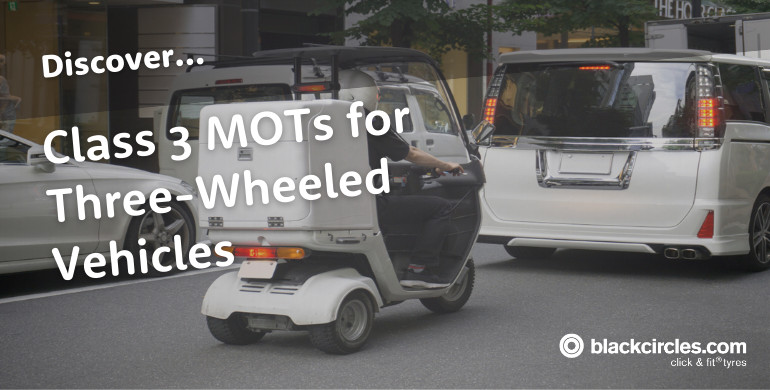
Everyone who’s on the road has either had, will have to put their car through an MOT test once their vehicle is more than three years old.
What some people might not know, is there’s different MOT procedures for different vehicle types – these are divided by “MOT classes”.
Class 4 MOTs are the most common test for the likes of passenger cars and light vans, as well as Class 7 MOTs which covers vehicles that weigh over 3,000kg (Design Gross Weight).
But what vehicles are covered in a Class 3 MOT? That’s what we’ll be exploring below.
Class 3 MOT
A Class 3 MOT is a test designed for three-wheeled vehicles.
The test itself follows the same principle as any other MOT, ensuring the vehicle is safe, roadworthy, and compliant with DVSA standards.
However, the inspection criteria are tailored to suit the unique design and handling characteristics of three-wheelers.
What Is the Weight Limit for Class 3 MOTs?
Class 3 MOTs apply to three-wheelers that weigh more than 350kg but no more than 450kg in DGW.
Anything below this weight limit typically doesn’t require a test, while three-wheelers above 450kg will fall into the Class 4 MOT category instead.
Class 3 Vehicle Types
Because they apply only to three-wheelers within this specific weight range, Class 3 MOTs cover a fairly narrow set of vehicles.
These usually include:
- Three-wheeled cars
- Three-wheeled motorcycles (also known as motor tricycles)
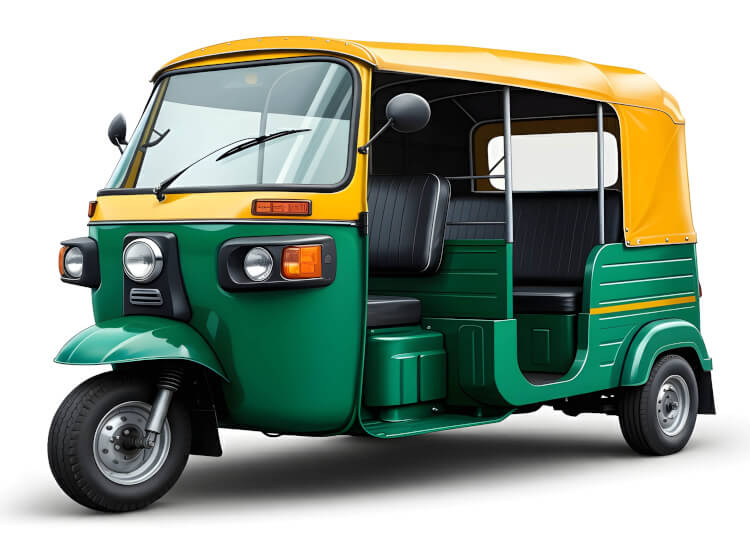
Three-Wheeled Cars
Certain small three-wheeled cars are covered under Class 3 MOTs.
These vehicles, often lightweight and compact, must undergo the same safety checks as other vehicles but adapted to their size and design.
Once their weight exceeds 450kg, however, they move into the Class 4 MOT category – the same as standard passenger cars.
Three-Wheeled Motorcycles
Motor tricycles and three-wheeled motorcycles also fall under Class 3 MOTs, as long as their DGW stays between 350kg and 450kg.
It’s important to note that motorcycles with sidecars do not come under Class 3. Instead, they fall under Class 2 MOT testing.
Meanwhile, heavier motor tricycles over 450kg are tested under Class 4.
What Is the Cost of a Class 3 MOT?
The maximum DVSA-set fee for a Class 3 MOT is £37.80.
This fee only covers the MOT test itself. If your three-wheeled vehicle fails and needs repairs or replacement parts, additional costs will apply before a pass certificate can be issued.
At present, Blackcircles.com only offers Class 4 MOT bookings and does not currently cover Class 3 MOTs.
FAQs:
Do all garages offer Class 3 MOT testing?
No. Class 3 MOT testing is far less widely available than Class 4, as relatively few vehicles require it. Not all approved MOT test stations are authorised to carry out Class 3 tests, so if you own a three-wheeled vehicle it is worth confirming the garage is approved for the correct class before booking. The DVSA's online tool can help you locate an authorised test centre near you.
Can I drive my three-wheeled vehicle to its Class 3 MOT if the current certificate has expired?
You are only permitted to drive a vehicle with an expired MOT certificate if you are travelling directly to a pre-booked test appointment. You should take the most direct route available and not use the vehicle for any other purpose. Driving without a valid MOT in any other circumstance is illegal and is likely to invalidate your insurance.
Are electric three-wheelers subject to a Class 3 MOT?
Yes, provided they fall within the 350kg to 450kg weight range, electric three-wheeled vehicles are subject to the same Class 3 MOT requirements as petrol or diesel equivalents. The test criteria are adapted to the vehicle type rather than the powertrain, though the absence of a combustion engine means emissions checks will not apply in the same way as they would for a petrol or diesel three-wheeler.
What happens if a three-wheeled vehicle fails its Class 3 MOT?
A Class 3 failure follows the same process as any other MOT failure. The vehicle cannot be issued a pass certificate until the faults identified during the test have been repaired. Depending on the severity of the defects, the vehicle may be categorised as having major or dangerous faults. Once repairs have been completed, the vehicle will need to be re-presented for inspection before a certificate can be issued.