For plenty of UK riders, the end of October means their bike goes away until spring. Cold, damp and months of standing still are hard on a motorcycle, though. Flat batteries, stale fuel, rust and flat-spotted tyres are the usual unwelcome surprises when the weather turns.
The good news is that a proper winter lay-up only takes an afternoon. Work through this motorcycle winter storage checklist – from fuel and battery care to tyre pressures, covers and SORN – and your bike will be ready to ride on the first dry weekend of the year.
Where is the best place to store a motorcycle over winter?
A dry, secure garage is the best place to store a motorbike over winter. It keeps the bike out of the rain, cuts condensation and makes theft much harder. A concrete floor is fine, but a piece of carpet or a rubber mat under the tyres helps keep the cold and damp away from the rubber.
If you don’t have a garage, you still have options:
- Storing a motorcycle outdoors: park somewhere sheltered and keep the tyres off wet ground. A paving slab, a sheet of plywood or a paddock mat under each wheel works well. Use a breathable, waterproof outdoor cover with vents, and on dry days take it off for an hour to let any trapped moisture escape. Secure the bike with a ground anchor and a disc lock or chain, and check on it every couple of weeks.
- A storage unit or shed: a motorcycle storage unit or a sturdy bike shed is a good middle ground, as long as it’s dry and lockable.
- Professional motorcycle winter storage: many dealers and specialist firms offer heated, insured winter storage, often with battery care included. To find it, ask your local dealer or search for motorcycle winter storage in your area. Prices vary by location and service, so check what’s included before you book: whether the space is heated and dry, who insures the bike while it’s there, whether battery charging is part of the price and how much notice you need to collect it.
Clean your motorcycle before winter storage
Never put a bike away dirty. Road salt, grime and dead insects hold moisture against the paint and metal, which is how corrosion starts over a long lay-up.
- Wash the bike thoroughly, paying attention to the wheels, engine casings and underside where salt collects.
- Dry it completely, ideally with a blower or a short ride to warm everything through.
- Wax the painted surfaces, then treat bare metal and exposed parts with a corrosion inhibitor such as ACF-50 or a similar anti-corrosion spray. Focus on the areas salt and damp reach first: fasteners and bolt heads, wheel spokes and rims, fork lowers, footpeg hangers and the underside of the engine. Apply a light coat and wipe off any excess. Near the wheels, spray onto a cloth instead of directly onto the bike, and keep it well away from the brake discs, pads and tyres. General water-displacing sprays also work, but they wear off sooner, so a dedicated inhibitor lasts better over a long lay-up.
- Clean and lube the chain so it doesn’t seize or rust while stood still.
- Check the brakes. Clean road grime off the callipers, look at the pad thickness, and check the brake fluid level and colour. Brake fluid absorbs moisture over time. If it’s dark or due a change according to your handbook, the winter lay-up is a good time to get it done.
Should I fill the fuel tank or drain it?
For most bikes with a steel tank, filling the tank to the brim is the better option. A full tank leaves less room for air and condensation, which helps stop rust forming inside it.
Modern UK petrol contains ethanol, which absorbs moisture, and the fuel itself can go stale within a few months. To protect the fuel system:
- Fill up with fresh fuel just before you lay the bike up. Many riders use E5 super unleaded for storage, as it contains less ethanol than standard E10.
- Add a motorcycle fuel stabiliser, ideally one labelled as suitable for E10 fuel, using the dose on the bottle. Then run the engine for a few minutes so the treated fuel reaches the carburettor or injectors.
- On older carburettor bikes, check the owner’s handbook. Some manufacturers recommend draining the float bowls for long-term storage.
How do I stop my motorcycle battery from dying in winter?
A flat battery is the most common winter storage problem. Even when the bike is switched off, alarms, trackers and clocks slowly drain it, and cold weather makes things worse.
The best fix is a motorcycle battery optimiser, sometimes called a trickle charger or battery tender. These smart chargers can stay connected all winter and keep the battery topped up without overcharging it. Many bikes accept a charging lead that stays fitted, so you just plug in. When choosing an optimiser, make sure it’s a smart, automatic charger that suits your battery type. Lithium batteries need a lithium-compatible charger, as a standard lead-acid charger can damage them.
If there’s no power socket where the bike lives, remove the battery and store it somewhere cool and dry indoors, then charge it every few weeks. If you disconnect it on the bike, always remove the negative terminal first.
Change the oil and check the coolant before winter storage
It’s best to change the engine oil and filter before winter storage rather than after. Used oil contains acids and moisture from combustion that can attack engine internals while the bike stands. Fresh oil means the engine sits in clean oil all winter, and the bike is ready to go in spring.
While you’re at it, check the coolant strength. Antifreeze protects the engine from freezing on cold nights, so make sure it’s in date and mixed to the ratio set out in your handbook.
Motorcycle tyre care during winter storage
Tyres are easy to overlook when a bike is laid up, but months in one position can cause flat spots. A flat spot forms when the part of the tyre touching the floor takes a set, which you’ll feel as a thump or vibration on your first ride.
To protect your motorcycle tyres over winter:
- Check tyre pressures before storage. Inflate to the pressures listed in your owner’s handbook, as tyres slowly lose air when they stand. Check them every few weeks over the winter.
- Get the weight off the tyres. Use paddock stands or the centre stand to lift one or both wheels clear of the ground. If you can’t, roll the bike a short way every couple of weeks so a different section of tread is at the bottom.
- Keep tyres away from heat sources and chemicals. Don’t park next to a boiler or heater, and keep solvents, fuel cans and corrosion sprays off the rubber.
- Inspect them before you put the bike away. Check tread depth, look for cuts, cracks or bulges, and note the age of the tyres. Winter is a good time to order replacements, so the bike is ready when the riding season starts.
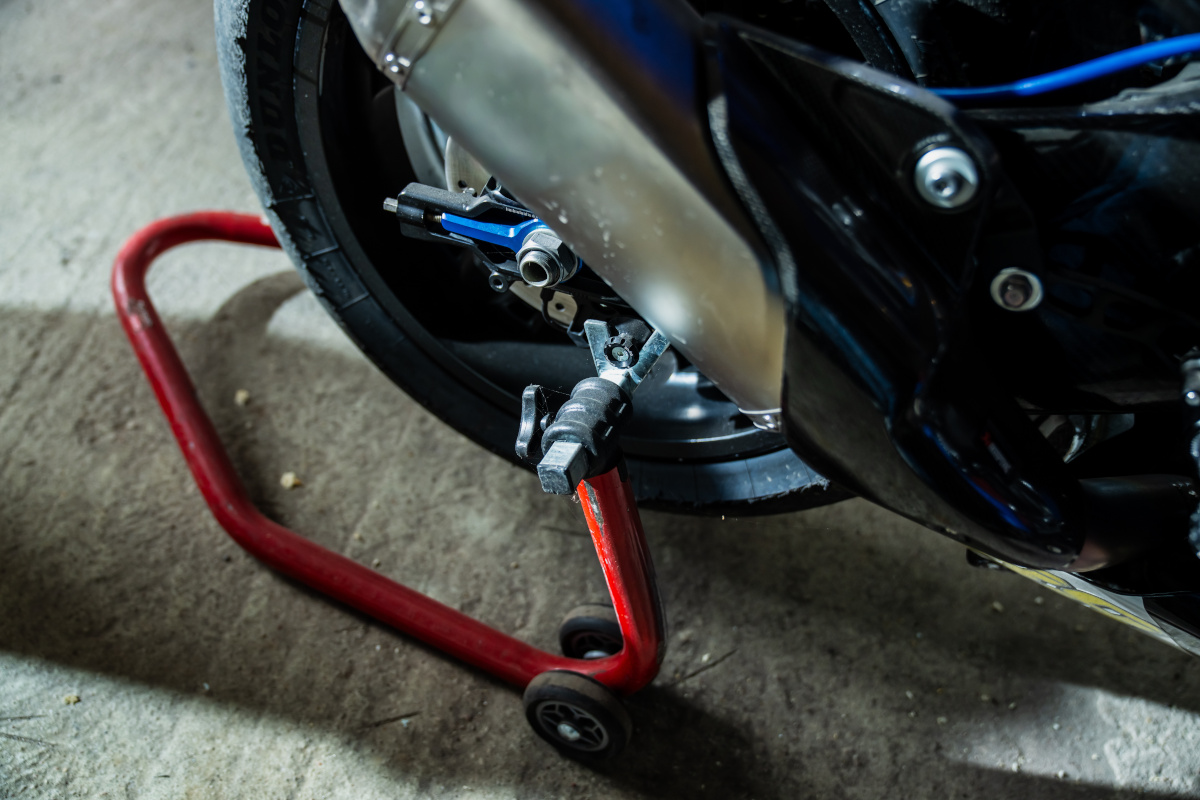
Should I use a paddock stand or leave the bike on its tyres?
A paddock stand, or a pair of them, is the best option for winter storage. It takes the weight off the tyres and suspension, prevents flat spots and keeps the bike stable. A centre stand does a similar job if your bike has one.
Leaving a bike on its side stand all winter is the least ideal option. If you have to, keep the tyres pumped up and move the bike every few weeks.
Do I need a cover when storing a motorcycle for winter?
Use a cover, even indoors. An indoor cover keeps dust off and protects against knocks in a busy garage. For outdoor storage, choose a waterproof motorbike cover that is also breathable. A non-breathable cover traps condensation underneath, which can do more harm than having no cover at all. A good outdoor cover will also have a soft lining to protect the paint, vents to let moisture out and an underbody strap so it doesn’t blow off.
Only put the cover on once the bike is fully dry and the exhaust has cooled down.
Should I start my motorcycle during winter storage?
It’s usually better not to start your bike every few weeks during winter storage. Running the engine for a few minutes without riding doesn’t get it up to full temperature. That creates condensation in the engine and exhaust without burning it off, and drains the battery too.
If you want to keep things moving, a proper ride on a dry day is fine, as long as the bike is taxed, insured and has a valid MOT. Otherwise, leave it laid up and on its optimiser until spring.
Do I need to SORN my motorcycle for winter?
You don’t have to SORN your motorcycle for winter, but it can save you money. A SORN (Statutory Off Road Notification) tells the DVLA your bike is off the road, so you stop paying vehicle tax. You’ll automatically get a refund for any full months of tax left.
Key things to know before you SORN a motorbike over winter:
- The bike must be kept off public roads, in a garage, on a driveway or on other private land.
- You can’t ride it on the road until you tax it again. Taxing it online cancels the SORN.
- A SORN removes the legal requirement to insure the bike. However, keeping cover for theft, fire and damage is still sensible, and many insurers offer laid-up policies for this.
- Timing matters. The refund only covers full calendar months, so make your SORN before the end of the month, not at the start of the next one.
- If your tax is due for renewal over winter, you can make a SORN instead of renewing it.
- Check your policy before you change anything. Ask your insurer what laid-up cover includes, whether your no-claims bonus keeps building while the bike is off the road, and whether they need specific security, such as a locked garage or ground anchor, while it’s stored.
You can
make a SORN for free on the GOV.UK website.
What to check before riding after winter storage
When spring comes round, run through a few checks before your first ride:
- Reconnect or refit the battery and check it’s fully charged.
- Check tyre pressures and look over the tyres for flat spots, cracks or damage.
- Check oil and coolant levels, and look for any leaks under the bike.
- Clean and lube the chain, and check its tension.
- Test the brakes, checking the pads and fluid level, then the lights, horn and indicators.
- If the bike’s been SORN, tax it again – and either way, make sure your insurance and MOT are valid.
- Take the first few miles gently while the tyres and brakes warm up.
Get your motorbike ready for spring with Blackcircles.com
A good motorcycle winter storage routine comes down to a few simple jobs: a clean bike, fresh fuel, a healthy battery, the right tyre pressures and a dry, secure spot. Do them now, and your bike should fire up first time when the riding season returns.
If your tyres are worn, cracked or getting on in years, the winter lay-up is the perfect time to replace them. Find
motorcycle tyres from leading brands at Blackcircles.com, with fitting at a garage near you.
Need new motorcycle tyres?
Enter your registration and postcode and we’ll show you the best tyres for your motorcycle
Motorcycle winter storage FAQs
How do I prepare my motorcycle for winter storage in the UK?
Clean and dry the bike, protect bare metal with an anti-corrosion spray and lube the chain. Fill the tank and add a fuel stabiliser, change the oil, and connect a battery optimiser. Inflate the tyres to the handbook pressures, put the bike on a paddock stand and use a breathable cover.
Can I store a motorcycle outside during winter?
Yes, but it needs more protection. Use a waterproof, breathable outdoor cover, keep the bike off wet ground if you can, and secure it with a ground anchor and lock. Check on it regularly and keep the battery charged.
Should I leave my motorcycle battery connected over winter?
Only if it’s on a smart battery optimiser. Otherwise, alarms and clocks will slowly drain it. If there’s no power nearby, remove the battery and store it indoors, charging it every few weeks.
What tyre pressure should I use when storing a motorcycle over winter?
Use the pressures in your owner’s handbook and check them every few weeks, as tyres lose air when the bike is stood. Using paddock stands to lift the wheels off the ground helps prevent flat spots.
How often should I start my motorcycle during winter storage?
Ideally, don’t. Short idling sessions create condensation without getting the engine fully warm, and drain the battery. Either leave the bike laid up until spring or take it for a proper ride if it’s taxed, insured and has a valid MOT.
Do I still need motorbike insurance if my bike is SORN over winter?
It’s not a legal requirement once a bike is SORN and kept off the road. However, many riders keep laid-up cover to protect against theft, fire and accidental damage while the bike is stored.
Should I change my motorcycle oil before or after winter storage?
Before. Used oil contains acids and moisture that can harm engine parts while the bike stands. Fresh oil protects the engine all winter.
How do I prevent rust on my motorcycle while it’s stored?
Clean and dry it thoroughly, wax the paintwork and use a corrosion inhibitor on bare metal. Store it somewhere dry with good airflow and use a breathable cover to stop condensation building up.
What spray should I use to protect my motorcycle from damp in winter?
A dedicated corrosion inhibitor such as ACF-50 works best on bare metal, fasteners and exposed parts, as it lasts longer than general water-displacing sprays. Apply it to a clean, dry bike and keep it off the brakes and tyres.
How do I protect my motorcycle brakes before winter storage?
Clean the callipers, check the pads and look at the brake fluid level and colour. If the fluid is dark or due a change, get it replaced before the lay-up, as it absorbs moisture over time.
Do I need to check the coolant before winter storage?
Yes. Make sure the antifreeze is in date and mixed to the ratio in your handbook, so the engine is protected on freezing nights.