Getting a
motorcycle licence in the UK is an exciting step towards the freedom of the open road.
Whether you're a beginner looking to ride a 50cc moped or aiming for a full Category A licence, the process involves a few, simple stages, from obtaining a provisional licence to passing the necessary tests.
While it may sound like a daunting experience, breaking it down into clear steps makes it much easier to navigate.
This guide will take you through everything you need to know about getting your motorcycle licence, including training, tests, and costs.
Step 1: Apply for a Provisional Licence
Before you can start riding, you’ll need a provisional driving licence.
You can apply for this once you're 15 years and 9 months old, provided you can read a number plate from 20 metres away and have lived in England, Scotland, or Wales for at least 185 days.
Applying is straightforward and can be done
online through GOV.UK or by post using a D1 application form from the DVLA.
The cost is £34 if you apply online or £43 by post, and processing typically takes between one and three weeks.
Once your provisional licence is issued, you can begin your motorcycle training.
Step 2: Complete Compulsory Basic Training (CBT)
Compulsory Basic Training (CBT) is the next step for most new riders.
Unlike a formal test, CBT is a training course designed to ensure you can ride safely before heading out on the road.
It typically takes a single day to complete and covers essential skills, including basic controls, safe manoeuvres, and on-road riding with an instructor.
After completing CBT, you'll receive a DL196 certificate, which is valid for two years.
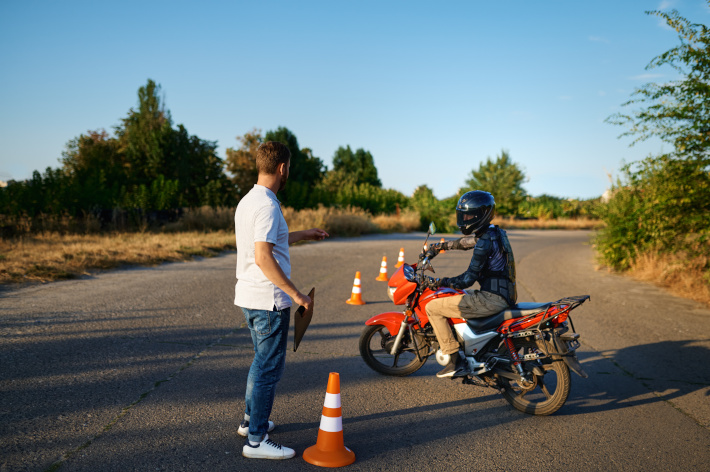
This allows you to ride a 50cc moped if you’re 16 or older, or a 125cc motorcycle if you’re 17 or older, but you must display L-plates and cannot carry passengers or ride on motorways.
There are a few exceptions to CBT – if you passed your car driving test before 1 February 2001, you’re legally allowed to ride a 50cc moped without taking CBT.
Similarly, those with a full moped licence obtained since 1 December 1990 are also exempt.
The cost of CBT varies depending on the training provider and location, but you should expect to pay between £120 and £150.
You can book your motorcycle training or CBT course by entering your postcode and discovering the closest centres to you on
GOV.UK today.
Step 3: Pass the Motorcycle Theory Test
If you plan to progress beyond a CBT-only licence, you’ll need to pass the motorcycle theory test before booking your practical test.
The theory test is made up of two sections:
- A multiple-choice test covering road signs, laws, and safety rules (pass mark: 43/50).
- A hazard perception test where you identify developing hazards in a series of video clips (pass mark: 44/75).
Studying for the theory test is essential, and there are plenty of resources available, including official DVSA practice tests.
The test itself costs £23 and can be
booked online via GOV.UK.
Your theory test pass certificate is valid for two years, so you must pass both practical test modules within this period or retake the theory exam.
Remember and take full advantage of resources such as
GOV.UK's motorcycle theory mock test online to better help your preperation.
Step 4: Take the Motorcycle Practical Test
The practical test is divided into two modules, both of which must be passed to obtain a full motorcycle licence.

Module 1: Off-Road Test
This 20 minute test is conducted in a controlled environment and assesses your ability to handle a motorcycle safely at low and high speeds.
You’ll be tested on:
- Slow-speed control, including a figure-eight and U-turn
- Wheeling the moped/motorcycle and using the stand
- Cornering
- Emergency stops and hazard avoidance at a minimum speed of 19mph (mopeds) or 31mph (motorcycles)
Module 2: On-Road Test
Once you pass Module 1, you can move on to Module 2, which involves 40 minutes of real-world riding with an examiner assessing your ability to follow road signs, handle different traffic situations, and ride safely.
You will be assessed on the following:
- Eyesight
- ‘Show me, tell me’ questions
- Independent road riding
Pricing of Practical Tests
The costs for the practical test are:
- Module 1: £15.50
- Module 2: £75 (weekdays) / £88.50 (weekends & bank holidays)
After passing both modules, you can upgrade your licence based on your age and experience.
Step 5: Choosing the Right Licence
The type of motorcycle licence you can obtain depends on your age and the type of bike you want to ride. Here’s a breakdown of the different licence categories:
| Licence Type
| Minimum Age
| What You Can Ride
|
|---|
| AM Licence
| 16+
| 50cc moped, no L-plates, can carry passengers
|
| A1 Licence
| 17+
| 125cc bike, no L-plates, can carry passengers & use motorways
|
| A2 Licence
| 19+
| Motorcycles up to 35kW (47bhp), unrestricted after 2 years
|
| A Licence (Full Licence)
| 24+ (or 21 with 2 years on A2)
| Any size motorbike, unrestricted power
|
If you're over 24, you can take a Direct Access course to gain a full Category A licence immediately.
If you're younger, you'll need to progress through staged licensing, upgrading after two years in each category.
Tyre Requirements by Licence Category
Whatever stage you’re at – CBT, provisional, or a full A licence – your bike is only as legal and as safe as the tyres fitted to it.
By law, motorcycle tyres must have at least 1mm of tread depth across the central three-quarters of the tyre, be free of cuts or bulges, and match the size, speed rating, and load index specified in your bike’s handbook. Riding on tyres that fall short of this can mean penalty points, a fine, or an MOT failure – and it can also affect how your bike behaves during your practical test.
| Licence Stage
| Tyre Considerations
|
|---|
| CBT / Provisional (50cc & 125cc)
| Tyres must meet the 1mm legal minimum and match the size stamped on the bike’s data plate – instructors will check this before you start your CBT, so it’s worth checking beforehand too.
|
| AM Licence
| Small-section moped tyres wear faster due to lower volume – check tread regularly, especially if you’re carrying a passenger.
|
| A1 Licence
| Motorway-legal 125cc bikes need tyres rated for sustained higher speeds – always match the speed rating on your bike’s handbook, not just the original fitment.
|
| A2 Licence
| Restricted 35kW bikes are often derived from more powerful models – check the tyres fitted are the A2-approved size and load rating, not the unrestricted version’s spec.
|
| Full A Licence
| Unrestricted power means more heat and load through the tyres – higher-spec sport or touring tyres are usually worth the upgrade over budget options.
|
Step 6: How Much Does a Motorcycle Licence Cost?
The total cost of getting a motorcycle licence varies depending on the training provider and your location. Below is an estimated breakdown of costs:
| Cost Breakdown
| Estimated Price
|
|---|
| Provisional Licence
| £34–£43
|
| CBT (Compulsory Basic Training)
| £120–£150
|
| Theory Test
| £23
|
| Practical Test (Module 1 & 2)
| £90.50–£104
|
| Training (for A1, A2, or A Licence)
| £600–£1,200
|
| Total Estimated Cost
| £800+ |
While the provisional licence, tests, and CBT are fixed costs, the biggest variation comes from training fees.
Many riders choose intensive courses to speed up the process – condensing weeks of lessons into a few consecutive days – which can mean holding a full licence in under a week rather than spread over several months.
The trade-off is cost and pressure: intensive packages typically sit at the higher end of the £600–£1,200 training estimate above, and cramming everything into a short window suits confident learners better than nervous ones, since there’s less time between sessions to absorb feedback. A standard weekly or bi-weekly course costs less overall and gives you more time to build confidence, but naturally takes longer to complete.
Final Tips for Getting a Motorcycle Licence
Successfully obtaining a motorcycle licence requires preparation, training, and an understanding of the road rules. Before you start, consider these final tips:
- Choose a reputable training school to improve your chances of passing the practical tests.
- Practise hazard perception to familiarise yourself with the test format.
- Invest in good riding gear, including a helmet, gloves, and a proper jacket for safety.
- Consider advanced rider courses after passing to enhance your skills and lower insurance costs.
With the right approach, you'll be well on your way to enjoying the freedom and thrill of riding a motorcycle.
Now that you know the steps, it's time to take the first step towards getting your licence and hitting the road!

Conclusion
While the process of getting a motorcycle licence in the UK may seem overwhelming at first, breaking it down into clear steps makes it much more manageable.
Whether you're starting with a 50cc moped or working towards a full A licence, following the right process ensures you can ride legally and safely.
If you're ready to begin, start by applying for your provisional licence and booking your CBT – before you know it, you'll be on the road with your new motorcycle in no time!
Motorcycle Licence FAQs
What happens if my CBT expires before I pass my full test?
Your CBT certificate (DL196) is valid for two years. If it expires before you’ve passed both practical test modules, you’ll need to retake CBT before you can legally ride again – your theory test result won’t be affected.
Can I ride on the motorway with a CBT certificate?
No. Riders on a CBT-only licence must display L-plates, can’t carry passengers, and are banned from motorways entirely – this restriction only lifts once you pass your full practical test (Modules 1 and 2).
I failed my motorcycle practical test – when can I retake it?
You must wait at least 10 working days before retaking a failed Module 1 or Module 2 test. Use the time to book extra lessons focusing on the areas your examiner flagged on your test result sheet.
How do I upgrade from an A2 licence to a full A licence?
After holding an A2 licence for two years, you can upgrade via ‘Progressive Access’ by passing another Module 1 and Module 2 test on an unrestricted bike – no new theory test is required. Riders aged 24+ can skip this via Direct Access instead.
Can I use my UK motorcycle licence to ride abroad?
A full UK Category A licence is generally accepted across the EU and many other countries. Some destinations outside Europe may require an International Driving Permit (IDP) alongside your licence – check requirements before you travel.
What documents do I need to apply for a motorcycle licence?
You’ll need proof of identity (passport or existing licence), proof of address, and a completed D1 form if applying by post. Applying online via GOV.UK is faster and only requires your details and payment.
Why is the motorcycle Module 1 pass rate so low?
Module 1’s slow-speed manoeuvres – particularly the U-turn and slalom – catch out many riders who are more comfortable at speed than at walking pace. Extra low-speed balance practice in a car park before your test significantly improves your chances.
What should I bring to my Module 2 test?
Bring your provisional licence, CBT certificate, theory test pass certificate, and full riding kit – helmet, gloves, and a suitable jacket. You’ll also need a working intercom-fitted helmet for the examiner to communicate with you.
Can I ride a moped on a full car (category B) licence without CBT?
If you passed your car test before 1 February 2001, you can ride a 50cc moped without CBT. If you passed after this date, your car licence gives provisional moped entitlement only – you’ll still need to complete CBT first.
Can I carry a passenger on a provisional motorcycle licence with CBT?
No. CBT-only riders cannot carry pillion passengers under any circumstances, regardless of licence category or bike size – this restriction is lifted only once you pass your full practical test.


