
Latest Model

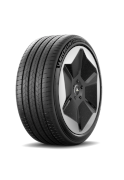
Michelin Primacy 5 Energy
Michelin have developed the Primacy 5 Energy to deliver outstanding efficiency, safety and comfort for everyday driving.
Price from
Find your size120.31to353.84
...searching


We all like to pinch pennies when and where we can, and driving is one of the best places to find big savings. You'll be happy to hear that fuel-efficient tyres can save you money, but how much depends on how far you drive and how big a jump you make on the tyre label. According to the Vehicle Certification Agency, a full set of tyres from the best fuel efficiency class can improve fuel economy by around 7.5% compared with the worst.
For a high-mileage driver, that adds up quickly. For someone who only drives a few thousand miles a year, the saving is smaller and takes longer to pay back. You can work out your own figure with the calculator below.
A fuel-efficient tyre is one with low rolling resistance. Sometimes called eco tyres, economical tyres or energy-saving tyres, they're designed to waste less energy as they roll.
Every time a tyre turns, the rubber squashes where it meets the road and springs back again. That flexing turns some of your engine's energy into heat rather than forward movement. The more a tyre resists rolling, the harder your engine, or your EV's motor, has to work.
Low rolling resistance tyres reduce that loss through:
Find out more in our guide to what rolling resistance is.
The easiest way to spot a fuel-efficient tyre is the fuel efficiency grade on the tyre label. Every new car tyre carries a label with three ratings:
Legally, Great Britain still uses the older A to G scale, but the UK tyre industry moved to the newer A to E label from May 2021, so that's the label you'll see when you buy. Our tyre labels explained guide covers the difference.
The fuel efficiency grade is based on the tyre's rolling resistance coefficient: how much force it takes to keep the tyre rolling, per tonne of load.
| Fuel efficiency grade | Rolling resistance (kg per tonne) |
|---|---|
| A | 6.5 or less |
| B | 6.6 to 7.7 |
| C | 7.8 to 9.0 |
| D | 9.1 to 10.5 |
| E | 10.6 or more |
For the best savings, look for an A-rated tyre, or a B at minimum. Each grade you move up the scale makes a difference, and it adds up over the life of the tyres.
The Vehicle Certification Agency puts the difference between the best and worst fuel efficiency classes at around 7.5% for a full set of tyres. Spread evenly across grades A to E, that works out at roughly 1.9% for each grade you move up.
Here's what that means in practice. A car covering 10,000 miles a year at 45 mpg uses around 1,010 litres of fuel. Switching from C-rated to A-rated tyres could save around 38 litres a year, or about 19 litres for a single grade.
The more you drive, the more you save. Low-mileage drivers will see a smaller saving and wait longer for any extra cost to pay back.
As a rule of thumb, a car averaging 45 mpg uses around 101 litres every 1,000 miles. Each grade you move up saves roughly 1.9 litres per 1,000 miles, and a two-grade jump around 3.8 litres, so you can work out how many miles it takes to cover any extra you pay for the tyres.
To get your own figure, plug your numbers into the calculator below. It uses the latest UK average fuel price from our fuel price tracker.
See what a full set of more efficient tyres could save you, using the fuel grades on the tyre label.
Loading the latest UK average price…
Estimate only. Uses the Vehicle Certification Agency figure of around 7.5% between the best and worst fuel classes for a full set, split evenly across A to E and applied to EVs too. Real savings depend on your car, driving and tyre pressures. Fuel prices from our UK fuel price tracker.
Savings aren't the whole story, though. For a closer look at how fuel costs change the real price of a tyre, see our cost per mile comparison of Michelin and its competitors.
A fuel-efficient tyre isn't automatically a better tyre overall. Fuel efficiency is only one of the things a tyre has to balance, so check the rest of the label before you buy.
Wet grip: fuel efficiency and wet grip are graded separately, so a tyre can score well on one and less well on the other. Braking in the wet matters more than saving fuel, so check both grades. Some tyres don't make you choose: the Michelin Primacy 5 Energy is A-rated for both in 205/55 R16.
Tread life: how long a tyre lasts varies from model to model. A tyre that wears out sooner cuts into your savings because you'll replace it sooner. Add your expected tyre life to the calculator to see the savings over the life of the tyres.
Noise: the label also shows how loud a tyre is, in decibels. If a quiet ride matters to you, compare the noise figures alongside the fuel grade.
These three tyres all meet the A-or-B fuel efficiency benchmark in 205/55 R16, one of the most common car tyre sizes in the UK. Label grades can vary by size, so always check the label for your size.
A-rated for both fuel efficiency and wet grip, so you don't have to trade safety for savings. With an A noise rating of 68 dB, it's also the quietest of the three.


A-rated wet grip and B-rated fuel efficiency make the Turanza 6 a strong premium alternative if braking in the wet is your top priority. Its noise rating is 69 dB (B).


B-rated for both fuel efficiency and wet grip, the Ecowing ES31 brings decent efficiency to the mid-range for drivers who want to keep upfront costs down. Its noise rating is 70 dB (B).
Comparing an A-rated tyre with a B? Pop the grades into the calculator above.
For more options, see our guide to the most fuel-efficient tyres in 2026.
On an electric car, lower rolling resistance means more range rather than better mpg. According to the European Commission, the difference between tyre fuel efficiency classes can be worth tens of kilometres of range per charge on an EV.
That makes the fuel efficiency grade one of the most useful things to check when choosing EV tyres. More range per charge also means lower charging costs over the year. Switch the calculator to Electric and enter your miles per kWh and what you pay per kWh to see your own estimate.
Many tyres for electric cars are also designed around the extra weight of an EV's battery. Michelin, for example, fits tyres to EVs as standard for manufacturers including Tesla, Volkswagen and Nissan, so its efficiency ranges are developed with real-world EV range in mind.
Hybrid drivers benefit too. If you've chosen a hybrid to keep fuel costs down, fitting low rolling resistance tyres helps protect that economy. Enter your hybrid's mpg in the calculator to see the difference.
Michelin's e.Primacy is designed to reduce energy consumption, and car makers choose it to equip electric, hybrid and low-consumption cars. In 205/55 R16, it's A-rated for fuel efficiency and B-rated for wet grip, with a noise rating of 69 dB (B).

For performance EVs, the Michelin Pilot Sport EV is designed specifically for electric cars. It comes in larger sizes, where it's mostly A- or B-rated for both fuel efficiency and wet grip, so check the label for your size.

See the full range of EV tyres at Blackcircles.com.
Fitting fuel-efficient tyres is one part of the picture. How you look after them, and how you drive, matters too.
Combine good habits with A- or B-rated fuel-efficient tyres, and you'll get the most out of every litre or kWh. Every tyre on Blackcircles.com shows its fuel efficiency, wet grip and noise ratings, so you can compare them before you buy, with fitting at a local garage or at home.
Enter your registration and postcode and we’ll show you the best tyres for your car
They can be, but the saving will be smaller. The fewer miles you drive, the less fuel you use, so it takes longer for any extra cost to pay back. Use the calculator above with your own mileage to see whether it's worth it for you.
Yes, high-mileage drivers have the most to gain. Savings grow with every mile, so frequent motorway drivers and commuters will see the biggest difference over the life of the tyres.
A-rated tyres have the lowest rolling resistance; C-rated sit in the middle of the scale. Based on our estimate, moving from C to A could cut fuel use by around 3.75%, or about 38 litres a year for a car covering 10,000 miles at 45 mpg.
Not necessarily. Tread life varies from one tyre model to another, so check independent tests and customer reviews before you buy.
Not necessarily. The tyre label shows each tyre's noise level in decibels. The Michelin Primacy 5 Energy, for example, is A-rated for fuel efficiency and has an A noise rating of 68 dB in 205/55 R16.
They can. Under-inflated tyres have higher rolling resistance, so they use more fuel. Figures from a TyreSafe member suggest tyres under-inflated by around 20% (about 6 psi) use 3% more fuel. That's more than our estimate of around 1.9% for a single label grade, so check your pressures at least once a month, whatever tyres you have.
Yes, but go by the label rather than the brand or price. Look for a B fuel efficiency grade or better, and check the wet grip grade too, so you're not trading braking performance for savings.
Yes. Summer and all season car tyres both carry the tyre label, so you can compare their fuel efficiency grades in exactly the same way. Grades vary by tyre and size, so check the label for yours.
Yes. Most SUV tyres are car tyres, so they're graded on the same A to E fuel efficiency scale. Van tyres carry the same label too, but they're a separate tyre class with their own, stricter limits for each grade, so compare van tyres with other van tyres.
The grade is on the tyre label, which you'll see alongside every tyre on Blackcircles.com. For the full details, scan the QR code on the label to see the tyre's record in EPREL, the EU's official tyre database.

We love to hear from our customers. Connect with us today and let’s start a conversation.
