
Latest Model
![System.Func`2[BlackCircles.Interfaces.IECommerceModuleData,System.String]](https://images.blackcircles.com/search/feature-ev.svg)
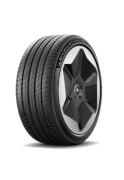
Michelin Primacy 5 Energy
Michelin have developed the Primacy 5 Energy to deliver outstanding efficiency, safety and comfort for everyday driving.
Price from
Find your size119.99to353.84
...searching


Most of us buy tyres by looking at the price on the shelf. It’s the obvious thing to do, and it’s the wrong number.
A tyre has two costs. There’s what you pay for it, spread over however many miles it lasts. And there’s the fuel or electricity it burns when driving. A tyre that requires more force to roll (rolling resistance), costs you more at the pump over time.
On average, a set of premium tyres in a common 18-inch size can cost you roughly 2.3p per mile to buy.
The fuel to move the car they are fitted to can cost somewhere between 12p and 24p a mile, depending on what your car runs on.
Based on that, the fuel is five to ten times the tyre. And unlike the tyre's up front purchase price, you pay for your fuel weekly.
This means the cheapest tyre to run is not necessarily the cheapest tyre to buy - or even the longest-lasting one.
There are two sides to the equation that need to be considered. Almost every comparison you’ll read online only does the first part.
The tyre half is the price of four tyres divided by the miles you get before they’re legally worn out.
The fuel half is the extra fuel a tyre burns because of its rolling resistance. And how much energy it takes to keep it turning.
No single tyre is responsible for your whole fuel bill. However, the difference between an efficient tyre and an inefficient one is a slice of a very large number.
Add them together and you get the real cost of a mile.
In the UK, a car tyre is illegal below 1.6mm of tread depth across the central three-quarters of the tread.
That’s Regulation 27 of the Road Vehicles (Construction and Use) Regulations 1986, confirmed in Annex 6 of the Highway Code.
If you are caught with a tread depth below this limit you face a £2,500 fine and three penalty points - per tyre.
Often it is stated that a new tyre comes with 8mm of tread - however, there's no reliable source for that number.
Michelin itself doesn’t provide one tread depth for its tyres, reflecting that it varies between ranges.
Tyre life isn’t only a function of new tyre tread depth, it also relates to other technologies that are employed, and the composition of the rubber affecting wear rate. Lower tread depths can also be a design choice in respect of providing improved handling, as tyre block movement is reduced.
The best measured figure comes from the European Commission’s Joint Research Centre. This put fifteen car tyres through the official on-road wear test and measured their starting tread at 7.5 to 7.7mm.
That same study found that summer tyres wearing at 1.47mm per 10,000km on the front axle and 0.64mm on the rear. Which meant that front tyres were wearing more than twice as fast as rears.
It also found that the tyres it tested ranged from 0.7 to 1.64 times the service life of the reference tyre.
In plain terms, the longest-lived tyre in that group lasted more than twice as long as the shortest.
The tyre label grades fuel efficiency, wet grip and noise. This is a genuinely useful piece of information for buyers.
The European Commission states that the difference between adjacent fuel-efficiency grades is worth about 80 litres of fuel over the life of the tyre.
The government’s own Vehicle Certification Agency puts the spread between the best and worst grades at 7.5% of your fuel economy.
What this does not tell you is how long the tread will last. Which is why independent test data is need to fill the gap.
The most useful independent test published this year is Auto Zeitung’s summer tyre test of 23 February 2026.
It ran ten tyres in 235/45 R18 on an Audi A5, bought anonymously at retail so no manufacturer could hand-pick a sample.
In this test it published wear rate, projected mileage and rolling resistance for every tyre.
Four of the ten were premium brands. Here they are with Blackcircles prices as at 4 August 2026, fully fitted.
| Tyre | Projected life | Wear (mm/1000km) | Rolling resistance | Price per tyre | Tyre cost (set of 4) | Fuel saved (set of 4) | Total per mile (set of 4) | Total per mile (per tyre) |
|---|---|---|---|---|---|---|---|---|
| Michelin Primacy 5 | 50,000 km / 31,100 miles | 0.076 | 6.8 kg/t | £180.99 | 2.33p | 0.39p | 1.94p | 0.48p |
| Goodyear Eagle F1 Asymmetric 6 | 49,500 km / 30,800 miles | 0.078 | 8.1 kg/t | £163.88 | 2.13p | 0.00p | 2.13p | 0.53p |
| Continental PremiumContact 7 | 44,250 km / 27,500 miles | 0.082 | 8.0 kg/t | £174.99 | 2.55p | 0.03p | 2.52p | 0.63p |
| Pirelli Cinturato C3 | 44,750 km / 27,800 miles | 0.082 | 7.7 kg/t | £185.24 | 2.67p | 0.12p | 2.54p | 0.64p |
Fuel column is the saving against the highest-rolling-resistance tyre here, at petrol prices of 156.13p per litre (Department for Transport, week commencing 27 July 2026). The "fuel saved" column shows what each tyre saves against the least efficient tyre of the four (in this case, the Goodyear). Bridgestone wasn’t in this test.
From this table there are two interesting points - which aren't perhaps obvious on an initial read through. On purchase cost alone, the Goodyear is the cheapest per mile. It’s £17 a tyre cheaper than the Michelin and lasts almost as long. So it wins on the maths that most people do.
However, once the fuel costs are factored in, the Michelin moves in front.
Its 6.8 kg/t rolling resistance against the Goodyear’s 8.1 is worth around £120 of petrol over 31,000 miles. Considerably more than the £68 extra the set costs. 1.94p a mile against 2.13p.
The conversion from rolling resistance to fuel used here is 0.12 litres per 100km for every 1 kg/t, a figure Michelin publishes and part-attributes to itself.
So we checked it against an independent source. The US National Research Council’s Special Report 286 gives a 10% cut in rolling resistance at a 1–2% gain in fuel economy.
Applied to this comparison, that implies a saving of 0.09 to 0.18 litres per 100km. Michelin’s factor gives 0.156 - inside the independent range, and towards the cautious end of it.

Here’s the thing the cost-per-mile arithmetic reveals: Michelin’s advantage isn’t that its tyres last the longest.
Several rivals match or beat it on raw tread life. Its advantage is that it spends less rubber and less fuel getting you each mile - and fuel is where the money is.
That shows up consistently across independent testing, from different organisations, in different sizes, over several years.
Germany’s ADAC has built the largest independent tyre-wear dataset that exists. 160 tyre models measured on public roads since 2023, on the same car, with the rubber loss weighed and normalised per tonne of vehicle weight. Its brand averages, in milligrams per kilometre per tonne - lower is better:
| Michelin | Continental | Goodyear | Pirelli | Bridgestone |
|---|---|---|---|---|
| 52 | 63 | 65 | 76 | 78 |
Michelin is 27% below the average of the brands. Plus the 17% below its nearest premium rival.
The worst of the five sheds half again as much rubber per mile.
ADAC’s lowest-wearing single tyre out of all 160 was a Michelin - the e.Primacy, at 35 mg/km/t.
Auto Express’s 2025 summer tyre test scored nine tyres in 225/40 R18 on a VW Golf GTI. On rolling resistance, indexed with the best at 100, the premium five finished:
The Michelin also won both of the test’s aquaplaning categories outright.
ADAC’s 2025 test in the same size reached the same conclusion by a different route, awarding the Michelin Pilot Sport 5 the best environmental score of the premium four - 1.9, against 2.2 for the Goodyear, 2.4 for the Continental and 2.8 for the Bridgestone.
In ADAC’s own summary, they reported that the Michelin placed among the leaders on both wear and mileage.
Michelin took the 2026 ACE summer tyre test with the Pilot Sport 4S on 141 points out of 170, ahead of the Continental SportContact 7 on 140 and the Bridgestone Potenza Sport Evo on 138.
It won Auto Bild’s 205/55 R16 test outright with the Primacy 4+ - the only tyre in that test to earn a sehr gut grade.
And in Auto Bild’s winter test in the same size, the Michelin Alpin 6 recorded the longest projected life of any tyre in the test at 50,500km.
Michelin’s own testing goes further than the independent data does, and it’s worth being clear about the difference.
Michelin commissions DEKRA, an independent German testing organisation, to run comparisons - but Michelin chooses the protocol, the size, the vehicle and which competitors are included.
On that basis it reports that its Primacy 5 energy outlasted the Bridgestone Turanza 6 by 41%, the Continental PremiumContact 7 by 39%, the Pirelli Cinturato P7C3 by 64% and the Goodyear EfficientGrip Performance 2 by 67%, in 215/55 R18 on a VW ID3 in late 2025.
That is a much wider gap than any independent test has found, from a single size on a single car, in a test Michelin paid for.

More useful, because it cuts both ways, is Michelin’s own published DEKRA data for the Primacy 4+ in 205/55 R16 on a VW Golf.
31,246km for the Michelin, against the Bridgestone Turanza T005 nearly 16,000km behind and the Continental PremiumContact 6 about 5,700km behind - and the Goodyear EfficientGrip Performance 2 2,093km ahead of the Michelin.
Michelin publishes that last figure itself, which is to its credit.
The strongest UK data comes from fleet management platform epyx, which tracks real replacement jobs.
Its most recent published figures show electric company cars reaching their first tyre replacement at 14,352 miles against 18,333 for petrol and diesel. Plus seeing that the cost is £246 a tyre against £187 - a 32% premium that epyx says has held steady since 2023.
Epyx is careful to note that fleet EVs skew towards larger, heavier models, so some of that gap is the cars rather than the drivetrain.
What’s much less disputed is that rolling resistance matters more on an EV than on a petrol car.
Oak Ridge National Laboratory, a US Department of Energy lab, measured original-fitment EV tyres at 7.65 N/kN against replacement tyres at 9.23. Replacements averaging nearly 21% worse.
Fitting tyres with 20% higher rolling resistance than the originals cost between 5% and 25% of range at motorway speeds.
One reassuring finding for anyone using ICE-based test data to choose EV tyres: ADAC reports that “tyres that show low wear on combustion vehicles also have a longer service life on electric vehicles”.
Expect shorter absolute lives on an EV, though. Auto Bild’s 2024 EV tyre test in 235/55 R19 on a Kia EV6 was won by the Michelin Pilot Sport 4 SUV. However the projected life was 35,865km, where an equivalent 19-inch tyre on a petrol car in Auto Bild’s 2026 test reached nearly 64,000km.
From 1 January 2027, tyre manufacturers will have to declare abrasion levels for newly approved car tyres - under an amendment to UN Regulation 117.
Then in June 2026 the UN adopted Regulation 186, which sets an actual limit. An abrasion index of 1.00 for car tyres, applying to new tyre types from 1 July 2028 and to all tyres by 30 June 2030.
UNECE expects it to cut tyre abrasion by more than 10% and push around 30% of today’s higher-wearing tyres off the market. The Department for Transport has consulted on adopting the same dates in Great Britain.
Which means the thing this article has had to reconstruct from test data will eventually be printed on the tyre. It also means the metric Michelin currently leads on among premium brands is the one about to become a legal requirement.
On average, fuel costs five to ten times what your tyres cost, per mile. So a tyre’s rolling resistance usually matters more to your wallet than its price, or even its tread life.
Across the premium brands, Michelin’s edge is there.
It has the lowest measured wear rate of any premium brand in the largest independent dataset that exists - 27% below the average of Continental, Goodyear, Bridgestone and Pirelli.
It led on rolling resistance among the premium five in UK testing last year. And in the one recent independent test that measured wear, mileage and rolling resistance together, it took all three - and the lowest total cost per mile.
Goodyear can appear to give you more miles for less money up front. In some sizes it still comes out cheapest overall.
And whilst Michelin isn’t the cheapest tyre in every fitment, if you’re choosing between premium tyres - and you want the cheapest mile rather than the cheapest tyre - the rolling resistance grade on the label deserves more of your attention.
Every figure above links to its source. We used independent test data where it exists - ADAC, Auto Zeitung, Auto Bild, Auto Express, ACE and Consumer Reports - and labelled manufacturer-funded testing as manufacturer-funded.
Prices are Blackcircles.com fully fitted prices including VAT, correct as of 4 August 2026. Fuel prices from the Department for Transport, week commencing 27 July 2026.

We love to hear from our customers. Connect with us today and let’s start a conversation.
