If you own a
BMW, keeping up to date with the latest safety recalls is one of the most important steps you can take to ensure your vehicle remains safe, reliable, and legally compliant on UK roads.
From electrical issues to component failures, BMW models occasionally appear in DVSA recall notices and understanding what these recalls mean can help you act quickly if your car is affected.
This guide explains how recalls work, highlights BMW recall activity across recent years, and outlines how to check your own vehicle for outstanding safety notices.
We will look to update this article with the latest BMW recalls to keep you informed throughout 2026 and beyond.
What Is a Vehicle Recall?
A vehicle recall is issued when a manufacturer identifies a safety defect or technical problem that needs correcting to prevent potential risk on the road.
These issues can range from minor faults to more serious concerns involving braking, steering, airbags, electrical systems, or structural components.
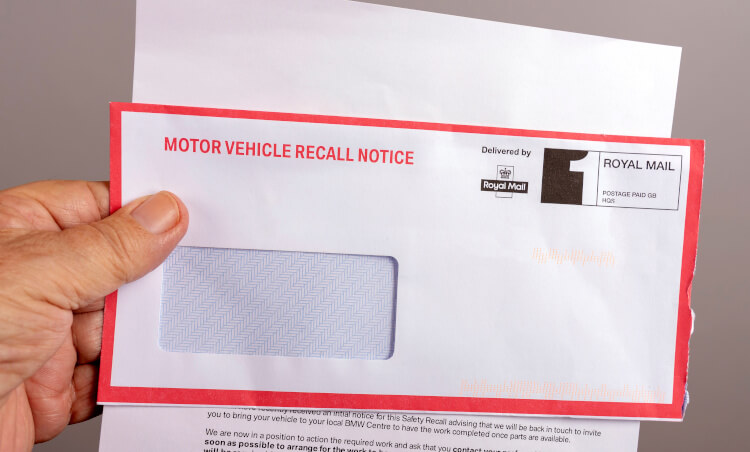
Most recalls do not require you to stop driving immediately. Instead, the manufacturer will contact you with instructions and provide a free repair, replacement, or software update to resolve the issue.
However, with the uptake in
“stop-drive” recalls, there are some that are urgent and require you not to drive under any/most circumstances – doing so can result in a driving fine.
The Driver and Vehicle Standards Agency (DVSA) regulates the recall process in the UK, ensuring manufacturers take swift action to fix safety-related faults.
However, the responsibility for issuing, managing, and completing repairs lies directly with the vehicle manufacturer – in this case, BMW.
BMW Recalls 2026: What Models Have Been Recalled This Year?
BMW have already made vehicle recalls at the start of 2026.
While some recalls are precautionary, others may require more urgent attention depending on the nature of the defect.

BMW January 2026 Recall: Takata Airbag
In January 2026, many BMW models were recalled – all for the same reason.
More issues regarding certain models’ airbags were detected. This came after a fatal accident in France that involved a
Citroen C3 in France, where a Takata (airbag producer) airbag had serious deployment concerns, which prompted an investigation regarding the functionality of Takata’s airbags.
This has affected not only BMW cars, but also other leading car manufacturers such as
Citroen,
Nissan,
Volkswagen, and more.
Regarding the recent 2026 recalls in January, 419,254 BMW cars were recalled.
A GOV.UK statement on the defect declared:
“Affected vehicles may be fitted with a drivers airbag which may deploy with too much explosive force causing sharp metal fragments to be released into the cabin. It has the potential to fatally or seriously injure vehicle occupants.”
Find the table below for a full breakdown of what BMW models were recalled to see if your BMW vehicle was recalled in January 2026:
| Make
| Model
| Build Start
| Build End
|
|---|
| BMW
| 1 SERIES 3 DOOR HATCH
| 17/11/2006
| 15/12/2011
|
| BMW
| 1 SERIES COUPE
| 29/08/2007
| 08/10/2013
|
| BMW
| X3
| 08/01/2006
| 18/08/2010
|
| BMW
| X1
| 19/08/2009
| 25/06/2015
|
| BMW
| 1 SERIES 5 DOOR HATCH
| 07/01/2006
| 30/06/2011
|
| BMW
| 1 SERIES CONVERTIBLE
| 26/09/2007
| 04/10/2013
|
| BMW
| 3 SERIES SALOON
| 02/01/2006
| 28/10/2011
|
| BMW
| 3 SERIES TOURING
| 02/01/2006
| 29/05/2012
|
| BMW
| 3 SERIES COUPE
| 03/05/2006
| 28/06/2013
|
| BMW
| 3 SERIES CONVERTIBLE
| 28/11/2006
| 02/10/2013
|
Given the severity of the Takata airbag issue, it’s safe to assume this is a “stop-drive” recall, meaning you should not drive this vehicle at all costs to save yourself from fines of up to £2,500, but more importantly, the safety of you and others on the road.
BMW Recalls 2025: Was My Model Recalled?
BMW issued many safety notices throughout 2025, affecting a range of models across BMW’s extensive model line-up.
Below, we’ve outlined the key BMW recall activity across the year.
BMW October 2025 Recalls
In October 2025, there was various models that were recalled for a differing reasons.
It’s important to note that even though different models are being recalled at once, the same issue could be the reason why multiple BMW models’ issues are needing fixed.
A total of 199,326 BMW vehicles were recalled in the month of October, so let’s take a look at what caused some of these recalls to happen:
Engine Starter Motor
A recall was sent out to a total of 91,562 BMW vehicles regarding the engine starter motor.
According to an official defect explanation from GOV.UK, the following issue was:
“For affected vehicles there is a concern involving water ingress and corrosion to the starter motor for where a short circuit cannot be ruled out. It is strongly recommended to park the vehicle outdoors and not in the immediate vicinity of buildings until the repair has been carried out.”
BMW cars recalled by this defect in October 2025 are as follows:
| Make
| Model
| Build Start
| Build End
|
|---|
| BMW
| 1 SERIES 3 DOOR HATCH
| 25/02/2017
| 13/05/2019
|
| BMW
| 1 SERIES 5 DOOR HATCH
| 22/02/2017
| 29/05/2019
|
| BMW
| 3 SERIES SALOON
| 20/02/2018
| 21/06/2021
|
| BMW
| 3 SERIES TOURING
| 05/02/2019
| 16/09/2020
|
| BMW
| 4 SERIES CONVERTIBLE
| 11/02/2020
| 10/03/2020
|
| BMW
| 4 SERIES COUPE
| 05/12/2019
| 24/07/2020
|
| BMW
| 5 SERIES SALOON
| 18/08/2016
| 01/09/2020
|
| BMW
| 5 SERIES TOURING
| 02/02/2017
| 30/07/2020
|
| BMW
| 6 SERIES GT
| 06/03/2018
| 25/06/2020
|
| BMW
| 7 SERIES SALOON
| 16/06/2017
| 11/09/2018
|
| BMW
| 7 SERIES SALOON LWB
| 06/10/2017
| 14/12/2018
|
| BMW
| X3
| 14/07/2017
| 05/11/2020
|
| BMW
| X4
| 12/12/2017
| 15/12/2020
|
| BMW
| Z4
| 21/08/2018
| 01/09/2020
|
This doesn’t appear to be a “stop-drive” recall and rather an advisory one, but please ensure you’re parking the vehicle outdoors as by recommendation from the DVSA.
The start date of these recalls rolling out to BMW drivers was 27 October 2025.
Seat Belt Rear Outer Seats
5,148 BMW cars were recalled for an issue regarding the back-outer seats in the vehicles.
In the vehicle recall history document, GOV.UK stated:
“On affected vehicles either one or both of the outer most rear seats may not have been manufactured correctly and the sensitivity sensor may be deformed. If the sensor is not functioning correctly there is a risk the seat belt may not operate as intended.”
The models manufactured by BMW that were affected by this defect were:
| Make
| Model
| Build Start
| Build End
|
|---|
| BMW
| 1 SERIES
| 07/08/2025
| 30/09/2025
|
| BMW
| 2 Series Gran Coupe
| 12/08/2025
| 30/09/2025
|
| BMW
| X1
| 01/08/2025
| 07/10/2025
|
Once again, appears to be an advisory recall, but please ensure that the seat belts are fixed by a trusted garage before any further issues are caused.
The start date of these recalls rolling out to BMW drivers was 23 October 2025.
Front Passenger Takata Airbag
The largest recall of 2025 for BMW cars was the Takata airbag defect that required a recall for over 102,000
BMW 3 Series cars:
“For vehicles fitted with a Takata front passenger airbag with a PSPI inflator these vehicles have previously received a like for like replacement front passenger airbag via a previous safety recall campaign.”
The only affected BMW model was 3 Series cars manufactured from 3 March 1999 to 24 August 2006.
It’s important to note that these recalls were just the recalls conducted by the DVSA/BMW that affected the most number of vehicles – if you’d like to take a deeper dive into the year as a whole,
please visit GOV.UK today.
Largest BMW Recalls Historically
While we’re highlighting the most recent recalls for BMW models, why don’t we take a look at some of the most significant BMW recalls since these were publicly available (from 1992 to present date):
- January 2023: Airbag module to be replaced. Potentially over 333,000 BMW models affected including
X1,
X5, 3 Series Saloon, & more. Manufactured dates ranging from 2012 to 2017.
- August 2022: Engine management control unit software to be improved. Potentially over 322,700 BMW models affected including
X3,
1 Series, 3 Series Saloon, & more. Manufactured dates ranging from 2010 to 2022.
- July 2013: Inspection of airbag inflator module. Potentially over 316,000 BMW 3 Series models affected that were manufactured from 1 May 1999 to 31 August 2006.
- June 2018: Positive battery cable repair required on affected vehicles. Potentially over 311,800 BMW models affected, those being the 1 Series, 3 Series, X1, and
Z4.
The above are just some recalls that have affected the most amount of vehicles at once.
It’s important to note that these were more than likely just advisory recalls, with the manufacturer identify potentially defects that could be affecting some cars, but not others that were outlined in the recall.
Check Your BMW Recall Status Online
If you’re unsure whether your BMW has any outstanding recalls, you can check your vehicle’s status quickly online.
Enter your vehicle’s VIN (Vehicle Identification Number) or your registration number on the
official BMW website to see any open safety actions or required repairs.
You can also use the
GOV.UK recall checker by entering your registration number, which will show all current recall notices issued for your car.
If your BMW is affected – particularly by a more urgent recall – make arrangements to book the repair as soon as possible.
All recall-related fixes are carried out free of charge, helping you stay safe on the road and ensuring your vehicle continues to meet legal safety standards.
My Car Has Been Recalled: What Next?
If your BMW has been recalled, the first step is not to panic – recalls are common, and manufacturers issue them to keep drivers safe – what you do next depends on the type of recall and how urgent it is.
Once a recall is issued, BMW or the DVSA will contact you with details of the defect and instructions on how to proceed.
In most cases, you’ll simply need to book your car into an authorised BMW garage for a repair, replacement part, or software update.
If the notice is more serious – such as a “stop-drive” recall – you must stop using the vehicle immediately. Driving a car under an urgent recall can be unsafe and, in some cases, illegal.
Manufacturers may advise arranging recovery to a dealership rather than driving the car yourself, depending on the fault.
While potentially not being able to drive for a period of time can be a hassle, it won’t cost you a penny, as manufacturers are legally required to cover all costs in event of a recall due to a defect.
Once the repair is complete, your BMW will be safe to use again, and the recall will be marked as resolved on the DVSA database.
Acting quickly ensures your vehicle remains safe, compliant, and ready for the road.
BMW car recalls: Frequently Asked Questions
Is there a BMW EGR recall?
Yes, BMW Group has a voluntary recall action in relation to EGR (Exhaust Gas Recirculation) coolers in its diesel vehicles. You should be contacted in writing if your vehicle is affected.
Is there a BMW airbag recall?
Yes, like several car manufacturers, BMW is conducting a major recall in vehicles which use Takata airbag systems. The recall impacts over 400,000 models and should be addressed as soon as possible if you own an affected model.
How long do BMW recalls last?
While the time taken to repair a recall issue can vary greatly, recall campaigns can remain open indefinitely until all affected models are addressed.