Wheel bearings might not be the first thing that comes to mind when preparing your car for an
MOT, but they play a crucial role in your vehicle's safety and stability.
A worn, noisy, or loose wheel bearing can lead to a failed MOT – or worse, dangerous driving conditions.
In this guide, we’ll break down exactly what wheel bearings do, how MOT testers inspect them, and what defects will cause your car to fail its test.
We’ll also explain how to spot issues early so you can avoid the hassle of an
MOT failure.
What Is a Wheel Bearing?
A wheel bearing is a set of steel balls or rollers held together in a metal ring (called a race), and it allows the wheels on your car to spin smoothly with minimal friction.
They’re found inside the wheel hub – the assembly that connects your wheel to the axle.
Every time your wheel turns, the bearing is doing the hard work. It's constantly dealing with the weight of
your car, the force of acceleration and braking, and the impact of bumps or potholes.
Therefore, understandably so, your wheel bearings naturally begin to wear down from all the stress they endure.
When wheel bearings wear down, they can cause all sorts of problems – from uneven tyre wear to total wheel failure.
Can Faulty Wheel Bearings Cause an MOT Fail?
Yes, wheel bearings can fail your MOT – depending on how bad the bearing is, it can either be a major or dangerous defect on your MOT report.
During the MOT, testers check the wheel bearings for excessive play, roughness, or noise.
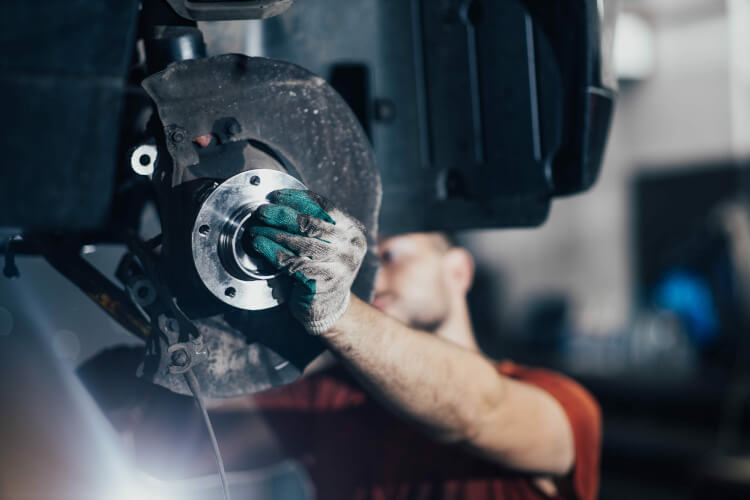
If the bearing has some play, but it’s still within limits, it may only be noted as an advisory.
But if the play is significant or if the bearing is on the verge of failure, the car will fail the MOT.
Causes of Wheel Bearing MOT Failure
Here’s what the official
DVSA MOT manual outline as to what can fail your test regarding wheel bearings:
Wheel Bearing Defect | MOT Fail Category |
Excessive play | Major defect |
Play so excessive it risks collapse or affects steering | Dangerous defect |
Bearing is excessively rough | Major defect |
Bearing is likely to collapse | Dangerous defect |
So if your wheel bearing is noisy, loose, or feels rough when spun – it’s time to get it sorted before your test.
Symptoms of a Failing Wheel Bearing
Spotting a worn wheel bearing early can save you the hassle (and cost) of an MOT fail.
Look out for these common warning signs:
- Humming or grinding noises from the wheels, especially when turning
- Vibration through the steering wheel or vehicle body
- Wheels that feel loose when rocked side to side (even when stationary)
- Uneven tyre wear
The noise often gets worse with speed and might sound like you're driving on a rough surface even when the road is smooth.
Why Are Wheel Bearings So Important?
Wheel bearings might be hidden, but they’re a vital safety component. They help:
- Keep your wheels securely attached to the vehicle
- Ensure smooth and stable steering
- Prevent excessive tyre and suspension wear
- Maintain correct braking performance (especially in ABS-equipped cars)
If a bearing completely fails, the wheel could potentially come loose – which is why dangerously worn bearings result in an instant MOT fail and an unroadworthy vehicle.
How to Avoid a Wheel Bearing MOT Failure
The best way to stay on top of wheel bearing issues is through regular
servicing and pre-MOT checks. Many garages can spot early signs of bearing wear before it reaches MOT-failing territory.
Here are some handy tips:
- Listen for unusual noises: A loud droning or grinding sound that changes with road speed is often bearing-related.
- Get wheels checked: Ask your mechanic to check for play in the bearings during servicing.
- Watch for warnings: Steering wobble or a pulling sensation while driving might point to bearing issues.
- Check your MOT history: If you’ve had advisories for wheel bearing play before, it’s wise to get them inspected before the next test.
Wheel bearing repairs vary in complexity and cost depending on your vehicle.
Some cars have press-fit bearings requiring special tools to replace, while others are bolt-on units that are quicker to swap out.
Final Word: Don’t Let a Wheel Bearing Fail Catch You Out
Wheel bearings may be one of those components you don’t think about until something goes wrong.
If there’s too much movement in the wheel, or it sounds like something’s grinding when the tester spins it, your car could rack up a major or dangerous defect in seconds.
Don’t wait for the fail sheet. If you’ve noticed any odd noises or steering vibration recently, book in a check before your MOT.
Need a garage near you to inspect or replace a wheel bearing? You
can book online with many trusted MOT & car service centres across the UK at Blackcircles.com.
Wheel Bearing MOT Fail: Frequently Asked Questions
Why does a bad wheel bearing sound worse when turning?
Failing wheel bearings often sound worse when turning as the centrifugal cornering forces place more stress on the bearings themselves.
How long does a wheel bearing last once it starts making a noise?
There’s no accurate way to predict how long a wheel bearing will last once it starts to make a noise. While a failing bearing could last anywhere from a couple of miles to a couple hundred miles, it’s safest to have the fault addressed as soon as possible.
Wheel bearing noise is it safe to drive?
Though it may be technically possible to drive with a failing wheel bearing, it is not advisable. You could lose control of the vehicle if the bearing fails — particularly when cornering or travelling at speed.