Your seatbelts are one of the most important safety features in your car – and yes, they can fail your
MOT test if they’re not in good condition or working properly.
During the MOT, seatbelts are checked thoroughly to make sure they’re secure, functional, and capable of protecting you in an accident.
A damaged, faulty, and of course, missing seatbelt will almost always be marked as a major defect, meaning your vehicle will fail its MOT until repaired.
Let’s take a closer look at what MOT testers check and how you can prevent an MOT fail.

What Seatbelt Checks Are Included in an MOT?
The MOT inspection covers every seatbelt fitted in your
car, including those attached to child seats or wheelchair restraints if they’re securely fitted at the time of testing.
Testers look for issues affecting seatbelt security, condition, function, and related components such as pre-tensioners and load limiters (if fitted as original equipment).
Here’s how each area is inspected:
1. Seatbelt Security
The tester examines all seatbelt anchorage points – the parts of the car body or seat frame where the belt is bolted or attached.
If these anchorage points are loose, corroded, or inadequately repaired, it’s considered a major defect.
In severe cases, where the seatbelt could become detached in a collision, it’s classed as dangerous, and the vehicle must not be driven until repaired.
2. Seatbelt Fitment and Condition
Every visible part of the seatbelt is checked for cuts, fraying, or signs of overstretching.
Even small cuts over 2mm near the edges or 4mm elsewhere can reduce the belt’s strength enough to cause an MOT fail.
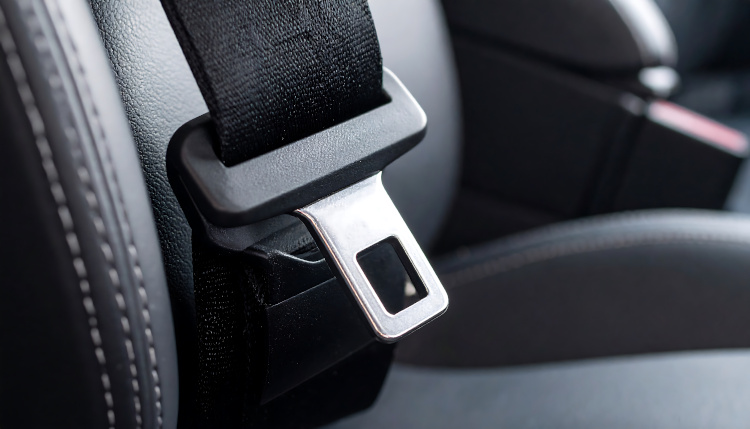
The tester also checks that the seatbelt retracts correctly and locks securely when fastened. If the buckle doesn’t latch properly or fails to release, this too will count as a major defect.
In short – if your belt doesn’t fasten, retract, or lock as it should, your car won’t pass.
3. Seatbelt Load Limiters
Load limiters are designed to reduce seatbelt-inflicted injuries during severe impacts by allowing a small amount of controlled give.
If these are fitted as original equipment but are missing or deployed, the car will fail its MOT.
4. Seatbelt Pre-tensioners
Pre-tensioners tighten the belt instantly during a crash, holding you securely before impact.
If one has been deployed (often indicated by an SRS warning light), or if it’s missing, it will also cause an MOT failure.
Signs Your Seatbelt Might Need Attention
While many seatbelt issues are only picked up during an MOT, some warning signs can appear in day-to-day use:
- The seatbelt doesn’t retract smoothly or gets stuck
- You have to jiggle the buckle to get it to click or release
- Visible fraying, fluffing, or damage to the belt webbing
- Warning lights for airbags or SRS systems stay illuminated
If you notice any of these, it’s best to get them checked before your MOT is due. Not only will it help avoid a fail – it could also make a crucial difference in the event of a collision.
How to Prevent a Seatbelt MOT Failure
Seatbelt maintenance is often overlooked, but it’s straightforward to prevent most MOT failures with regular checks and basic care.
1. Inspect Your Seatbelts Regularly
Run your fingers along the full length of the belt to feel for cuts, wear, or stiffness.
Pull the belt out fully to check for hidden damage or debris caught in the retractor mechanism.
2. Keep the Buckles and Belts Clean
Dirt, dust, or liquid spills can affect the belt’s retraction and locking mechanism.
Wipe them down gently with a damp cloth and mild soap – but never lubricate or use harsh cleaners.
3. Address SRS or Airbag Warning Lights
If your dashboard shows a restraint system warning light, get it checked promptly.
It could indicate a fault with pre-tensioners or airbags, both of which are part of the MOT safety assessment.
4. Avoid DIY Repairs
Never attempt to sew, glue, or tape a damaged seatbelt. It’s illegal to modify or repair them without replacing the full assembly and any visible repair work will be an instant MOT fail.

What Happens If You Fail Due to a Seatbelt Issue?
If your MOT tester identifies a major defect, such as a cut belt or a faulty buckle, your car will fail the MOT.
You’ll only be allowed to drive it to a pre-booked repair appointment or a retest if your previous MOT certificate is still valid.
If the defect is marked as dangerous, you cannot drive the vehicle at all until it’s repaired.
Driving a car in this condition risks fines, penalty points, and even prosecution for operating an unsafe vehicle.
Final Thoughts: Stay Safe and MOT-Ready
Seatbelts may seem simple, but they play a crucial role in keeping you, and your passengers safe.
During an MOT, even small faults can lead to a failure because of the vital protection seatbelts provide in a crash.
Taking a few minutes to inspect your belts and fix issues early can save you the hassle and cost of a failed MOT.
If your MOT test is due soon, you can easily
book your MOT or service online with Blackcircles.com.
Our
trusted network of garages helps ensure your vehicle meets safety standards and stays roadworthy all year round.
Seatbelt MOT fail: Frequently Asked Questions
What does SRS mean?
SRS stands for supplementary restraint system, which essentially includes your car’s airbags and seatbelts. A fault with this system will cause an MOT failure.
Does a slow retracting seatbelt fail an MOT?
Yes, it can. If the belt fails to retract fully or properly it will be marked as a major defect and fail the MOT test. However, a seatbelt which retracts a little slowly in the last few cm of travel may still pass.
Are rear seatbelts checked during an MOT?
Yes, if your car has rear seatbelts they will be checked as part of the MOT test. They must comply with the same standards as the front seatbelts.
Can rusty seatbelt bolts fail an MOT?
Yes, if the securing bolts or anchorage points are rusty this can cause an MOT failure.