

![System.Func`2[BlackCircles.Interfaces.IECommerceModuleData,System.String]](https://images.blackcircles.com/search/feature-ev.svg)
Michelin Primacy 5
The Michelin Primacy 5 tyre has been designed with safety and longevity in mind. So you can drive with confidence every day.
Price from
Find your size97.99to333.04
...searching


Passing your driving test is a huge milestone. Once you've got your licence, your attention is likely to be on insurance costs, fuel prices and finding your first car.
Tyres rarely make that list.
Yet they're the only part of your car that actually touches the road. Every time you brake, steer or accelerate, it's your tyres that determine how much grip you have. Whether you're making an emergency stop in heavy rain, avoiding a pothole or taking your first motorway journey, your tyres can make a real difference when it matters most.
For new and learner drivers, who are still building experience behind the wheel, choosing the right tyres is one of the smartest investments you can make.
When it comes to tyre safety, it's not about flashy marketing or the most expensive option. A safe tyre combines excellent grip, predictable handling and consistent performance throughout its life.
When choosing tyres, look for:
These qualities give drivers greater confidence and help create an extra margin of safety when conditions become challenging.
A quality all-season tyre - such as the Michelin CrossClimate 3 - or a premium summer tyre like the Michelin Primacy 5 delivers the required grip levels, along with a long life performance, that keeps the cost low over the lifetime of the tyre.
When you've been driving for years, a lot of decisions happen almost automatically.
You read the road ahead instinctively, you sense when your grip is wearing low and you adjust your speed without really thinking about it.
New drivers and learners may not have built up those instincts quite yet. This means that the tyres are very important when it comes to margins of error.
Quality tyres can't replace experience, but they can provide extra reassurance while those driving instincts develop.
Imagine these everyday situations:
In moments like these, your tyres are working harder than any other part of the car.
This is arguably the single most important safety metric for UK driving. Thanks to our climate, wet roads are can often considered the norm rather than an exception.
Every tyre sold in the UK carries an EU tyre label grading wet grip from A (shortest wet braking) to E (longest).
The gap between the best and worst grades can be significant. On a wet road, a lower-graded tyre can add significant distance the stopping distance. For a new driver, that extra distance is the difference between stopping in time or not.
One of the purposes of the tread patterns of a tyre is help to channel water away from the tyre’s path. Reducing the risk of aquaplaning. It is also important for the traction and stability of the tyre when braking and cornering.
As such, tread depth is very important. In the UK, the legal minimum tread depth for a tyre is 1.6mm across the central three-quarters of the tyre, around its entire circumference.
It is important to check the tread depth of your tyres on a regular basis to make sure they are still able to perform to their optimal levels.
New drivers are often the least likely to replace tyres promptly. As budgets are tight and a tyre that "looks fine" may end up staying on.
A tyre designed and developed to grip reliably right down to the wear limit helps to protect a driver who leaves replacement later. Although you should never let the tyre’s tread depth drop below 1.6mm.
Blackcircles.com does not recommend the fitment of part worn tyres. In practice they're a false economy and a safety risk.
Part-worn tyres may appear to offer excellent value, but they come with significant uncertainties.
You rarely know:
Many are sold with only a few millimetres of tread, so the cost-per-mile works out worse than a new tyre. For a new driver, the advice is straightforward - buy new. Buy the best you can afford. Treat tyres as importantly as you would any other piece of safety equipment.

Learning to drive and gaining confidence behind the wheel is an exciting milestone, but the first few years of driving are also when the risk of being involved in a serious collision is at its highest.
According to the Department for Transport, drivers aged 17 to 24 are disproportionately represented in serious road collisions. In 2024:
No tyre can prevent every collision, but quality tyres can help reduce stopping distances, improve grip in wet conditions and provide more predictable handling when drivers need it most. For someone who is still building experience, that extra margin of control can make a real difference.
Road safety organisations such as TyreSafe also stress the importance of maintaining tyres correctly.
Checking your tyre pressures regularly, monitoring tread depth and replacing worn or damaged tyres are simple checks that can improve safety and reduce the risk of tyre-related incidents.
Before choosing your next set of tyres, it's worth knowing that:
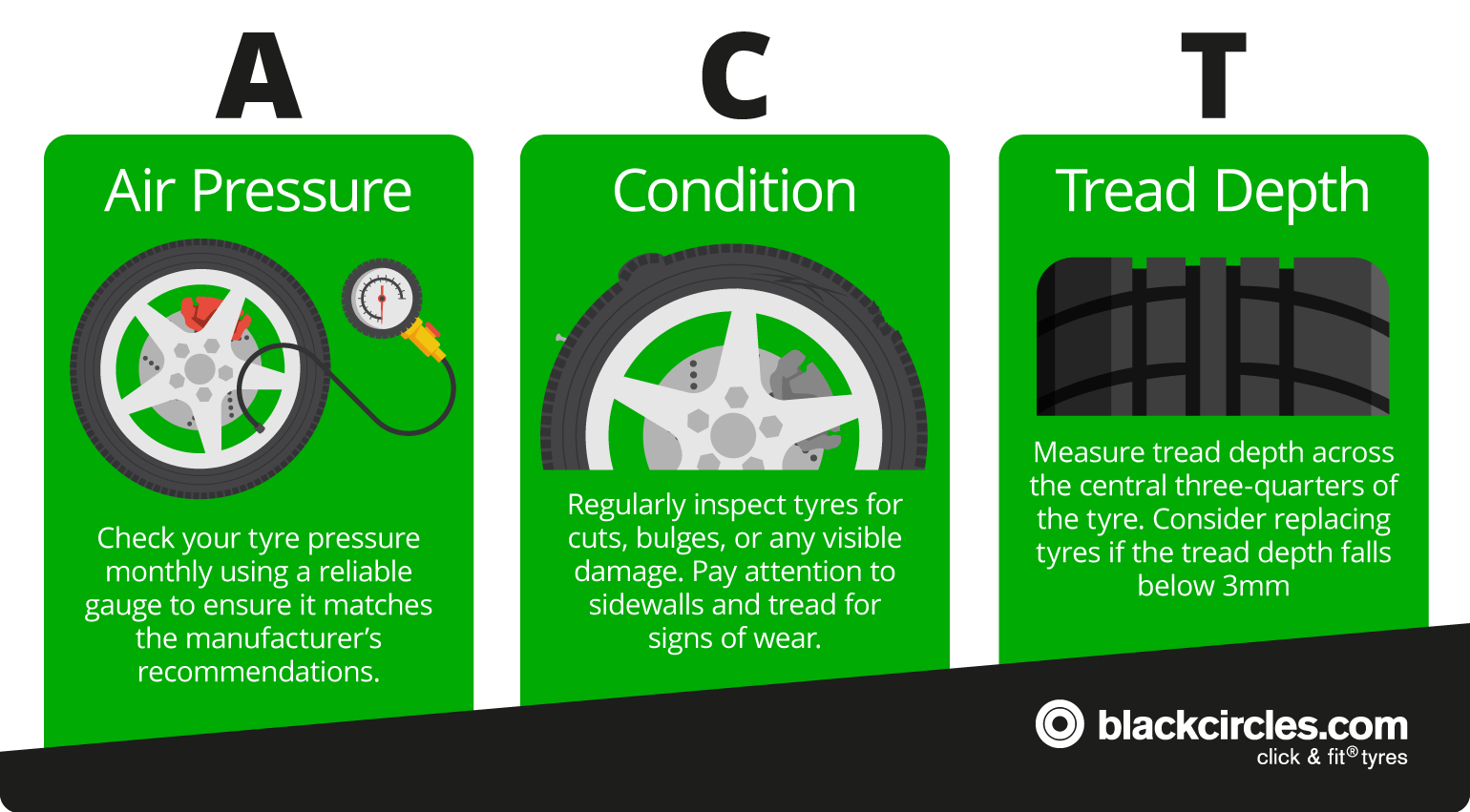
There are four quick checks you can carry out to check the condition of your current tyres.
There is a lot of choice when it comes to tyres. However, here are some of the more popular tyres that you can find on Blackcircles.com - from budget through to premium.
| Tyre | Type | Best for |
|---|---|---|
| Michelin CrossClimate 3 | All-season | New drivers wanting year-round confidence from one set of tyres |
| Michelin Primacy 5 | Summer | Comfort, longevity and grip. |
| Michelin CrossClimate 2 | All-season | Smaller first cars where CC3 sizes aren't yet available. |
| Continental AllSeasonContact 2 | All-season | Strong all-season alternative |
| Goodyear EfficientGrip Performance 2 | Summer | Balanced mid-premium summer option |
| Kumho Ecsta HS52 | Summer | Budget-conscious buyers wanting a good level of wet grip |
The Michelin Primacy 5 is an excellent choice for drivers who mainly use their car on roads during the warmer months. It combines strong wet and dry grip with a comfortable, quiet ride, making everyday journeys more enjoyable. It's also designed for long-lasting performance, helping to keep replacement costs down over time.
Buy Michelin Primacy 5 tyres
![System.Func`2[BlackCircles.Interfaces.IECommerceModuleData,System.String]](https://images.blackcircles.com/search/feature-all-season.svg)
If your car uses a tyre size that isn't yet available in the newer CrossClimate 3 range, the CrossClimate 2 remains an outstanding option. It offers dependable performance in changing weather conditions, including rain, cold temperatures and light snow, making it ideal for drivers who want one set of tyres to use all year round.
Buy Michelin CrossClimate 2 tyres

The Continental AllSeasonContact 2 is a strong all-season alternative that delivers confident grip in both wet and dry conditions. Its balanced handling and predictable performance make it well suited to new drivers looking for year-round convenience without changing between summer and winter tyres.
Buy Continental AllSeasonContact 2 tyres

Designed for everyday driving, the Goodyear EfficientGrip Performance 2 offers a great balance of comfort, fuel efficiency and dependable wet-weather braking. Its long tread life also makes it an attractive option for drivers covering higher annual mileages who want premium performance without compromising on value.
Buy Goodyear EfficientGrip Performance 2 tyres

For drivers working to a tighter budget, the Kumho Ecsta HS52 offers impressive performance for the price. It delivers strong wet-weather grip, predictable handling and good everyday comfort, making it a sensible choice for first-time drivers looking for reassurance without the premium price tag.
Buy Kumho Ecsta HS52 tyresMichelin tyres deliver on what a new driver actually needs:
Finding the correct tyre size is easier than you might think. There are three simple ways to check:
Most first cars use tyres between 15 and 17 inches, with common sizes including 195/65 R15 and 205/55 R16.
If you're still unsure, simply enter your vehicle registration into the Blackcircles.com tyre search tool. It will identify the correct tyre sizes for your vehicle and show all compatible options, making it quick and easy to choose the right tyres.
Whether you're learning to drive or have recently passed your test, choosing the right tyres is one of the best investments you can make in your safety and confidence on the road.
At Blackcircles.com, finding the right tyres couldn't be easier. Simply enter your vehicle registration to see tyres that fit your car, compare options from trusted brands and book fitting at a local garage at a time that suits you. Every new tyre sold meets UK safety standards, so you can buy with confidence, knowing you're fitting quality tyres designed to help keep you safe.
From affordable everyday options to premium tyres like Michelin, Blackcircles.com offers a wide range of tyres to suit different budgets and driving needs. With transparent pricing, thousands of trusted customer reviews and a nationwide network of professional fitting centres, you can be confident you're making the right choice from your very first miles.
After all, your tyres are the only part of your car in contact with the road. Investing in quality new tyres today is an investment in safer journeys tomorrow!
The safest choice is a tyre with a high EU wet grip rating (A or B), good tread and a reliable performance as it wears.
Premium all-season tyres like the Michelin CrossClimate 3 suit new drivers well.
They give strong wet grip and year-round capability. There's no seasonal change to deal with.
Budget tyres can be road-legal but often carry weaker wet grip ratings and longer stopping distances than premium tyres.
For a learner or new driver paying a little more for better wet grip is one of the most cost-effective safety upgrades.
No. Their history is unknown and they often have little usable tread left.
New tyres with a known wet grip rating are the safer and often better choice.
For many drivers, yes. Michelin's longevity means the higher purchase price can work out cheaper per mile over the life of the tyre.
While the wet grip and all-season capability address the safety areas where new drivers are most exposed.
Check the tread with the 20p test, look for the wear-indicator bars at 1.6mm, inspect for cracks or bulges, and keep pressures at the level specified in your door frame or handbook. If tread is low or you're unsure, have them checked.
Generally, yes, cheap tyres generally wear out quicker. When compared with Premium brands such as Michelin, you will find that Budget tyres are typically made with softer or lower-grade rubber compounds. As well as simpler tread pattern designs. They often lack the advanced polymers found in premium brands as well. All of which means budget tyres suffer from increased friction and heat - leading to quicker wear rates. Premium brands such as Michelin are well regarded for their longevity and long lasting tyre performance throughout the lifespan of a tyre.

We love to hear from our customers. Connect with us today and let’s start a conversation.
