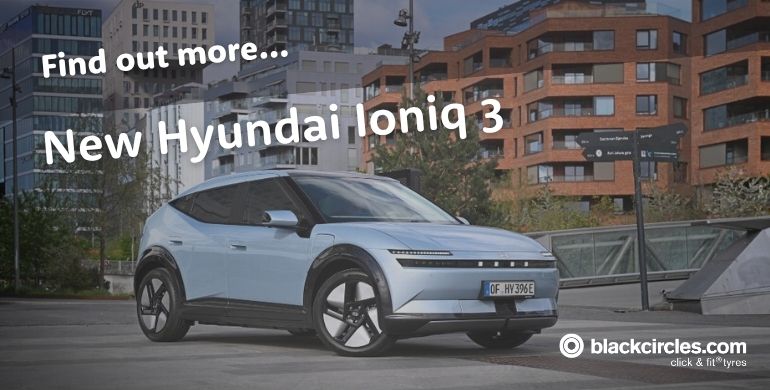
Hyundai's electric line-up has a new entry point. The Ioniq 3 has now gone on sale in the UK, slotting in as the brand's smallest and most affordable Ioniq model yet and, if early reservation numbers are anything to go by, one of its most in-demand launches ever. Positioned to take on the likes of the
Renault 5,
MG4 and
Cupra Raval, the Ioniq 3 brings solid EV range, sharp styling and Hyundai's latest tech to a price point that finally undercuts most of its closest rivals.
Keep reading for everything you need to know about the new Ioniq 3, including UK pricing, range, trim levels, and which tyres it will use as standard.
What Is the Hyundai Ioniq 3?
The Ioniq 3 is a fully electric, five-door hatchback that fills the gap between the tiny Inster city car and the much larger Ioniq 5. It's built on a shortened version of Hyundai's E-GMP electric platform and shares its underpinnings with the closely related Kia EV2.
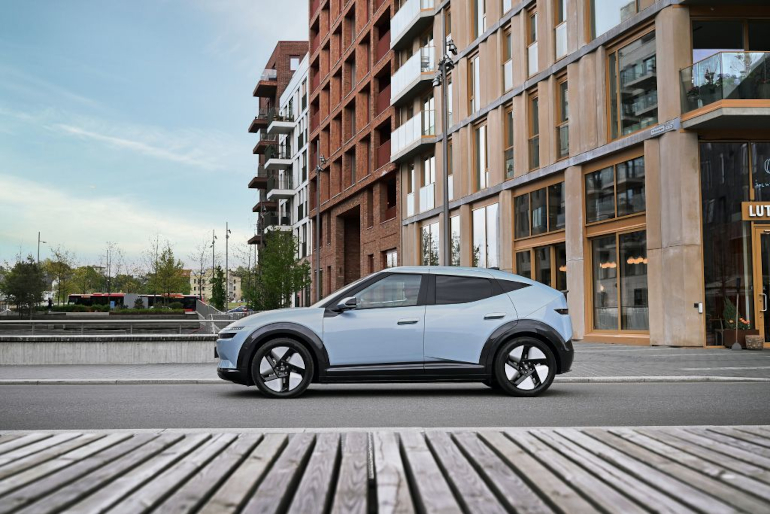
Rather than badge it as another compact SUV, Hyundai has gone with what it calls an "Aero Hatch" body style. In essence, that's a low, sleek hatchback shape rather than the crossover look so many rivals default to. It's a similar size to the
Ford Puma, but with the low stance and stretched roofline of something more like an electric alternative to the i20.
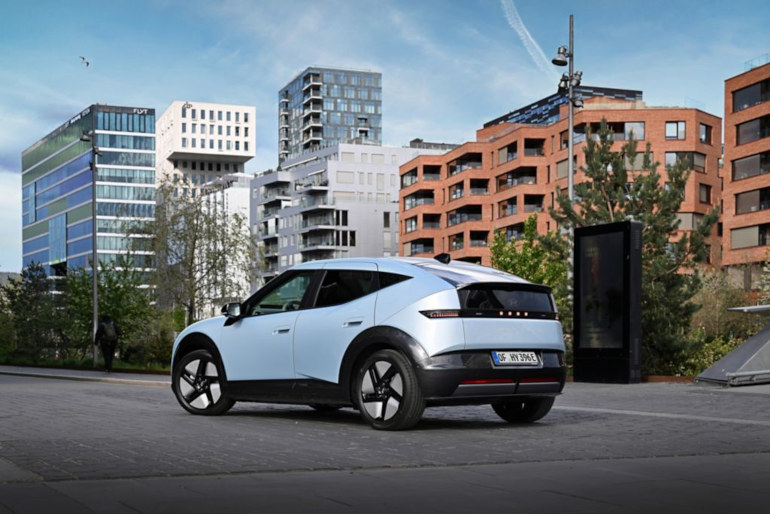
New Hyundai Ioniq 3 Exterior Design & Styling
The Ioniq 3 introduces Hyundai's new "Art of Steel" design language to the Ioniq range for the first time, having previously been seen on the latest Nexo. It's a cleaner, more structured look than the swoopier styling of some recent Hyundais, with flat surfacing and crisp shoulder lines that are said to reflect the natural properties of pressed steel.
Practical thinking sits behind the styling, too. Hyundai has engineered the body specifically to cut through the air efficiently, quoting a drag coefficient of around 0.263Cd. That's a highly competitive figure for this class, and one that should pay dividends at motorway speeds where aerodynamic drag has the biggest impact on real-world range.
Signature "pixel" lighting continues the visual link to the rest of the Ioniq family, with four square LED elements front and rear forming a subtle nod to the letter H. Alloy wheels start at 16 inches on entry-level Advance cars, growing through Premium (17") and Ultimate (18"), with the sportier N Line Evo getting the largest 19-inch wheels and the most aggressive styling addenda, including a higher and wider rear spoiler with lower diffuser and bespoke black alloys.
New Hyundai Ioniq 3 Interior, Technology & Practicality
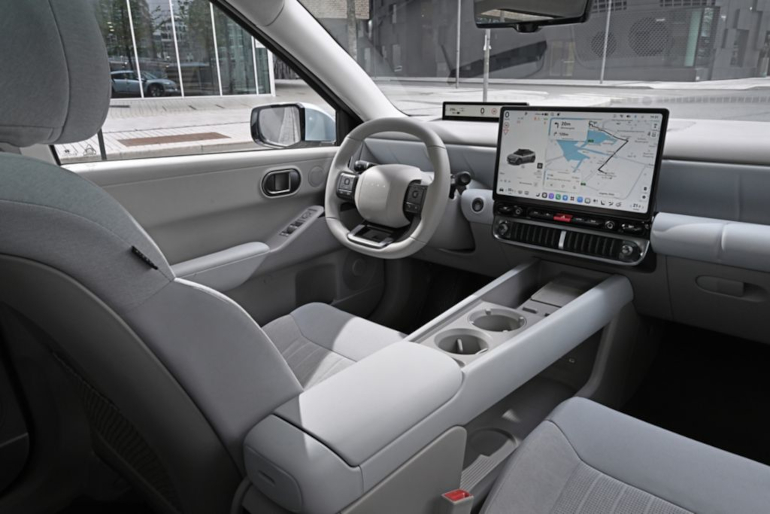
Step inside and the Ioniq 3 becomes the first Hyundai in Europe to run the brand's new Pleos Connect infotainment system, built on Android Automotive OS. It's displayed across a 12.9-inch touchscreen (rising to 14.6 inches on N Line Evo) and comes with wireless Apple CarPlay and Android Auto as standard, even on the base car — a detail budget-EV buyers will appreciate, given how often such features get saved for higher trims elsewhere.
Standard equipment on the entry-level Advance trim includes dual-zone climate control, automatic headlights, smart cruise control with Stop & Go, and a rear-view monitor with dynamic parking guidance. Move up the range and you gain items such as a heat pump, battery heating with pre-conditioning, a heated steering wheel, and (exclusive to N Line Evo) Memory Reverse Assist, which memorises the last 50 metres of driving inputs to help with tricky manoeuvres like reversing out of tight parking spaces.
Despite its compact footprint, Hyundai has clearly prioritised usability. Boot space comes in at a useful 441 litres, and there's a "Megabox" underfloor storage compartment for stashing charging cables out of sight. Vehicle-to-Load (V2L) technology is also available, allowing the car's battery to power external devices, handy for camping trips or running tools on site.
New Hyundai Ioniq 3 Powertrain, Battery & Range
The Ioniq 3 is offered with a choice of two battery packs, both feeding a front-mounted permanent magnet synchronous motor through Hyundai's 400-volt architecture.
| Battery
| Max Power
| Torque
| 0–62mph
| Top Speed
| WLTP Range
|
|---|
| 42.2kWh
| 146.5PS / 107.8kW
| 250Nm
| 8.8 sec
| 105mph
| Up to 213 miles
|
| 61kWh
| 135.2PS / 99.5kW
| 250Nm
| 9.5 sec (9.6 N Line Evo)
| 102mph
| Up to 308 miles*
|
*Range on the 61kWh battery varies by trim: 308 miles (Advance), 303 miles (Premium), 300 miles (Ultimate) and 265 miles (N Line Evo), reflecting differences in wheel size and equipment. Source: Hyundai Motor UK official technical specifications, August 2026.
AC charging tops out at an 11kW onboard charger across both batteries, which should be plenty for most owners charging overnight at home. DC rapid charging peaks at 119kW on the 42.2kWh battery and 110kW on the 61kWh battery, with Hyundai quoting a 10–80% charge time of around 29 minutes and 30 minutes respectively.
New Hyundai Ioniq 3 Trims and UK Pricing
The Ioniq 3 range is structured across four trim levels: Advance, Premium, Ultimate and the sportier-looking N Line Evo. Only the entry-level Advance can be specified with the smaller 42kWh battery; every other trim comes exclusively with the 61kWh unit.
| Model
| OTR Price
| OTR Price (inc. Reservation Saving / anticipated Electric Car Grant)
|
|---|
| IONIQ 3 Advance 42kWh
| £22,245
| —
|
| IONIQ 3 Advance 61kWh
| £25,745
| £24,245
|
| IONIQ 3 Premium 61kWh
| £27,445
| £25,945
|
| IONIQ 3 Ultimate 61kWh
| £29,945
| £28,445
|
| IONIQ 3 N Line Evo 61kWh
| £31,945
| £30,445
|
Source: Hyundai Motor UK official pricing, announced 17 August 2026. The bracketed figures reflect Hyundai's £1,500 Reservation Saving, applied where cars are expected to qualify for the Government's Electric Car Grant; final eligibility is confirmed at the point of order.
A handful of paid options sit on top of this: an EV Pack (£1,250, adding the heat pump and V2L functionality on Advance), a Comfort Pack (£2,500, available on Ultimate and N Line Evo) and a Design Pack (£1,500, adding a two-tone Vision Roof on Ultimate and N Line Evo), alongside pearl (£750) and matte (£1,250) paint finishes.
That entry price makes the Ioniq 3 one of the most affordable ways into a new Hyundai EV, undercutting the brand's own Inster supermini.
How Does the Ioniq 3 Compare to Its Rivals?
The compact electric hatchback segment has become one of the most competitive corners of the new car market, and the Ioniq 3 arrives into a crowded field.
| Model
| Battery (largest)
| Max Range (WLTP)
| Approx. Starting Price
|
|---|
| Hyundai Ioniq 3
| 61kWh
| 308 miles
| From £22,245
|
| Renault 5
| 52kWh
| 252 miles
| From circa £23,000
|
| Kia EV2
| 58kWh
| c. 300 miles
| From circa £24,000
|
| Cupra Raval
| 59kWh
| c. 265 miles
| From circa £23,800
|
| MG4
| 61.7kWh
| 281 miles
| From circa £27,000
|
Prices and specifications for rival models are approximate and subject to change; always check current manufacturer pricing.
On paper, the Ioniq 3 undercuts most of this list on price while offering a genuinely competitive range, particularly on Advance trim with the larger battery fitted. That combination is a big part of why Hyundai has reported record early interest in the model.
When Can You Buy the New Hyundai Ioniq 3?
Hyundai opened IONIQ 3 reservations in the UK in July 2026, with full pricing and specification confirmed on 17 August 2026. Production started at the İzmit plant earlier that month. Hyundai has not published a specific UK delivery date within its official pricing announcement, so it's worth checking with your local retailer for the latest timing on your preferred trim and battery combination.
Which Tyres Does the New Ioniq 3 Use?
Unlike many new car launches, Hyundai has published trim-specific tyre sizes for the Ioniq 3 alongside its UK pricing:
Trim
| Wheel Size
| Tyre Size
|
Advance
| 16"
| 205/65 R16
|
Premium
| 17"
| 215/55 R17
|
Ultimate
| 18"
| 215/50 R18
|
N Line Evo
| 19"
| 225/45 R19
|
While Hyundai hasn't officially confirmed the tyre brand fitted from the factory, cars pictured in the launch press imagery appear to be wearing
Hankook's iON evo tyres. It wouldn't be a surprise if this turns out to be the case. Hankook already has a strong OE relationship with Hyundai's electric range, supplying the Ventus S1 evo3 ev for the Ioniq 6 and iON evo tyres for stablemates including the Kia EV3.
The iON evo family is engineered specifically around the demands of EVs: a stiffened, reinforced construction to cope with the extra weight of the battery pack, a tread compound tuned to handle instant electric torque without excessive wear, and a low rolling resistance design intended to protect range rather than eat into it.
Whatever size wheel your Ioniq 3 rolls on, it's worth choosing a tyre designed with electric vehicles in mind when replacement time comes around.
Blackcircles stocks a wide range of EV-specific tyres suited to cars like the Ioniq 3, including the
Michelin e.Primacy,
Continental EcoContact 6, and
Goodyear ElectricDrive ranges, all engineered to balance efficiency with everyday grip and comfort.
New Hyundai Ioniq 3: Early Verdict
The Ioniq 3 lands at exactly the right moment for Hyundai. With UK EV adoption increasingly hinging on affordability, a compact hatchback offering up to 308 miles of range, genuinely useful practicality and a starting price of £22,245 is a strong proposition on paper. As a sensible, well-equipped route into electric motoring, the Ioniq 3 looks set to give the established superminis of this class some serious competition.
New Hyundai Ioniq 3: Frequently Asked Questions
What is the Hyundai Ioniq 3?
The Hyundai Ioniq 3 is a fully electric, five-door hatchback that sits between the smaller Inster city car and the larger Ioniq 5 in Hyundai's EV line-up. Built on a shortened version of Hyundai's E-GMP electric platform, it shares its underpinnings with the closely related Kia EV2. Rather than following the compact SUV trend, Hyundai has given the Ioniq 3 an "Aero Hatch" body style — a low, sleek hatchback shape designed for efficiency.
How much does the Hyundai Ioniq 3 cost?
UK prices start from £22,245 on the road for the entry-level Advance trim with the 42kWh battery, according to Hyundai's official pricing. Higher trims with the 61kWh battery range up to £31,945 for the N Line Evo, or £30,445 including Hyundai's Reservation Saving where cars are expected to qualify for the Government's Electric Car Grant.
What is the range of the Hyundai Ioniq 3?
The entry-level 42.2kWh battery offers up to 213 miles of WLTP range. Opting for the larger 61kWh battery increases this to up to 308 miles on Advance trim, though this dips slightly on higher trims due to larger wheels — 303 miles on Premium, 300 miles on Ultimate, and 265 miles on N Line Evo.
Where is the Hyundai Ioniq 3 built?
The Ioniq 3 is manufactured at Hyundai Motor Türkiye's İzmit facility, which began production of the model in August 2026 as its first electric vehicle build.
What tyres does the Hyundai Ioniq 3 use?
Tyre sizes vary by trim: 205/65 R16 on Advance, 215/55 R17 on Premium, 215/50 R18 on Ultimate, and 225/45 R19 on N Line Evo. While not officially confirmed, cars pictured in Hyundai's launch imagery appear to be wearing Hankook's iON evo tyres, a range already used across Hyundai's electric line-up.
How does the Ioniq 3 compare to the Kia EV2?
The two cars share the same platform and battery options, though pricing and specification differ between the two closely related models.
When will the Hyundai Ioniq 3 arrive in UK showrooms?
Reservations and orders are open now following Hyundai's official pricing announcement on 17 August 2026. Contact your local Hyundai retailer for the latest delivery timing on specific trims.