
Join the conversation
We love to hear from our customers. Connect with us today and let’s start a conversation.
...searching
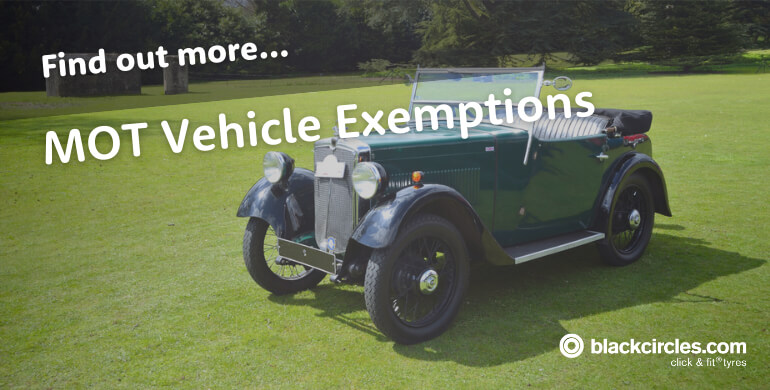
If you own a classic car or specialist vehicle, you may be exempt from needing an annual MOT. But that doesn’t mean you’re free from all responsibilities.
Let's breaks down everything you need to know about MOT exemptions in 2025.
Including which vehicles qualify, how to apply, and what you must do to stay legally compliant on UK roads.
| Vehicle Type | MOT Required? | Exemption Criteria | Declaration Required? |
|---|---|---|---|
| Cars under 3 years old | No | Automatically exempt until third anniversary of registration | No |
| Historic vehicles (40+ years old) | No | No substantial changes in past 30 years | Yes – complete V112 at tax renewal |
| Electric goods vehicles (pre-March 2015) | No | Fully electric and registered before 1 March 2015 | Yes – complete V112G |
| Agricultural tractors | No | Used for agriculture and road speeds below 25 mph | Yes – V112 form |
| Lorries, buses, trailers | Yes (annual vehicle test) | Subject to separate testing rules | Handled via operator licensing |

Vehicles over 40 years old are exempt from MOT testing, provided no substantial changes have been made in the past 30 years. This is a rolling exemption, based on the year of first registration.
Changes to the chassis, axles, steering, engine or suspension that significantly affect the vehicle's performance or safety would be classed as substantial. Paintwork, tyres, or interior updates do not count.
Light goods vehicles that are fully electric and registered before 1 March 2015 are exempt from MOT testing. This applies to commercial rather than passenger vehicles.
Agricultural tractors are exempt if they are only used for agriculture, horticulture, or forestry — and not used commercially at higher road speeds.
These vehicles are not MOT tested, but must pass an annual roadworthiness test - often referred to as the HGV or PSV test.
Even if your vehicle is eligible, you must formally declare the exemption when taxing your vehicle.
To do this, complete a V112 or V112G form and submit it at a Post Office branch that handles vehicle tax.
You’ll need your logbook (V5C), and possibly your tax renewal letter (V11).
MOT exemption does not mean you can drive an unsafe vehicle.
Your car must still meet the legal minimum for safety and roadworthiness.
Failure to maintain your vehicle could lead to a £2,500 fine and 3 penalty points.
Many owners of exempt vehicles still choose to get an MOT for peace of mind and to uncover safety issues early.
This can also be helpful if you are selling or insuring the vehicle.
MOT exemption and tax exemption are different. If your vehicle is historic (usually built before 1 January 1985), you may also qualify for zero vehicle tax.
This requires applying for the ‘Historic’ tax class through the DVLA.

MOT exemptions help reduce admin for owners of classic and specialised vehicles.
But keeping your car roadworthy is still your legal responsibility.
If in doubt, speak to a trusted mechanic or check the latest government guidance before declaring an exemption.

We love to hear from our customers. Connect with us today and let’s start a conversation.