
Join the conversation
We love to hear from our customers. Connect with us today and let’s start a conversation.
...searching
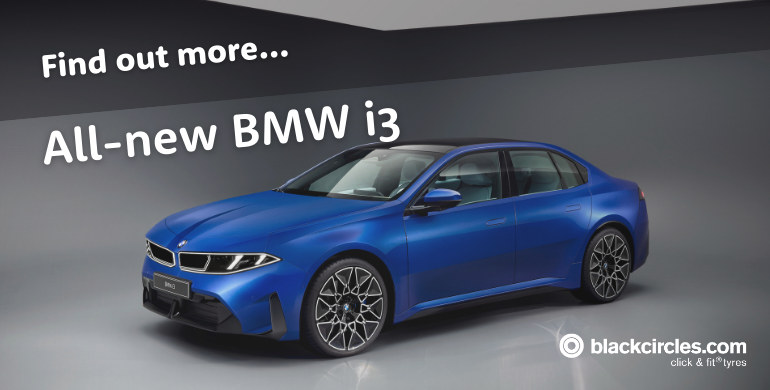
Meet the all-new, all-electric
BMW i3. Designed to take the
3 Series into the EV age, it marks a bold reinvention of one of BMW’s best-selling models.
Don’t be confused by the name, the new i3 isn’t a direct replacement for BMW’s discontinued electric supermini. Instead, it promises to be a fully electric 3 Series alternative. That means it’ll boast a next-gen platform, sleek styling, cutting edge battery technology, and much more.
But is it good enough to steal customers from the likes of
Tesla,
Polestar,
Audi and even nascent Chinese brands like
BYD? From price to performance, here’s everything you need to know about the 2026 BMW i3.
While the new i3 appears radically different to previous generations of 3 Series, look closely and you’ll spot several signature BMW design traits.
With its new 2.5-box silhouette, the new electric 3 Series looks most like a restyled version of the brand’s 2023 Neue Klasse concept car. However, BMW fans will notice trademark touches like the frontal kidney grilles and four-light “face”. Moreover, the slightly angled nose is said to echo ‘70s and ‘80s models like the 635 CSI.
Moving down the sides, the i3’s shape clearly subscribes to the Neue Klasse idea of simplification. Its proportions are defined by a stretched wheelbase and tightly cut overhangs, creating a silhouette that places the cabin slightly rearward and gives the car a balanced, athletic feel.
Meanwhile, the Hofmeister kink is still present in the rear three quarters but appears to be more subtlety integrated than before. At the back, the taillights are slimmer and more horizontally oriented, visually widening the car and contributing to a sleek, modern finish. Compared to previous 3 Series, the i3’s rear end looks particularly futuristic.
Ultimately, though, styling is subjective and whether you like or loathe the new 3 Series design comes down to personal preference.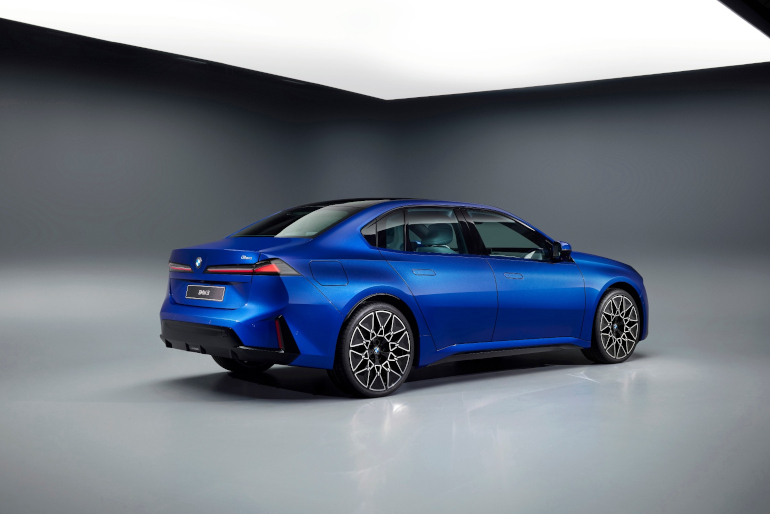
Inside, things look suitably space-age. Much of the design language — including the oblong shaped wheel with spokes at 12 and 6-o’clock — is shared with the new Ix3, which makes the i3 a nice place to sit.
Like the exterior, the cabin majors in minimalism. That means there’s a clean, open layout with fewer physical buttons and an emphasis on lightweight, recycled materials, including sustainable fabrics and leather-free options such as “Veganza,” alongside responsibly sourced trims. This design philosophy not only reduces environmental impact but also enhances the sense of space, aided by the absence of a traditional transmission tunnel and the use of large glass areas.
BMW also focuses on premium comfort, offering configurable seating, ambient lighting with multiple colour options, and high-quality finishes that maintain the brand’s luxury feel while presenting a distinctly modern aesthetic.
The new i3 represents a significant step forward in in-car technology, centred around BMW’s innovative “Panoramic iDrive” system. This setup replaces traditional dashboards with a wide projection across the base of the windscreen, working alongside a prominent 17.9-inch central touchscreen and an optional 3D head-up display to present key driving information in a more immersive way. Built on the latest BMW Operating System X and supported by far more powerful computing hardware, the system delivers faster responses and a smoother, more intuitive user experience.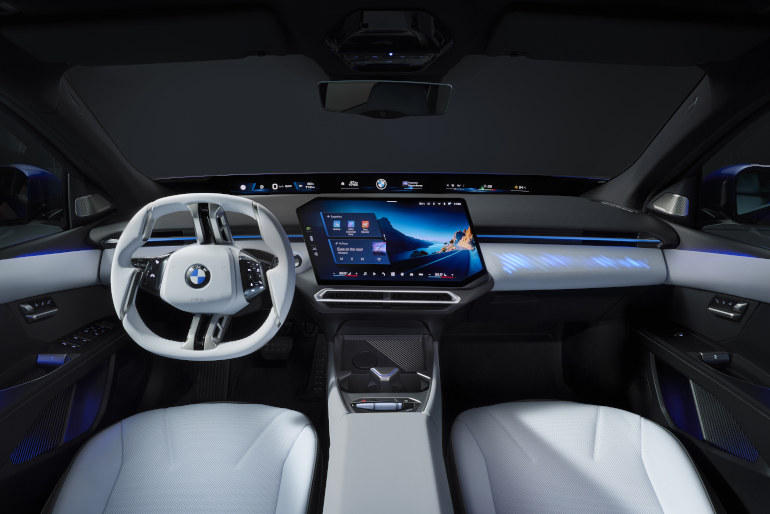
In addition, the i3 also benefits from voice commands powered by Amazon Alexa, augmented-reality navigation that overlays directions onto real-world views, and highly customisable display settings tailored to the driver’s preferences. There are even advanced driver-assistance features with Level 2 autonomy to take more of the stress out of driving longer journeys.
The i3’s new battery range is arguably its most crucial statistic. Thanks to the latest 6th-gen eDrive system and a new battery design with cylindrical cells, the 2026 i3 can achieve nearly to 560 miles on a full charge. This makes it one of the longest-range EVs currently on sale — a fact which should help it sell against the electric saloon competition.
The battery itself is expected to be around 108–109 kWh in capacity, paired with an 800-volt electrical architecture that enables ultra-fast charging speeds of up to 400 kW. Under ideal conditions, this means the i3 can recover well over 200 miles of range in as little as 10 minutes, making it far more practical for long-distance travel than other EVs on the market.
| Model | Driving range (Miles) |
|---|---|
| BMW i3 50 xDrive | 562 |
| Hyundai Ioniq 6 SE Long Range RWD | 338 |
| Tesla Model 3 Long Range (RWD) | 466 |
| Mercedes-Benz CLA 250+ Electric | 484 |
| Audi A6 Sportback e-tron Performance | 469 |
| KIA EV6 (RWD) | 361 |
| Polestar 2 Long Range (RWD) | 409 |
Despite not being an M-Performance product, the new all-electric 3 Series will boast a whopping 462 bhp from front and rear mounted motors. That means that even the launch i3 50 xDrive model should accelerate from 0-60 mph in under 5 seconds. And, as an EV, the instant torque delivery should make it feel even faster out on the open road.
However, those looking for the ultimate fast electric 3 Series will need to wait until new iM3 is revealed in 2027. With an expected power output of over 1000 bhp, the electrified M3 should be one of the quickest saloons on sale when it debuts in 2028.
| Model | Power (BHP) |
|---|---|
| BMW i3 50 xDrive | 462 |
| Hyundai Ioniq 6 SE Long Range RWD | 222 |
| Tesla Model 3 Long Range (RWD) | 310 |
| Mercedes-Benz CLA 250+ Electric | 268 |
| Audi A6 Sportback e-tron Performance (RWD) | 367 |
| KIA EV6 (RWD) | 225 |
| Polestar 2 Long Range (RWD) | 299 |
Nobody knows yet. The early signs are positive, though. Given the iX3 (the i3’s SUV sibling) has already been praised for its agility and well-judged suspension, the i3 stands a good chance of perpetuating the 3 Series’ fine handling reputation.
Though the new electric 3 Series will be heavy, a wide stance and low centre of gravity should stand it in good stead when it comes to driver engagement.
While there’s no official original equipment list yet, we noticed that BMW’s press car was wearing low-profile
Hankook’s Ventus S1 Evo 3 tyres in size 245/35 R21.
This makes sense given the Hankook’s versatile blend of dry and wet traction, though we wonder why BMW opted not to fit the EV-focused version the Ventus S1 Evo 3 — a tyre specifically designed to reduce road noise in luxury electric vehicles.
Buy Hankook Ventus S1 Evo 3 EV Tyres
| Model | Starting Price (£) |
|---|---|
| BMW i3 50 xDrive | 50,000 est. |
| Hyundai Ioniq 6 SE Long Range RWD | 47,050 |
| Tesla Model 3 Long Range (RWD) | 49,900 |
| Mercedes-Benz CLA 250+ Electric | 45,000 |
| Audi A6 Sportback e-tron Performance | 68,860 |
| KIA EV6 (RWD) | 44,795 |
| Polestar 2 Long Range (RWD) | 50,260 |

We love to hear from our customers. Connect with us today and let’s start a conversation.