
Join the conversation
We love to hear from our customers. Connect with us today and let’s start a conversation.
...searching


When owning a vehicle, you may receive a letter from either your car manufacturer or the DVSA with a recall notice.
While some are only advisory, recalls can be highlighted for serious defects that you should get seen to immediately.
If you’re a
Ford car owner, sporadic recall checks only help in making sure you haven’t missed a recent recall notice.
This Ford recall checker guide will help you understand what mass recalls have been carried out in recent times, with this article being updated throughout the year so you don’t miss a Ford recall in 2026.
A vehicle recall is issued when a manufacturer identifies a fault that could affect a car’s safety, reliability, or compliance with legal standards.
These defects may be discovered during routine testing, customer reports, or internal investigations.
Some recalls relate to relatively minor issues, such as software updates or component inspections, while others involve more serious safety concerns including seatbelts, braking systems, steering components, fuel systems, or high-voltage batteries.
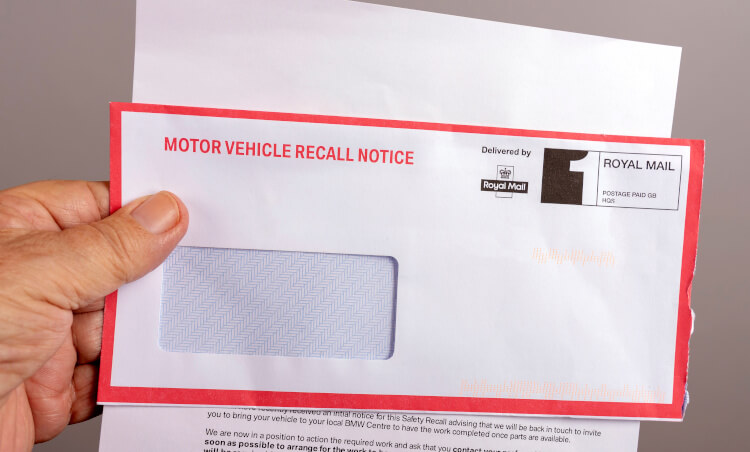
The urgency of a recall depends on the severity of the fault. In many cases, recalls are precautionary and do not mean you need to stop driving immediately. Instead, Ford will contact affected owners and arrange a free repair, replacement part, or software update to resolve the issue.
On the other hand, a
stop-drive recall will be issued if the defect can cause fatal danger to both the owner of the vehicle and others on the road.
In the UK, vehicle recalls are monitored by the Driver and Vehicle Standards Agency (DVSA). While the DVSA publishes recall information, Ford remains responsible for notifying owners and carrying out all recall-related repairs free of charge.
At the time of writing (26/01/2026), Ford has not issued any vehicle recalls affecting its UK passenger car or commercial vehicle range during 2026.
This section will be kept under review and updated should any Ford recalls be announced later in the year, helping drivers stay informed and avoid missing important safety notices.
Throughout 2025, Ford issued several recall notices affecting both passenger vehicles and commercial vans.
While some recalls were advisory in nature, others required more urgent attention depending on the potential safety risk involved.
Below, we highlight the most notable Ford recall activity from 2025.
In December 2025, Ford issued a recall affecting 7,421
Ford Mustang vehicles.
“Affected vehicles may experience corrosion that can weaken or detach the seatbelt anchor pretensioner cables for both front seats. A corroded pretensioner cable may not adequately restrain an occupant in the event of a collision, increasing the risk of injury.”
The recall applies to Ford Mustang models built between 18 October 2018 and 1 June 2021. Ford contacted registered keepers directly and arranged inspections and repairs where necessary.
Also in December 2025, Ford recalled 9,112 E-Transit vans due to a potential issue with the 12-volt battery system.
“On affected vehicles, the battery may vent gases unexpectedly. Drivers could notice warning signs such as an acid smell or a rotten egg odour inside the cabin, a hissing sound, or visible battery venting and heat in the front seat area.”
The recall applies to vehicles built between 9 December 2021 and 10 July 2025. Ford advised owners to follow recall guidance promptly to reduce the risk of further complications.
In November 2025, Ford issued a recall affecting 26,375
Ford Kuga vehicles.
“On affected models, the high-voltage battery may contain cells that could potentially develop a short circuit. This could trigger a “Stop Safely Now” warning message, lead to a loss of motive power, or result in battery thermal venting.”
The recall applies to Ford Kuga vehicles built between 7 August 2019 and 1 June 2022. Owners were advised to book their vehicles in for inspection and repair as soon as possible.

If you’re unsure whether your Ford has an outstanding recall, checking its status is quick and straightforward.
Ford owners can use the official Ford recall checker by entering their
VIN (Vehicle Identification Number) on Ford’s website.
This will show any open safety recalls, inspections, or software updates linked to your specific vehicle.
Alternatively, you can use the
GOV.UK recall checker, which allows you to search using your vehicle registration number. This tool displays all active recall notices recorded against your car by the DVSA.
If your Ford is listed under a recall – particularly one marked as urgent or stop-drive – it’s important to follow the instructions provided and arrange repairs as soon as possible. All recall-related work is carried out free of charge by Ford.
If you discover that your Ford has been recalled, the most important thing is to act promptly but not panic.
Recalls are issued as a precaution to prevent potential issues, not because every affected vehicle is already unsafe.
Ford or the DVSA will normally contact you directly with details of the recall and instructions on what to do next.
In most cases, you’ll be asked to book your vehicle into an approved garage for a free repair.
If the recall is classified as a stop-drive notice, you should avoid using the vehicle until the issue has been resolved.
Depending on the severity of the defect, Ford may recommend vehicle recovery rather than driving it to the repair centre.
Once the recall work has been completed, the DVSA record will be updated, and your Ford can be driven safely again.
Responding quickly helps ensure your vehicle remains safe, legally compliant, and ready for everyday use.

We love to hear from our customers. Connect with us today and let’s start a conversation.