What is a driverless car?
A driverless car (also known as a self-driving car or autonomous vehicle) is designed to operate without direct human control. Using artificial intelligence, sensors, and real-time data, it can navigate roads, follow traffic laws, and respond to changing conditions independently.
How do self-driving cars work?
Self-driving cars rely on a combination of AI software, mapping systems, and advanced sensors to interpret their surroundings and make driving decisions in real time.
They use:
- GPS for route planning
- Cameras to interpret the road environment
- Sensors to detect nearby objects
- AI systems to process data and react instantly
This enables the vehicle to steer, brake, and accelerate without human input.
What sensors do autonomous vehicles use?
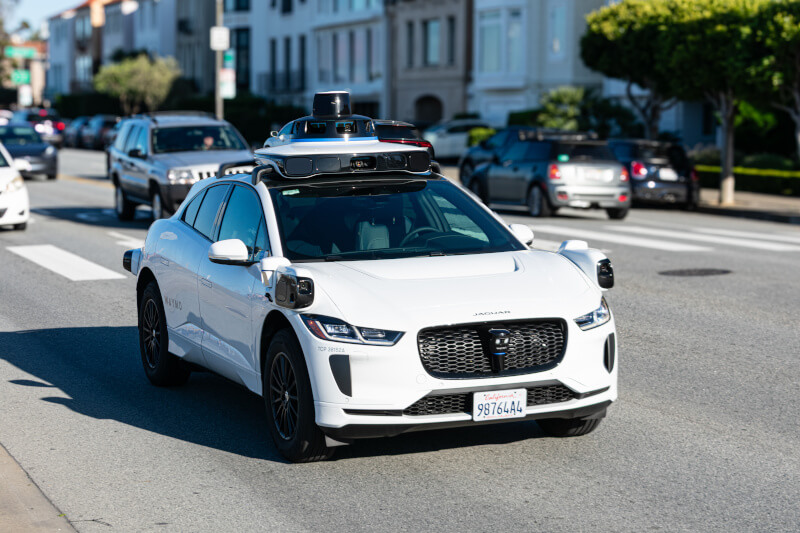
Autonomous vehicles typically combine several technologies:
- Cameras to recognise road signs, traffic lights, and lane markings
- Radar to measure the speed and distance of surrounding vehicles
- LiDAR to generate detailed 3D maps of the environment
- Ultrasonic sensors for short-range detection, such as parking
These systems work together to create a comprehensive understanding of the road.
Are there any driverless cars in the UK?
Driverless vehicles are already being tested on UK roads, although fully autonomous cars are not yet widely available.
The UK government has indicated that self-driving vehicles could begin appearing more broadly from 2026, supported by new legislation expected to be fully implemented by 2027.
However, widespread everyday use is more likely to happen gradually over the 2030s rather than immediately.
At present, most vehicles on UK roads offer partial automation, including:
- Adaptive cruise control
- Lane-keeping assistance
- Automatic emergency braking
According to Thatcham Research, automatic emergency braking systems alone can reduce rear-end collisions by up to 38%.
Are driverless cars safer than human drivers?
Driverless cars have the potential to significantly improve road safety.
Human error contributes to around 88% of road accidents, according to UK road safety data. Autonomous systems do not get tired, distracted, or impaired, which could reduce this risk.
However, there are still limitations:
- Difficulty interpreting unusual or complex scenarios
- Challenges in predicting human behaviour
- Performance issues in poor weather conditions
While early data is promising, autonomous vehicles are not yet proven to be safer than human drivers in all situations.
Levels of Self-Driving Cars Explained
Self-driving cars are classified into six levels of automation, ranging from no automation (Level 0) to fully autonomous vehicles that require no driver at all (Level 5).
| Level
| Name
| Who is in control?
| What the car can do
| Example features / use
|
|---|
| 0
| No automation
| Driver
| No control – may provide warnings only
| Collision alerts
|
| 1
| Driver assistance
| Driver
| Assists with one function (steering or speed)
| Cruise control
|
| 2
| Partial automation
| Driver (must monitor)
| Controls steering and speed at the same time
| Adaptive cruise control, lane centring
|
| 3
| Conditional automation
| Car (in certain conditions)
| Handles most driving tasks but may request takeover
| Traffic jam assist
|
| 4
| High automation
| Car (in specific areas)
| Fully self-driving in limited environments
| Robotaxis, geofenced driving
|
| 5
| Full automation
| Car
| Fully autonomous in all conditions
| No steering wheel required
|
The UK is currently at Level 2 automation, where the driver remains in control but is supported by advanced features. Level 3 systems are beginning to emerge, while Level 4 driverless vehicles are expected to be introduced through pilot schemes from 2026. Fully autonomous Level 5 cars are not yet available.
What are robotaxis?
Robotaxis are fully autonomous vehicles designed to operate as driverless taxi services.
Users can book a journey through an app and travel without a human driver. These services aim to reduce congestion, lower transport costs, and improve access to mobility.
Industry analysts suggest that robotaxis could significantly reduce private car ownership in urban areas over the coming decades.
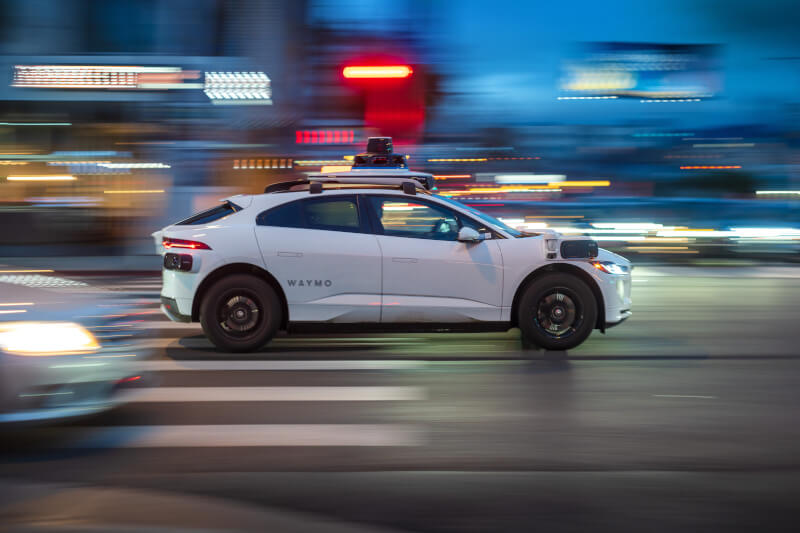
Waymo, the US driverless car firm, said it hopes to be operating a robotaxi service in London as soon as September this year.
What is Waymo and how does it work?
Waymo, part of Alphabet Inc. (better known as Google), is one of the most advanced developers of self-driving technology.
Key facts:
- Waymo vehicles have driven millions of miles on public roads autonomously
- The company operates fully driverless robotaxi services in parts of the United States
- Its systems rely heavily on LiDAR and detailed mapping
- Not available in the UK yet but plans to roll out by the end of 2026 (assuming regulations go ahead)
Waymo is often considered a leader in achieving high levels of autonomy, particularly Level 4 driving.
But they do have competitors in the likes of
Tesla .
What is Tesla Full Self-Driving (FSD)?
Tesla offers a system called Full Self-Driving (FSD), which provides advanced driver assistance features.
These include:
- Automatic lane changes
- Traffic light and sign recognition
- Navigation on urban roads
Despite the name,
Tesla’s FSD is not fully autonomous. Drivers must remain attentive and ready to take control at all times.
Is Tesla FSD approved in Europe?
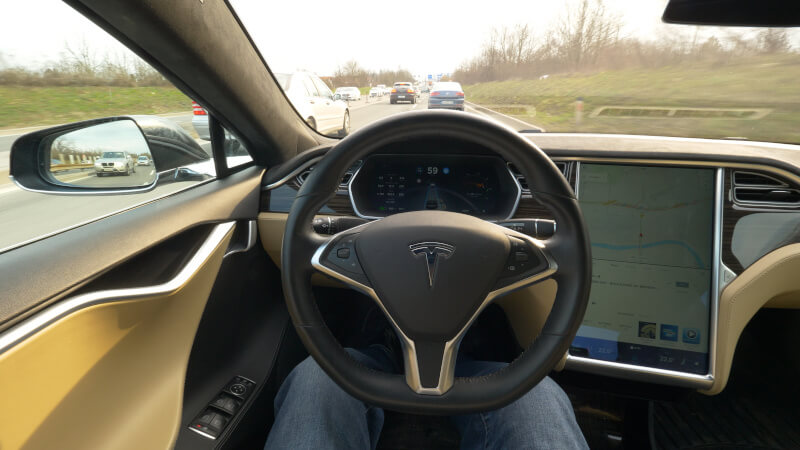
Tesla has begun rolling out its Full Self-Driving (FSD) technology in parts of Europe, with Netherlands among the first to approve in April 2026 limited use on public roads.
The system can handle steering, braking, and acceleration, but it still requires constant driver supervision. This means it is classed as driver assistance rather than fully autonomous driving, and the driver remains legally responsible at all times.
Will Tesla FSD be approved in the UK?
The UK is developing new rules for self-driving vehicles, including the Automated Vehicles Act 2024, which sets out how these systems can be approved.
Tesla’s FSD could be introduced in the UK in the future, but only if it meets strict safety standards. Any rollout is likely to be gradual, starting with limited or supervised use before becoming more widely available.
Can driverless cars drive in bad weather?
Adverse weather conditions remain a significant challenge.
Rain, fog, and snow can:
- Reduce visibility for cameras
- Interfere with sensor accuracy
- Obscure road markings
These limitations mean that human intervention may still be required in difficult conditions.
Can self-driving cars be hacked?
Autonomous vehicles rely on software and connectivity, which introduces cybersecurity risks.
Potential threats include:
- Unauthorised access to vehicle systems
- Data breaches
- Interference with navigation or control systems
Manufacturers are investing heavily in cybersecurity, but it remains an ongoing concern.
What happens if a driverless car crashes?
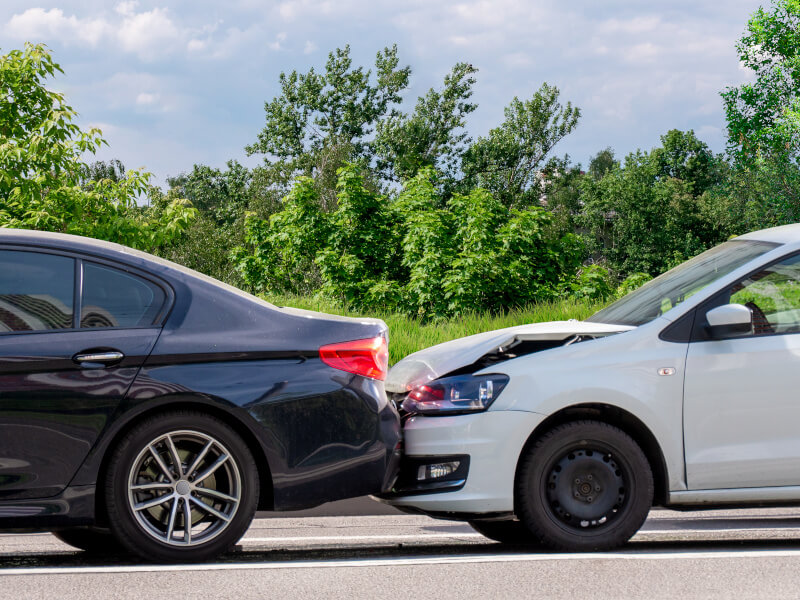
In the event of a crash, self-driving vehicles can record detailed operational data, including speed, system inputs, and environmental conditions.
This information is used to:
- Understand what happened
- Determine whether the system or driver was in control
- Support legal and insurance decisions
Who is responsible in a self-driving car accident?
Responsibility depends on the level of automation and who was in control at the time.
- If the driver was controlling the vehicle, they are typically responsible
- If the vehicle was operating in autonomous mode, liability may fall to:
- The manufacturer
- The software developer
- The insurer
UK legislation is evolving to reflect this shift, with increasing focus on product liability.
Do you need a driving licence for a driverless car?
At present, a driving licence is still required.
Drivers must:
- Be legally qualified to drive
- Remain ready to take control if the system requests it
Fully autonomous vehicles that do not require a driver are not yet available in the UK.
How much do autonomous cars cost?
There is currently no standard price for fully autonomous vehicles.
However:
- Cars with advanced driver-assistance systems tend to carry a premium
- Costs are expected to decrease as adoption increases
- Insurance costs may change depending on accident rates and liability models
What companies are leading in driverless technology?
Several major companies are investing heavily in autonomous driving:
Competition in driverless technology is intense, with car manufacturers and tech companies investing billions to create systems that are safe, scalable, and suitable for real-world use. Each is taking a different approach, particularly when it comes to sensors and software.
What are the risks of driverless cars?
Despite their potential benefits, autonomous vehicles present several risks:
- Over-reliance on automation
- Reduced driver engagement and slower reaction times
- Difficulty handling complex or unpredictable scenarios
- Cybersecurity vulnerabilities
- Legal and insurance uncertainty
Research from road safety organisations highlights that drivers may become less attentive when relying on automation, which could increase risk in situations requiring human intervention.
Will driverless cars replace human drivers?
Driverless cars are expected to change how people travel, but a complete replacement of human drivers is unlikely in the near future.
We are more likely to see:
- Growth in autonomous taxi ride-hailing services
- Reduced need for manual driving in urban areas
- Continued reliance on human drivers in complex or rural environments
Frequently Asked Questions
Can you sleep in a self-driving car?
No, not currently in the UK. Even with advanced driver assistance or limited self-driving features, the person in the driver’s seat must remain alert and ready to take control if needed. Sleeping would be considered unsafe and illegal under current laws.
Can driverless cars drive on motorways in the UK?
Yes, some systems can operate on motorways, but only under specific conditions. Certain Level 3 features, such as automated lane-keeping in slow traffic, are permitted in approved vehicles. However, a driver must still be present and ready to intervene.
What is the Automated Vehicles Act 2024?
The Automated Vehicles Act 2024 is UK legislation designed to regulate self-driving cars. It sets out how autonomous vehicles can be approved, who is responsible when they are in self-driving mode, and the safety standards they must meet. The aim is to ensure driverless cars are at least as safe as competent human drivers before widespread use.
What is a ‘user-in-charge’ in a self-driving car?
A ‘user-in-charge’ is the person responsible for the vehicle when it is not fully driving itself. When the car is in approved self-driving mode, the user-in-charge is not responsible for how it drives but must be ready to take control if the system requests it.
How do driverless cars handle roadworks?
Driverless cars rely on sensors, cameras, and real-time data to detect changes in road layout, including roadworks. However, temporary signs, cones, unusual lane changes, and
hazards such as potholes can be harder for systems to recognise and assess. As a result, human intervention may still be needed in more complex situations.
How do autonomous cars respond to emergency vehicles?
Autonomous vehicles are designed to detect emergency vehicles using sirens, lights, and movement patterns. They can slow down, pull over, or adjust their position accordingly. However, complex or unpredictable scenarios may still require a human driver to step in.
What happens if sensors fail in a driverless car?
If a sensor fails, the system is designed to either rely on backup sensors or safely reduce functionality. In many cases, the vehicle will alert the driver and request that they take control. Redundancy is built into most systems to minimise risk.
Will driverless cars reduce car insurance costs?
Potentially, yes. If autonomous vehicles reduce accidents—particularly those caused by human error—insurance premiums could decrease over time. However, new risks such as software faults and cybersecurity threats may also influence pricing.
Do driverless cars need servicing or maintenance?
Yes. Like any vehicle, driverless cars still require regular maintenance, including tyres, brakes, and servicing. In addition, their sensors and software systems may need updates and calibration to ensure safe operation.
Will driverless cars eliminate traffic jams?
Driverless cars could help reduce congestion by improving traffic flow and reducing stop-start driving. By communicating with each other and optimising routes, they may make journeys more efficient. However, they are unlikely to eliminate traffic entirely, especially in busy urban areas.