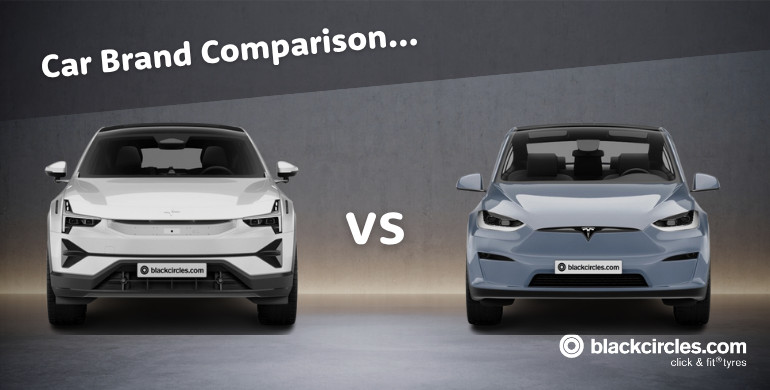
Tesla and
Polestar are both car manufacturers that are shaping the future of clean mobility.
Tesla remains one of the most recognisable names in the
EV space, but Polestar is steadily gaining ground with its premium Scandinavian design and ambitious rollout of new models.
In this comparative breakdown, we’ll outline the key differences between the two brands – comparing production figures, model ranges, pricing, and more – to help you understand how these two electric contenders measure up in today’s evolving EV landscape.
Tesla Overview
Tesla has become virtually synonymous with electric vehicles.
Founded in California in 2003, Tesla has grown into a global leader in battery-electric vehicle (BEV) manufacturing.
Known for sleek styling, fast acceleration, and industry-leading range, Tesla has also built a full energy ecosystem with software, solar, and battery products.
The brand’s core lineup consists of four all-electric models: the compact
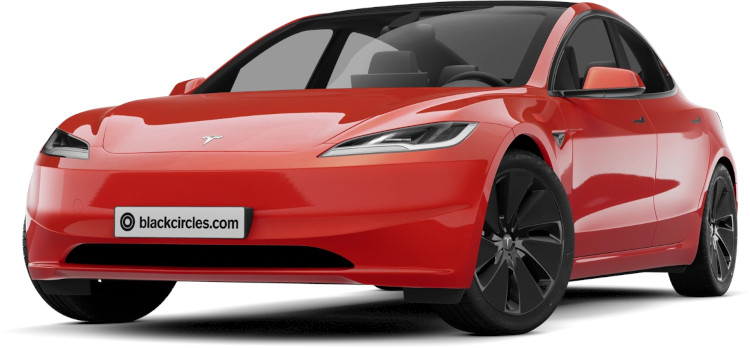
Model 3 saloon,
Model Y crossover SUV, luxury
Model S saloon, and
Model X large SUV. The Model 3 and Y represent the vast majority of Tesla sales worldwide.
Tesla continues to lead the premium EV market through innovations in range, software updates, and its exclusive Supercharger network.
Polestar Overview
Polestar is a Swedish car brand, but one that is quickly establishing its presence throughout the global hybrid and electric vehicle market.
Originally launched by Volvo, Polestar began with the limited-run Polestar 1 plug-in hybrid before transitioning to a full battery-electric lineup. Its production is largely based in China, with expansion into global markets now well underway.
Polestar’s current range includes the
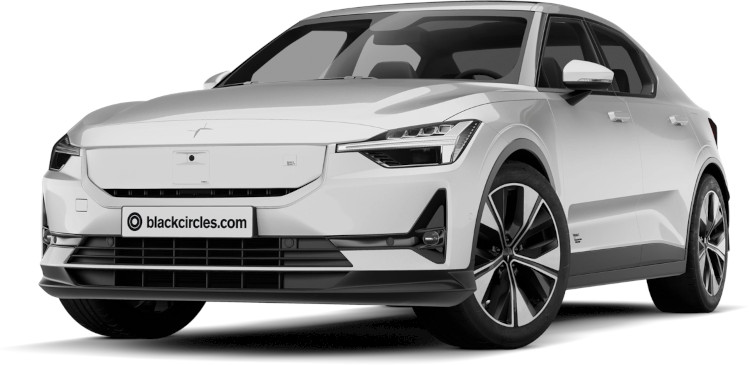
Polestar 2, 3, and 4. The brand places a strong emphasis on minimalist Scandinavian design, high interior quality, and a Google-integrated infotainment system.
Though smaller than Tesla, Polestar is gaining traction among buyers looking for distinctive, design-led electric alternatives.
Tesla vs Polestar: Who Leads in EV Production?
Tesla’s scale is unmatched in the BEV world – but Polestar has made impressive gains considering its size and shorter history.
Tesla: An Industry Giant
Tesla’s production ramp-up over the last five years has been drastic:
Year
Number of Vehicles Produced
2019
365,000
2020
509,000
2021
930,000
2022
1,370,000
2023
1,840,000
2024
1,770,000
Tesla’s Model 3 and Model Y continue to drive the bulk of its sales, with over 1.68 million units combined in 2024 alone.
While 2024 marked its first production dip in a decade, Tesla still leads globally in battery-electric vehicle output.
Polestar: Nimble but Growing
Polestar’s growth tells a different story:
Year
Number of Vehicles Produced
2019
3,000
2020
10,000
2021
29,000
2022
50,510
2023
52,798
2024
44,851
Polestar’s 2024 15% YoY dip reflects a slowdown ahead of new model launches.
While dwarfed by Tesla in scale, Polestar has grown significantly from its hybrid beginnings and is poised for renewed growth throughout new markets.
Production Summary
Tesla’s advantage lies in global reach, recognition, advanced manufacturing, and sheer volume.
Polestar, by contrast, remains small-sized but continues to expand, especially moving into numerous European markets by the early 2020s. With premium design and new models arriving, it’s positioning itself as a style-focused alternative to Tesla’s tech-first approach.
Tesla Model 3 vs Polestar 2
The Tesla Model 3 has become one of the most recognisable electric saloons in the world. It offers long range, sporty acceleration, and a minimalist cabin dominated by a central touchscreen.
Polestar’s answer is the Polestar 2 – a fastback EV that blends sharp styling with premium materials.
Key comparison points:
Model 3 range: up to 436 miles (WLTP)
Polestar 2 range: up to 405 miles (WLTP)
Both available in rear or dual-motor variants
While Tesla’s Model 3 benefits from the Supercharger network and wider brand recognition, the Polestar 2 delivers a compelling package for drivers seeking high quality interiors and less screen-centric controls.
Tesla Model Y vs Polestar 3 & 4
Tesla’s Model Y is a compact SUV built on the same platform as the Model 3. It offers strong performance, a spacious interior, and up to 331 miles of WLTP range.
Polestar now fields two SUV competitors:
The Polestar 3: a large luxury SUV with up to 438 miles of range (WLTP)
The Polestar 4: a sleeker coupe-style SUV with innovative design features such as no rear window
Tesla & Polestar Pricing: Which Offers Better Value?
Tesla targets the premium end of the mass market, while Polestar aims slightly further up, with more emphasis on design and interior refinement.
UK Pricing (As of August 2025):
Tesla Pricing
Car Model
Starting Price (UK)
Vehicle Type
Model 3
£39,990
Saloon
Model Y
£41,515
SUV / Crossover
Model S
£98,230
Saloon
Model X
£92,910
SUV
Polestar Pricing
Model
Starting Price (UK)
Vehicle Type
2
£30,205
Fastback (Hatchback / Saloon Crossover)
3
£37,705
SUV
4
£45,705
SUV / Crossover
Tesla continues to lead in value-for-money on paper, with lower starting prices and longer-standing market presence.
However, Polestar offers a fresh new design appeal for those looking to stand out in the premium EV space.
Final Thoughts
Tesla remains the dominant force in the EV world, with unmatched production scale, a vast charging network, and some of the best-selling electric models globally.
Polestar, while far smaller, is carving out a niche with stylish, well-built vehicles that appeal to design-conscious buyers.
If you value cutting-edge tech, acceleration, and access to a vast charging ecosystem, Tesla remains a top choice. If minimalist design, build quality, and a less mainstream alternative appeal more, Polestar is a brand worth watching.
Polestar began as Volvo’s performance division but is now an independent EV brand. It was created by Volvo and Geely, with Geely now owning the majority stake. Volvo retains a smaller share and continues to collaborate closely with Polestar.
Yes, many Tesla Superchargers in Europe are open to EVs with a CCS port, including the Polestar 2. Access requires the Tesla app, but not all Superchargers are available and cable positioning may be less convenient than with a Tesla.
Insurance costs vary, but Teslas usually fall into higher insurance groups than Polestar. The Polestar 2 is often slightly cheaper to insure than a Tesla Model 3, though both remain in relatively high groups compared to other EVs.
No, Polestar does not offer unlimited free charging. Instead, it provides an optional subscription called Polestar Charge, which gives access to thousands of UK charging points at discounted rates.
PayPal Credit and PayPal Pay in 3 are trading names of PayPal UK Ltd, 5 Fleet Place, London, United Kingdom, EC4M 7RD. Terms and conditions apply. Credit subject to status and approval, 18+ UK residents only. PayPal Credit and PayPal Pay in 3 are a form of credit, so carefully consider whether the purchase is affordable and how you will make the repayments. PayPal Pay in 3 is a credit agreement. See product terms for more details and FAQs. Learn more about PayPal Credit.Learn more about PayPal Pay in 3.