To cut straight to the chase, for those just looking for a quick answer, 3PMSF stands for three-peak mountain snowflake.
If a tyre carries that symbol, then it means it has passed a standardised winter performance test. It is classified in UK and European regulation as a tyre for use in severe snow conditions.
Three things follow from that, and they are the three things most people get wrong:
It is a test result, not a description.
It appears on both winter tyres and all-season tyres (but not all).
The performance it puts a number on is snow performance. Ice has a separate marking.
What Is The 3PMSF Symbol?
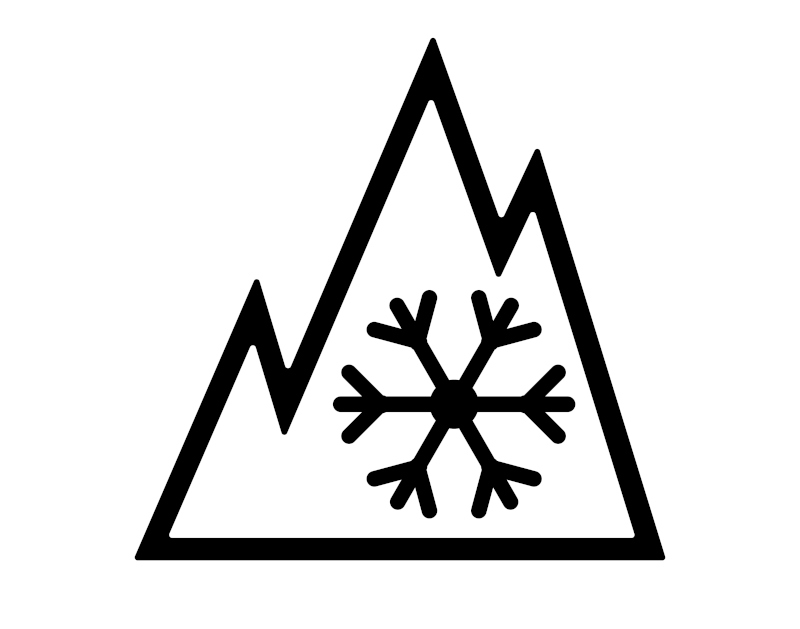
The marking is a small pictogram of a three-peaked mountain with a snowflake inside it. You can find it on a tyre, moulded into the sidewall.
This is written into UK law under Part D of Annex I to the tyre labelling regulation. It shows that the tyre has been tested for snow grip performance in accordance with Annex 7 to UNECE Regulation 117.
Ultimately, a tyre meeting the minimum snow grip index values is classified as a tyre for use in severe snow conditions.
In essence, the symbol is not a manufacturer's badge. A manufacturer cannot simply state that their tyres meet requirements. It is a regulatory classification with a defined test behind it.
M+S vs 3PMSF
You may see both markings. But they are not equivalents.
M+S
3PMSF
What it means
Mud and snow
Three-peak mountain snowflake
Basis
Tread pattern geometry
Measured snow performance
Test required
None
Yes, against a reference tyre
Who decides
The manufacturer
The test result
Appears on
Many tyres
Winter and some all-season tyres
The key – and perhaps main - point of difference is that a M+S classification is self-declared by a manufacturer.
They apply it to their own tyres on the basis of the tread pattern. No performance test is required.
The 3PMSF, on the other hand, is an earned accolade. The tyre is tested and must clear a numeric threshold.
How Does A Tyre Get 3PMSF Certification?
The tyre is tested on snow against a standard reference test tyre (SRTT). The performance of that tyre in the test is then expressed as a snow grip index. This is a ratio, where 1.00 would mean identical to the reference tyre.
Regulation 117 sets out three approved methods:
braking on snow
spin traction
acceleration
It is important to note that not all of these are applied to every class of tyre.
For passenger car tyres (C1), two apply, and each carries its own threshold. See below:
Test method
Reference tyre
Minimum snow grip index, C1
Braking on snow
SRTT14
1.07 — 7% better than the reference
Spin traction
SRTT14
1.10 — 10% better than the reference
Acceleration
—
Not applicable to C1
The acceleration method is used for heavy commercial tyres (C3) where the threshold is 1.25.
Van tyres (C2) are tested by spin traction at 1.10 or against a commercial reference tyre at 1.02.
The test itself is run on a prepared snow surface. With a hard-packed base that is 3cm thick with about 2cm of medium-packed snow on top. They also closely control the air temperature. Which needs to be between −2°C and −15°C.
What Does The 3PMSF Symbol Actually Measure?
The Annex 7 test is conducted on snow, and snow is the only thing it puts a number on.
It does not measure performance on ice, and it does not measure dry braking or handling.
Wet grip is a more interesting case. A severe snow tyre is not exempt from wet grip testing. Every C1 tyre needs a wet grip approval under the same regulation.
But a tyre classified for severe snow conditions is held to a lower minimum than a normal tyre:
Category of use (class C1)
Minimum wet grip index
Normal tyre
1.10
Snow tyre
1.10
Severe snow conditions, speed symbol R/H and above
1.00
Severe snow conditions, speed symbol Q or below
0.90
What Is The Ice Grip Tyre Symbol?
The same regulation provides for an ice grip pictogram on the tyre label. This is a mountain with an icicle rather than a snowflake.
To earn it, a tyre must record an ice grip index of 1.18 under
ISO 19447. 18% better ice braking than the standard reference test tyre.
It sits on top of 3PMSF, not instead of it.
It is restricted to passenger car tyres. The European Commission has confirmed that because ISO 19447 covers the C1 test method only.
In practice you will see it mostly on Nordic winter tyres. Where ice rather than snow is the most common winter condition.
Do All-Season Tyres Have The 3PMSF Symbol?
If you were to search the UNECE Regulation 117 and you will find four categories of use:
normal tyre
snow tyre
snow tyre for use in severe snow conditions
special use tyre.
“All-season”, “all-weather” and “four-season” aren't classified. They are ultimately descriptions.
What that means is that two tyres can both be sold as all-season – with one classified for severe snow conditions and the other not.
This is why the 3PMSF marking is the thing to check - rather than relying on the category name.
Michelin's UK CrossClimate range is a straightforward worked example. Every model in the range carries the 3PMSF.
All season tyres: designed to cope with various weather conditions and deliver a reliable performance throughout the different seasons.
EV approved tyres: electric vehicle (EV) tyres are a category of car tyre that has been developed by several manufacturers to meet the specific requirements of an electric vehicle.
The Michelin CrossClimate 3 Sport is a premium all-season tyre developed for sporty and high-performance vehicles, delivering sharp handling, outstanding control, and year-round safety.
3PMSF vs Summer Tyres: The Snow Braking Difference
Regulatory thresholds are abstract. Test figures put a number on them.
In
Auto Express's 2026 winter tyre test - carried out in partnership with Blackcircles.com - the best 3PMSF tyre on the test stopped from 25mph on snow in 18.7 metres.
The uncertified summer tyre ran a further 24 metres. Its snow traction measured less than a third, and its snow braking less than half, of the weakest 3PMSF tyre.
From twenty-five miles an hour - the gap was longer than the stopping distance itself.
Best All-Season Tyres For Snow
For most UK motorists in the market for all season tyres, the big question is which all-season tyre is genuinely capable when the weather turns.
To answer that, the best place to start is with the marking. If it does not carry 3PMSF, it has not been tested on snow.
Michelin CrossClimate: 3PMSF Across The Whole Range
Michelin's CrossClimate range is the most straightforward answer to all three of those tests.
All of these models are listed with the 3PMSF symbol.
Michelin attributes the range's cold-weather behaviour to a Thermal Adaptive Tread Compound, which the manufacturer says adjusts to changing road temperatures rather than being optimised for one end of the range.
Other All-Season Tyres With 3PMSF
Michelin is not the only credible option, and a shortlist is more useful than a single recommendation.
Tyre
Best suited to
3PMSF
Michelin CrossClimate 3
Cars and SUVs, widest size coverage
Yes
Michelin CrossClimate 3 Sport
Performance and higher-speed fitments
Yes
Continental AllSeasonContact 2
Broad range, strong value at entry sizes
Yes
Goodyear Vector All Season 4
Cars, SUVs and EVs
Yes
Bridgestone Turanza All Season 6
EV-ready fitments
Yes
Pirelli Scorpion All Season SF3
SUV-specific
Yes
Are All-Season Tyres Any Good On Ice?
Snow and ice are not the same problem. No all-season tyre currently sold in the UK carries the ice grip symbol. As set out above, that marking requires an ice grip index of 1.18 under ISO 19447, and in practice it appears on Nordic winter tyres.
An all-season tyre with 3PMSF has demonstrated snow capability. It has demonstrated nothing about ice, because it has not been tested for it.
That is not a reason to avoid all-seasons. Black ice is a hazard that beats most tyres. But if ice rather than snow is the defining feature of your winter a dedicated winter tyre is the specialist tool.
Are 3PMSF Or Winter Tyres A Legal UK Requirement?
Not in the UK. There is no requirement anywhere in the UK to fit winter or 3PMSF tyres at any time of year.
The Highway Code's rules on icy and snowy weather, rules 228 to 231, cover several points, but not a mandatory tyre type for driving in winter conditions. The rules cover:
Checking the forecast
Not travelling unless the journey is essential
Carrying an emergency kit
Clearing snow and ice from every window
Keeping well back because stopping distances can be ten times greater than on dry roads.
The only legal tyre requirement is tread depth, and it applies all year: 1.6mm across the central three-quarters of the tread, all the way round, under
Regulation 27 of the Road Vehicles (Construction and Use) Regulations 1986.
Frequently Asked Questions
What does 3PMSF stand for?
The actual name is Three-peak mountain snowflake. You may sometimes hear or read it referenced as the alpine symbol. It shows that a tyre has been approved for use in severe snow conditions.
What is the difference between M+S and 3PMSF?
M+S is self-declared by the manufacturer on the basis of the tread pattern. There is no test required. 3PMSF requires the tyre to pass a standardised snow test against a reference tyre.
Does 3PMSF mean a tyre is good on ice?
Not necessarily. The 3PMSF test is conducted on snow and measures nothing about ice. A separate ice grip symbol exists. However is only found on Nordic winter tyres.
Can an all-season tyre carry the 3PMSF symbol?
Yes and many do. An all-season tyre carrying 3PMSF has passed the same test as a winter tyre.
Are 3PMSF tyres a legal requirement in the UK?
No. There is no UK requirement to fit winter or 3PMSF tyres at any time of year. The only legal tyre requirement is a minimum tread depth of 1.6mm across the central three-quarters of the tread.
Do all Michelin CrossClimate tyres carry the 3PMSF marking?
Yes. Michelin lists every model in the UK CrossClimate range as carrying the 3PMSF accreditation.
Does the 3PMSF symbol appear on the tyre label as well as the sidewall?
Yes. The tyre label has a dedicated snow grip section, and a separate ice grip section, so a label may show neither marking, one, or both.
A note on our sources
The regulatory detail comes from the assimilated UK tyre labelling regulation on legislation.gov.uk, from the full published text of UNECE Regulation 117, and from the European Commission. Threshold figures, test methods and test conditions are taken from the Regulation itself rather than from secondary summaries. The legal position comes from the Highway Code and legislation.gov.uk.
Performance figures are from Auto Express's 2026 winter tyre test, published 2 September 2026 and carried out in partnership with Blackcircles.com. Manufacturer statements are labelled as such throughout.
PayPal Credit and PayPal Pay in 3 are trading names of PayPal UK Ltd, 5 Fleet Place, London, United Kingdom, EC4M 7RD. Terms and conditions apply. Credit subject to status and approval, 18+ UK residents only. PayPal Credit and PayPal Pay in 3 are a form of credit, so carefully consider whether the purchase is affordable and how you will make the repayments. PayPal Pay in 3 is a credit agreement. See product terms for more details and FAQs. Learn more about PayPal Credit.Learn more about PayPal Pay in 3.





![System.Func`2[BlackCircles.Interfaces.IECommerceModuleData,System.String]](https://images.blackcircles.com/search/feature-all-season.svg)
![System.Func`2[BlackCircles.Interfaces.IECommerceModuleData,System.String]](https://images.blackcircles.com/search/feature-ev.svg)


