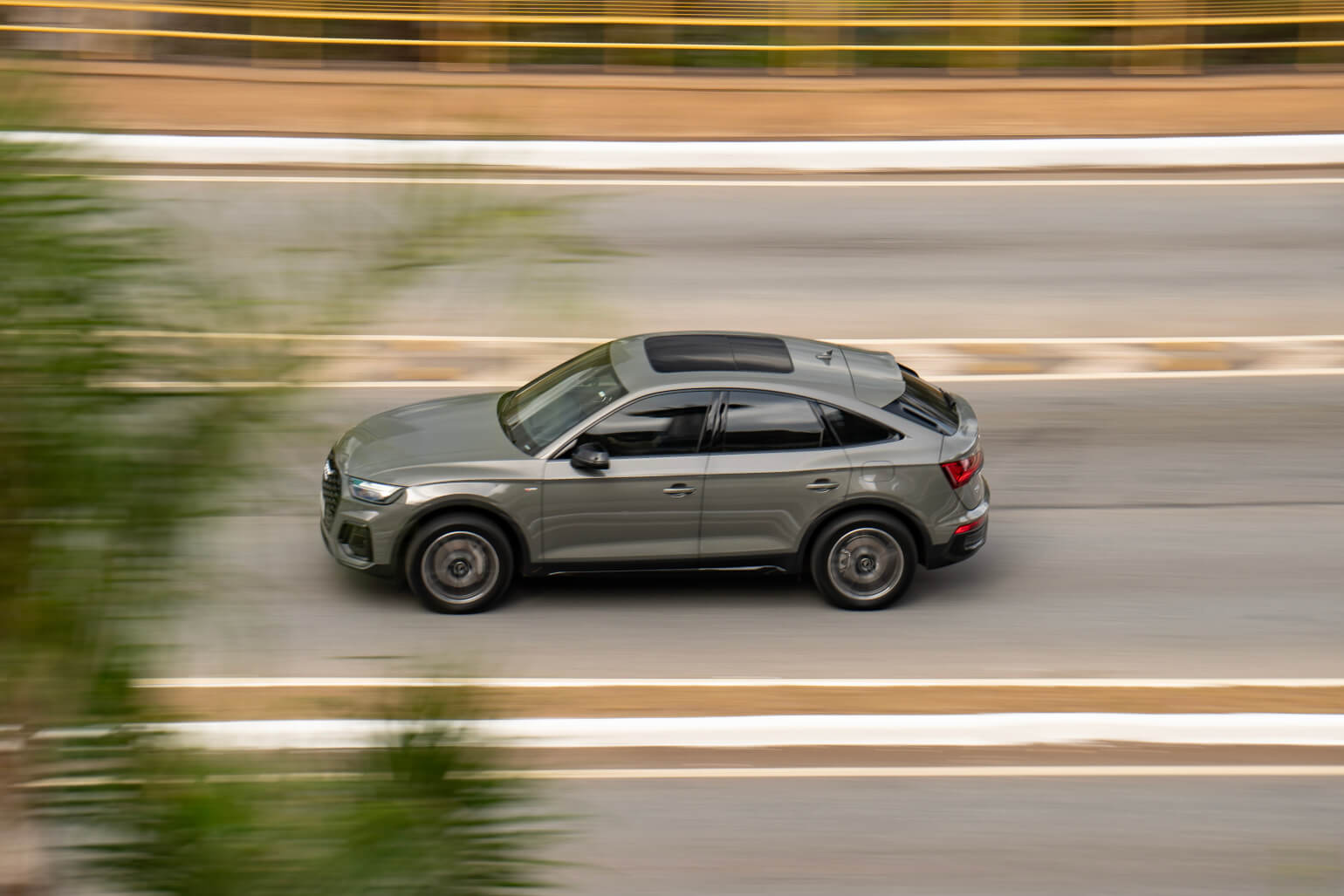
Staying up-to-date with the latest safety recalls is one of the best ways you can ensure your
Audi vehicle is kept in the safest and most reliable condition possible.
With issues ranging from faulty cameras to malfunctioning batteries, Audi models occasionally appear in DVSA recall notices and understanding what these recalls mean can help you act quickly if your car is affected.
This guide explains how recalls work, highlights Audi’s recall activity across recent years, and outlines how to check your own vehicle for outstanding safety notices.
Throughout 2026 and beyond, we will update this article with the latest Audi recalls, keeping you informed.
What Is a Vehicle Recall?
When a manufacturer identifies a safety defect or technical problem that is in need of correcting, they will issue what is known as a vehicle recall.
These issues can range from minor technical issues which don’t require immediate repairs to problems with the brakes, steering, airbags or structural components which can pose a risk to drivers.
Normally, most recalls do not require you to stop driving. Instead, the manufacturer will get in touch with instructions and provide a free repair, replacement, or software update to resolve the issue.
However, with the uptake in '
stop-drive' recalls, there are some that are urgent and require you not to drive under any/most circumstances: doing so can result in a driving fine.
For vehicle safety and public protection, the DVSA monitors the UK recall landscape to ensure that manufacturers adhere to strict safety standards. It is important to note, however, that while the DVSA provides the framework for these actions, Audi are the entity legally responsible for the logistics of the repair process.
This includes issuing official safety notices and ensuring that all remedial work is carried out by authorised technicians to restore the vehicle to its original safety specification.
Audi Car Recalls 2026: What Models Have Been Recalled This Year?
At the time of writing, Audi—as a wholly owned subsidiary of the Volkswagen Group—have just recently announced a significant recall for 2026.
Audi April 2026 Recall: Brake Booster Safety Defect
Audi issued a major global recall regarding a critical defect in the braking system.
A GOV.UK statement on the defect (Recall Number R/2026/168) declared:
On affected vehicles, the bolted connection for the push rod between the brake pedal and brake servo may come loose, with the risk that it will no longer be possible to stop by using the brake pedal.
The recall primarily impacts Audi’s flagship electric SUVs, specifically the
Audi e-tron (2019–2024), the Audi e-tron Sportback (2020–2024), and the newer
Q8 e-tron and Q8 e-tron Sportback models. Approximately 100,000 vehicles are affected worldwide, with an estimated 11,327 in the UK.
Audi Recalls 2025: Was My Model Recalled?
Throughout 2025, Audi had to announce various recalls on a range of models, covering issues such as short-circuiting, faulty chargers and incorrectly tightened screws.
Below, we’ve outlined the key Audi recall activity across the year:
- May 2025: Audi identified a potential fire risk in the
Q5 and
SQ5 (including Sportback variants) due to improperly tightened cylinder head cover screws. An estimated 89,417 vehicles were affected. If left unaddressed, oil could leak onto hot engine components, increasing the risk of engine fire. Manufactured dates range from 2022 to 2024.
- February 2025: A significant safety campaign was launched for the
e-tron GT and RS e-tron GT regarding high-voltage battery modules that could develop internal short circuits. Approximately 20,201 vehicles were involved. Audi advised owners to limit charging to 80% until a dealer could inspect and potentially replace the modules. Affected models include production years 2022 to 2024.
- February 2025: Audi recalled certain electric SUVs due to a faulty on-board charger (OCDC) that could fail and lead to a flat 12-volt battery, resulting in a sudden loss of drive power. An estimated 14,000 vehicles were affected, specifically the
Q4 e-tron and Q4 e-tron Sportback. Affected models were primarily from the 2024 and 2025 model years.
- January 2025: A voluntary recall was issued for various plug-in hybrid (PHEV) models to address software irregularities in the battery management system. Affected models included the A6 TFSI-e, A7 TFSI-e, and Q5 TFSI-e. This update was designed to improve the diagnostic capabilities of the high-voltage system for vehicles manufactured between 2020 and 2023.
Largest Audi Recalls Historically
While we’re highlighting the latest Audi recalls, let’s look at some of the most significant Audi recalls since records were made publicly available:
- October 2014: A global recall was issued for approximately 850,000 vehicles due to a software fault that could prevent the airbags from deploying in a crash. The recall primarily focused on the A4 saloon and Avant models. Manufactured dates range from 2013 to 2015.
- December 2021: A major defect was identified in the gateway control module located under the rear seat of the Q5 and SQ5. Liquid spills in the back seat could cause the module to short-circuit, causing the engine to enter an emergency limp home mode. Over 288,000 vehicles were affected in the US alone. Manufactured dates range from 2018 to 2022.
- November 2015: As part of the wider ‘Dieselgate’ scandal, Audi recalled thousands of vehicles fitted with V6 TDI engines that used defeat device software to bypass emission standards. Potentially over 60,000 Audi models were affected in specific waves, including the A6, A7, A8, and Q5. Manufactured dates range from 2009 to 2015.
- January 2026: A massive proactive recall in the U.S was issued for 356,649 vehicles due to faulty reversing camera software that could sporadically fail to display an image. This affected a wide range of premium models, including the Q7, Q8, A6, and e-tron quattro. Manufactured dates range from 2019 to 2026.
How to Check Your Audi Recall Status
If you’re unsure whether your Audi has any outstanding recalls, you can check your vehicle’s status quickly online.
Enter your vehicle’s VIN (Vehicle Identification Number) on the
official Audi UK website to see any open safety actions or required repairs. You can also use the
GOV.UK recall checker by entering your registration number, which will show all current recall notices issued for your car.
If your Audi is affected—particularly by a more urgent recall—make arrangements to book the repair as soon as possible. All recall-related fixes are carried out free of charge, helping you stay safe on the road and ensuring your vehicle continues to meet legal safety standards.
My Audi Car Has Been Recalled: What Next?
If your Audi is subject to a safety recall, there is no need to panic; recalls are a standard part of the automotive industry’s commitment to safety and proactive maintenance.
When a recall is officially launched, either Audi or the Driver and Vehicle Standards Agency (DVSA) will contact you via a formal letter. This will detail the specific defect and provide clear instructions.
In most cases, the process simply requires you to schedule an appointment with an authorised Audi repairer. Depending on the defect, the technician will perform a repair, install a replacement part, or deploy a software update.
If you receive a ‘Stop Drive’ notice, you must cease using the vehicle immediately. These are rare but serious; in such cases, Audi will typically arrange for the recovery of your vehicle to a workshop.
Under the UK’s safety recall framework, manufacturers are legally obligated to cover all costs associated with rectifying a safety-related defect. You will not have to pay for parts or labour.
Acting promptly ensures your Audi remains safe, compliant, and maintains its long-term value and reliability.