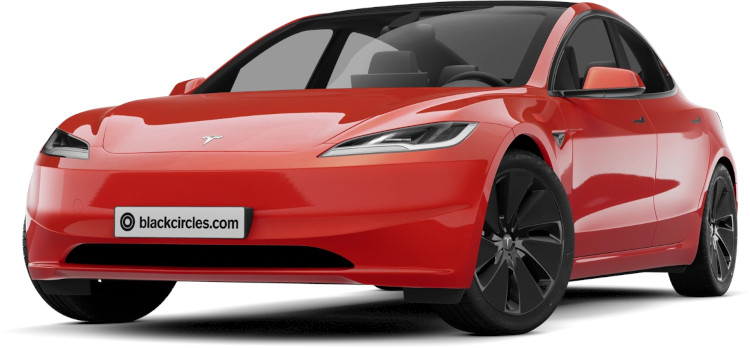
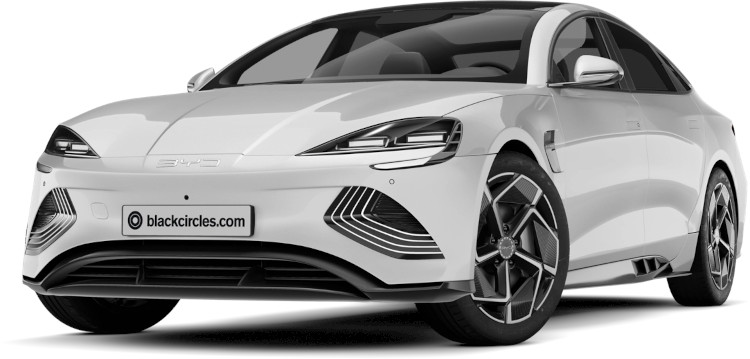
Tesla and
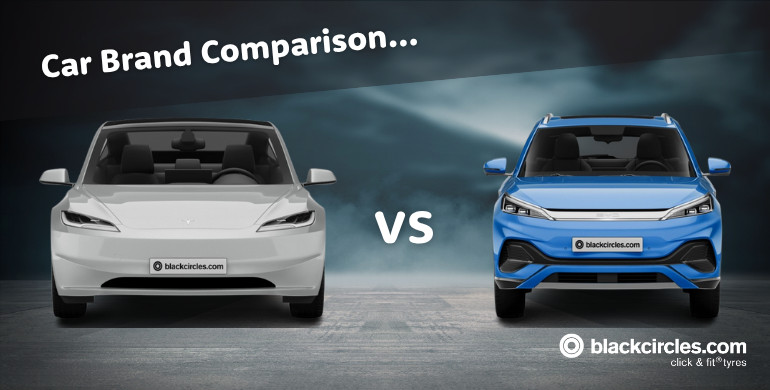
BYD are both EV exclusive brands that have been making waves within the automotive industry.
When thinking of electric car brands, Tesla is more than likely the first manufacturer that comes to mind, but with the impressive trajectory of BYD in the past five years, they may be looking to steal some thunder from Tesla in the coming years.
We will be comparing rivalling models, pricing, production, and more – giving you a clear breakdown of how these two electric giants stack up in today’s fast-evolving EV market.
Tesla Overview
Tesla is widely considered the face of modern
electric vehicle production.
Founded in California, the brand has built a reputation for pushing the boundaries of EV innovation – combining sleek design with cutting-edge technology.
All Tesla models are fully electric, with a strong focus on performance, range, and connectivity.
The
Model 3 and
Model Y have become particularly popular choices worldwide, while the
Model S and
Model X continue to represent the more luxury side of their lineup.
As one of the few EV-only manufacturers, Tesla continues to influence the direction of the entire industry – not just through its vehicles, but through its software, battery development, and energy ecosystem.
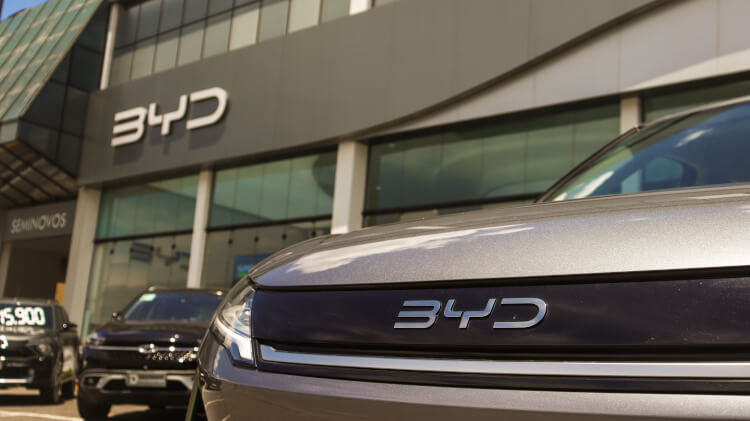
BYD (acronym for “Build Your Dreams”) may not be as well-known in the UK or US, but it’s a giant in China – and one of the fastest-growing EV brands globally.
Unlike Tesla, BYD builds plug-in hybrid vehicles as well as all-electric vehicles, offering a wide range of models at affordable prices.
Their unique Blade Battery has earned praise for safety and longevity, and their lineup includes everything from compact city cars to large electric SUVs and buses.
BYD’s rapid rise, especially in China and emerging markets, signals that they’re no longer a challenger brand – they’re a serious global contender.
The global electric vehicle (EV) market has evolved rapidly in recent years, with Tesla and BYD being right at the top of leading production in this market.
While both manufacturers have delivered major milestones, their strategies and growth patterns have taken very different turns.
Tesla: A Global Mammoth
Once the undisputed leader in EV production, Tesla saw years of strong growth:
In 2019, Tesla built around 365,000 vehicles.
That jumped to 930,000 by 2021, largely driven by the success of the Model 3 and new factories.
By 2023, Tesla had hit 1.85 million vehicles produced.
But 2024 marked a turning point:
Production dropped to around 1.77 million vehicles – the company’s first year-on-year decline in a decade. This slowdown is linked to factory upgrades and cooling demand in key markets.
Despite the dip, Tesla still leads in pure battery-electric vehicles (BEVs), staying ahead of competitors in the premium EV space.
BYD: Becoming a Production Powerhouse
BYD on the other hand, has grown leaps and bounds in their production:
BYD’s total vehicle production leapt from just 432,000 in 2020 to 747,000 in 2021.
In 2022, that figure soared to 1.88 million – followed by 3.05 million in 2023
By 2024, BYD produced 4.30 million vehicles – more than double Tesla’s output.
Much of BYD’s growth came from its strong plug-in hybrid (PHEV) lineup:
2024 PHEV production: approx. 2.5 million (up 73% year-on-year).
2024 BEV production: around 1.78 million – just edging past Tesla
Production Summary
Tesla focuses solely on battery-electric models, with a premium brand and global reach.
BYD, on the other hand, thrives on affordability and hybrid flexibility – especially in China where they are considerably the most popular EV brand. This is important to note, as BYD’s stronghold on the Chinese EV market ramps up their production volume significantly, while they have been recently breaking into other markets such as the UK and US.
The race is far from over, but for now, BYD holds the upper hand in volume, while Tesla holds the edge in global all-electric leadership.
Tesla Model 3 vs BYD Seal
The Tesla Model 3 has become a benchmark for mid-size electric saloons – offering long range, sleek styling, and impressive acceleration. It’s known for its minimalist interior and intuitive software, including Tesla’s signature central touchscreen and frequent over-the-air updates.
The BYD Seal is a direct competitor – and it’s gaining attention fast. With sharp styling, a high-quality cabin, and BYD’s Blade Battery technology, it positions itself as a premium EV without the premium price tag.
It also offers multiple variants, including performance versions that rival the Model 3’s acceleration.
Key comparison points:
Tesla Model 3 range: up to 390 miles (WLTP)
BYD Seal range: up to 354 miles (WLTP)
Both offer dual-motor AWD variants
If you’re looking for brand recognition and access to Tesla’s Supercharger network, the Model 3 still holds appeal – but the Seal offers serious value and performance at a lesser price.
Tesla Model Y vs BYD Atto 3
Tesla’s Model Y is one of the best-selling electric SUVs globally – known for its spacious design, smooth drive, and strong performance.
It shares a platform with the Model 3 but offers more room, making it ideal for families.
The
BYD Atto 3 is a smaller crossover, but it punches above its weight in terms of tech and value. Designed with European markets in mind, it comes well-equipped as standard and feels more playful in its styling.
Key comparison points:
Tesla Model Y range: up to 331 miles (WLTP)
BYD Atto 3 range: up to 260 miles (WLTP)
Atto 3 features a rotating infotainment screen and quirky interior design
Model Y offers more performance and cargo space, but at a higher price
While the Model Y leans into performance and minimalist luxury, the Atto 3 offers a practical and more budget-friendly alternative for new electric SUV/crossover drivers.
Tesla & BYD Pricing: Which is Cheaper?
Tesla are regarded as a mid-range/premium EV manufacturer, whereas BYD operate within the budget-to-mid-range market.
Brand new vehicle prices for key models from both car brands within the UK are as follows:
Tesla Pricing
Car Model
Starting Price (UK)
Vehicle Type
Model 3
£39,990
Saloon
Model Y
£41,515
SUV / Crossover
Model S
£98,230
Premium Saloon
Model X
£92,910
Premium SUV
BYD Pricing
Model
Starting Price (UK)
Vehicle Type
Dolphin
£30,205
Hatchback
Atto 3
£37,705
SUV / Crossover
Seal
£45,705
Saloon
Sealion
£47,000
SUV
Final Thoughts
When it comes to electric vehicles, both Tesla and BYD have carved out their own space, with each brand bringing something different to the table.
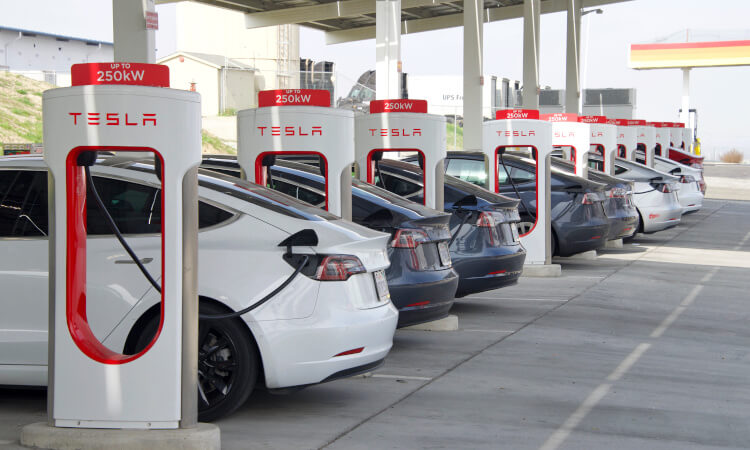
Tesla continues to lead in performance and innovation. With rapid acceleration, advanced tech features like Autopilot, and access to the Supercharger network, Tesla models are built for those who value speed, software, and a minimalist, futuristic design.
BYD, on the other hand, makes electric cars more accessible. Their vehicles are stylish, practical, and come packed with features at a lower starting price point compared to Tesla.
Whichever direction you go, both brands are helping to drive the EV market forward.
BYD cars offer premium interiors, generous equipment and strong value, while Tesla leads on range, charging speeds and software. In short, BYD suits buyers prioritising comfort and price, while Tesla is better for efficiency, performance and charging convenience.
Yes. Reviews of the Atto 3 SUV highlight its good range, smooth ride and well-equipped cabin. However, it lags behind rivals on charging speed, driving dynamics and interior quality. Reliability data is still limited, but BYD provides a long warranty and no major UK issues have been reported.
BYD keeps costs down by making its own batteries and components, using cheaper lithium-iron-phosphate cells, and building smaller, lower-range models. Tesla focuses more on high-performance cars, advanced software and its Supercharger network, which raises costs but improves the overall ownership experience.
Elon Musk once dismissed and mocked BYD's cars back in 2011, but now acknowledges them as a strong competitor. Reportedly, Elon Musk stated on a Tesla earnings call that BYD can “pretty much demolish most other car companies in the world” without tighter controls on global trade being established.
If current trends continue, BYD is likely to overtake Tesla’s year-to-date lead before the end of 2025. Tesla still has the advantage in overall brand recognition and earlier market presence, but BYD’s momentum is accelerating.
PayPal Credit and PayPal Pay in 3 are trading names of PayPal UK Ltd, 5 Fleet Place, London, United Kingdom, EC4M 7RD. Terms and conditions apply. Credit subject to status and approval, 18+ UK residents only. PayPal Credit and PayPal Pay in 3 are a form of credit, so carefully consider whether the purchase is affordable and how you will make the repayments. PayPal Pay in 3 is a credit agreement. See product terms for more details and FAQs. Learn more about PayPal Credit.Learn more about PayPal Pay in 3.