
Join the conversation
We love to hear from our customers. Connect with us today and let’s start a conversation.
...searching


If you've filled up at a UK forecourt any time in the last few years, you'll have noticed the pump handles marked "E10" and "E5". But plenty of drivers still aren't entirely sure what those labels actually mean, or why it matters which one they choose.
The short version: it's all about how much ethanol is blended into the fuel, and for most modern cars, it makes little practical difference. But for a meaningful minority of vehicles on UK roads, picking the wrong one over time really can cause problems.
Here's everything you need to know about E5 and E10 petrol, which one your car should be running on, and what happens if you get it wrong.
E10 is standard unleaded petrol blended with up to 10% bioethanol, a renewable fuel produced from crops such as wheat and sugar beet. Since 1 September 2021, E10 has been the default 95-octane "regular" unleaded sold across England, Scotland and Wales, with Northern Ireland following in November 2022.
The switch was a deliberate environmental measure. Because bioethanol is a renewable component rather than a fossil fuel, blending more of it into standard petrol lowers the overall carbon footprint of every tank sold. The change is estimated to cut UK transport CO2 emissions by roughly 750,000 tonnes a year. That’s comparable to removing around 350,000 cars from the road.
E5 is the fuel that E10 replaced as the UK's standard grade, and it still hasn't disappeared. E5 contains up to 5% ethanol, and today it's typically sold as the higher-octane "super" or premium unleaded grade (97+ octane), rather than as the everyday pump fuel.
So while E10 is now the default choice at most stations, E5 remains available for the drivers and vehicles that need it, just usually at a higher price per litre, and under a different name on the pump.
| E5 Petrol | E10 Petrol | |
| Ethanol content | Up to 5% | Up to 10% |
| Typical grade | Super/premium unleaded (97+ octane) | Standard unleaded (95 octane) |
| UK status | Now a niche, higher-cost option | Default pump fuel since 2021 |
| Vehicle compatibility | Suitable for all petrol engines | Suitable for roughly 95% of petrol vehicles |
| Typical price | A few pence more per litre | Usually the cheaper option |
If your car isn't listed as compatible, you'll need to stick with E5, sold as super unleaded, rather than the standard grade at the pump.
A single tank of E10 in a non-compatible car isn't something to panic about. One fill-up is very unlikely to cause any noticeable or lasting damage. Simply switch back to E5 super unleaded next time you refuel.
The real risk comes from sustained, regular use. Ethanol is a more aggressive solvent than pure petrol, and in vehicles built before the mid-1990s in particular, it can gradually degrade rubber seals, fuel lines, and certain plastic or composite components in the fuel system that weren't designed to tolerate it. Over time, this can lead to fuel leaks, blockages, or a car running poorly.
E5, by contrast, is safe to use in any petrol-engined car on sale in the UK, including modern E10-compatible vehicles. The only downside is cost: because it's now sold as the premium grade, E5 typically carries a price premium of around 10 to 15 pence per litre over E10.
Because ethanol contains less energy per litre than pure petrol, E10 delivers slightly lower fuel economy than E5. The Department for Transport puts the difference at around 1%, which most drivers won't notice in day-to-day use. It's a far smaller factor in real-world mpg than driving style, load, or
under-inflated tyres.
For most motorists, then, the marginally reduced efficiency of E10 is comfortably outweighed by its lower price at the pump and its environmental benefit.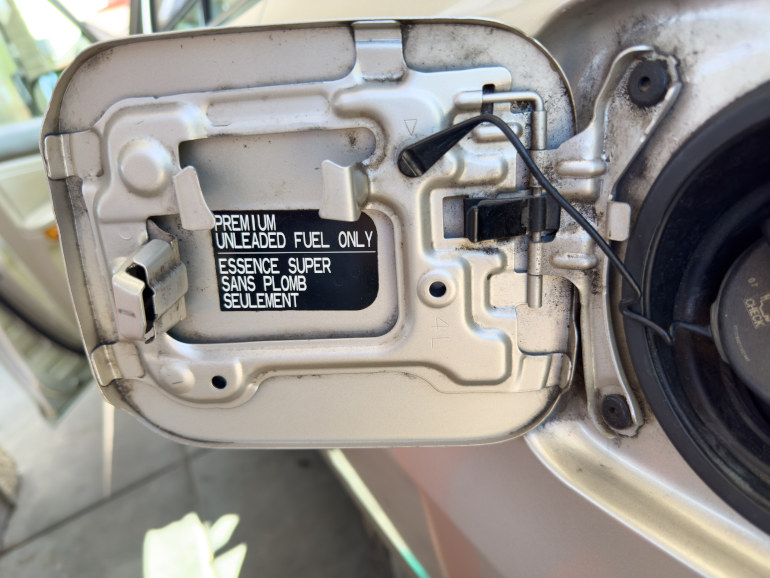
Owners of pre-2000s and classic vehicles need to take particular care. Many were built using materials (certain rubbers, cork gaskets, and early plastics) that simply weren't engineered with higher ethanol blends in mind. The government has committed to keeping E5 super unleaded available at UK forecourts for the benefit of this group, though its long-term availability will depend on ongoing demand.
Owners of carburettor-fed engines, in particular, are generally advised to avoid E10 altogether and stick with E5, alongside routinely checking fuel lines and seals for any signs of wear.
For the vast majority of UK drivers with a car built in the last decade or more, the answer is straightforward: use standard E10 unleaded. It's cheaper, better for the environment, and fully compatible with your vehicle.
If you're driving a pre-2011 petrol car, a motorcycle, or anything with a carburettor, it's worth taking two minutes to run your registration through the government's compatibility checker before you next fill up. If your vehicle isn't listed as compatible, opt for E5 super unleaded. Yes, it costs a little more, but it removes any risk to your fuel system altogether.
Whichever grade your car takes, keeping on top of routine maintenance, tyres included, will do far more for your fuel economy and running costs than the fuel grade alone.

We love to hear from our customers. Connect with us today and let’s start a conversation.