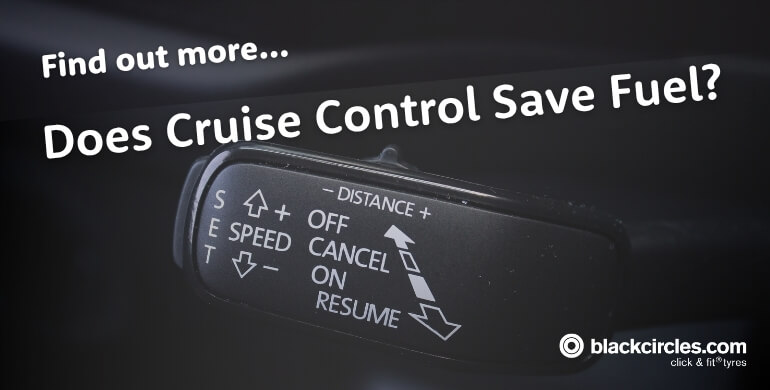
Used correctly on the right road, cruise control can reduce fuel consumption rather than increase it. However, it is not a magic wand when it comes to maximising your MPG, and any savings depend entirely on the road you're driving.
With fuel prices still squeezing household budgets, it's no surprise that drivers are looking closely at every habit behind the wheel that might be costing them money. That’s why the merits (and drawbacks) of cruise control are often debated when it comes to fuel economy.
In this guide we separate the myths from the evidence, drawing on independent testing and motoring body research to explain exactly how cruise control can affect your fuel bill, and how to use it more efficiently.
How Cruise Control Can Save Fuel
Conventional cruise control holds your car at a set speed, removing the need for your foot to constantly ease on and off the accelerator. This matters because the small, repeated bursts of acceleration a human driver naturally makes are a major efficiency loss.
Research from Natural Resources Canada found that holding a steady speed of around 50mph used roughly 20% less fuel than a car whose speed drifted between 47mph and 53mph every 18 seconds.
Independent road testing tells a similar story, if a slightly less dramatic one. A widely cited road test by the car research site Edmunds found fuel savings of up to 14% when cruise control was used, though the average benefit across various vehicles and conditions was closer to 7%.
Where Cruise Control Falls Short
On steeper gradients cruise control will apply larger throttle inputs than necessary to ensure the vehicle loses no momentum, forcing downshifts and a spike in engine revs. This burns more fuel than a human who accelerates gently uphill and lets speed roll on downhill. Most vehicle handbooks advise against relying on cruise control in hilly areas, heavy traffic, or on wet and winding roads.
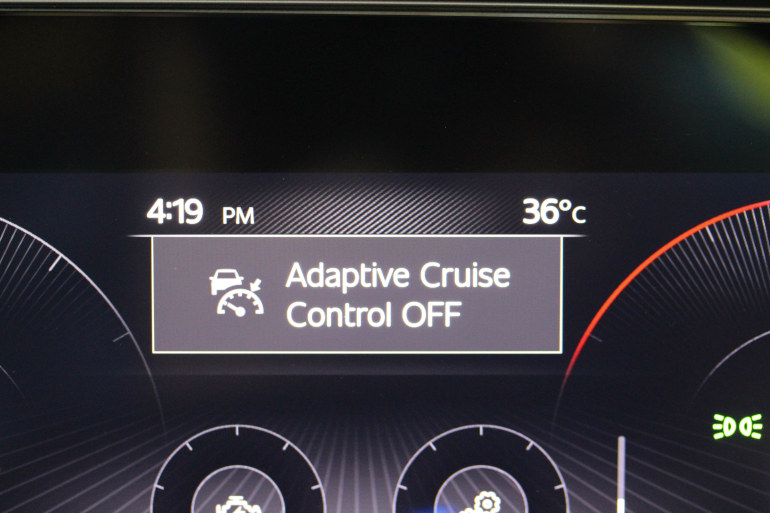
Adaptive cruise control (ACC) complicates the picture. A 2019 study from Volvo and the National Renewable Energy Laboratory suggested ACC could improve fuel economy by 5–7% compared with manual driving. However, a
comprehensive analysis published in Nature Communications found it tends to slightly increase overall fuel consumption in real-world driving. The research argues that it’s most beneficial in stop-start conditions, but worse at higher, steadier motorway speeds.
Cruise Control Fuel Impact by Road Type
| Road Type | Standard Cruise Control | Adaptive Cruise Control (ACC) |
| Flat, open motorway | Can improve fuel economy (7% average, up to 14%) | Can slightly increase consumption at steady, higher speeds |
| Hilly or undulating roads | Can use more fuel than manual driving | Similarly less effective on gradient changes |
| Stop-start / congested traffic | Not recommended by most manufacturers | Performs best here — can improve efficiency below 30mph |
| Wet, winding, or icy roads | Not recommended by most manufacturers | Not recommended by most manufacturers |
The Verdict on Fuel Savings
For most drivers on long, flat, open motorway stretches with light traffic, cruise control is likely to modestly improve fuel economy. On hilly, congested, or stop-start routes, it can just as easily use more fuel than driving manually with a light foot.
Ultimately, it’s worth keeping cruise control in perspective. While it can help shave a few percentage points off your fuel consumption in the right conditions, the most effective way to reduce how much fuel you use is simply to drive at a lower speed and keep your vehicle properly maintained. This includes monitoring your tyre pressures and ensuring your engine benefits from fresh filters and fluids to maximise its efficiency.
FAQs
Does cruise control use more fuel or less?
It depends on the road. On flat roads you might see a slight increase in economy, whereas on hilly or winding roads, cruise control can use more fuel.
Does adaptive cruise control save more fuel than standard cruise control?
Not necessarily. Volvo/NREL research suggested 5–7% savings, but a larger independent study in Nature Communications found ACC can slightly increase consumption at steady motorway speeds while performing better in stop-start traffic.
Why is cruise control less effective on hilly roads?
It applies extra throttle to hold speed uphill and brakes on the way down, burning more fuel than a driver who eases off naturally on the ascent.
Is it safe to use cruise control in traffic or bad weather?
No, cruise control is not recommended in heavy traffic, on wet or icy roads, or on winding routes.
Does cruise control save fuel on short journeys?
Not really, its benefit comes from sustained steady-speed stretches, so it has little to offer on short trips with frequent junctions.
Is cruise control bad for your car?
No, cruise control doesn't inherently damage your car. It doesn't cause excess wear on the engine, transmission, or brakes. If anything, by removing the jerky acceleration/deceleration a human foot naturally produces, it can reduce some of the small stresses on the drivetrain.
Can you use cruise control in the rain?
Using cruise control in light rain or drizzle is generally ok, though it's not advisable in heavier downpours or standing water as it can reduce the risk of aquaplaning.
At what speed should you use cruise control?
Best above roughly 30–40mph on flat, open roads. Conventional cruise control is generally not designed for built-up areas or low-speed, junction-heavy routes.