Whether you're buying a used car, dealing with an insurance claim, or simply trying to decode a vehicle history check, the UK's crash damage categories can feel bewildering at times. Cat A, Cat B, Cat N, Cat S… and how do the older Cat C and Cat D labels fit into the equation?
This guide breaks down every damage category, explains what changed in 2017 and why it matters, and looks at a new angle when it comes to insurance write-offs: how EVs are rewriting the rules on what counts as a write-off in the first place.
What Is a Car Write-Off?
A write-off (sometimes known as a total loss) is a vehicle that an insurer has deemed either too dangerous or uneconomical to repair. Though the threshold typically varies between insurers, it can be set as low as 50% of the car's pre-accident market value.
Once that decision is made, the car is given one of four damage categories. This category determines whether the vehicle can ever be put back on the road, be broken for parts, or must be destroyed. Crucially, this title remains on the vehicle's record permanently
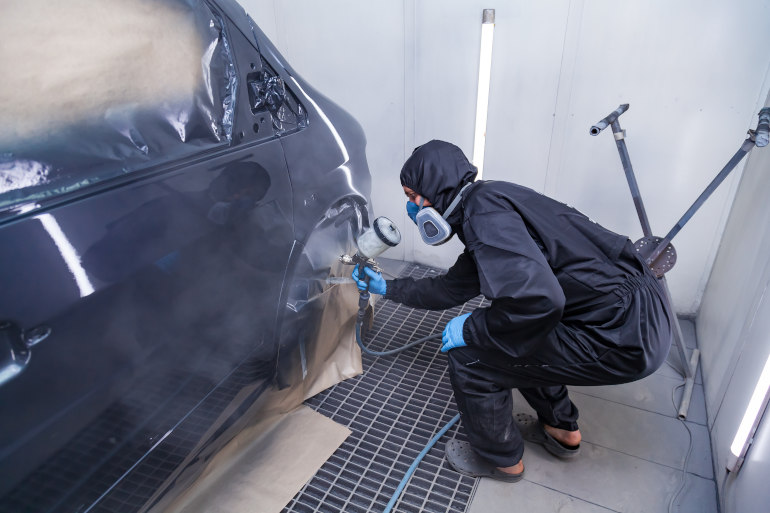
The Four UK Damage Categories
Category A: Scrap Only
Category A is the most serious damage category and represents vehicles so thoroughly damaged that not even salvageable components should find their way back into use.
While it might sound extreme to throw away potentially serviceable parts, Category A crashes are so severe that there’s no way to guarantee their safety. Whether it’s due to the violent g-forces involved in the crash itself, or the immense heat generated from a fire, all of a Cat A vehicle’s component may have been compromised.
You should never encounter a Cat A vehicle being legitimately advertised for sale. If you do, treat it as a serious red flag. Vehicle cloning — a practice where the identity of a legitimately scrapped car is given to a stolen vehicle — is one reason you might see a Category A car for sale. If you do spot such a vehicle advertised, you should avoid it and report the listing to the appropriate authorities.
Category B: Break for Parts
Category B vehicles have sustained damage severe enough to rule out any return to the road, but some parts can be removed and sold on before the bodyshell is crushed. Components like engines, gearboxes, seats, and wheels may be salvaged from a Category B write-off. The key distinction is that the vehicle’s structural shell must be permanently destroyed and cannot be repaired or re-registered.
Like Cat A, a Cat B vehicle should never be offered for sale as a driveable car. Only authorised dismantlers are legally permitted to handle them.
Category S: Structural Damage, Repairable
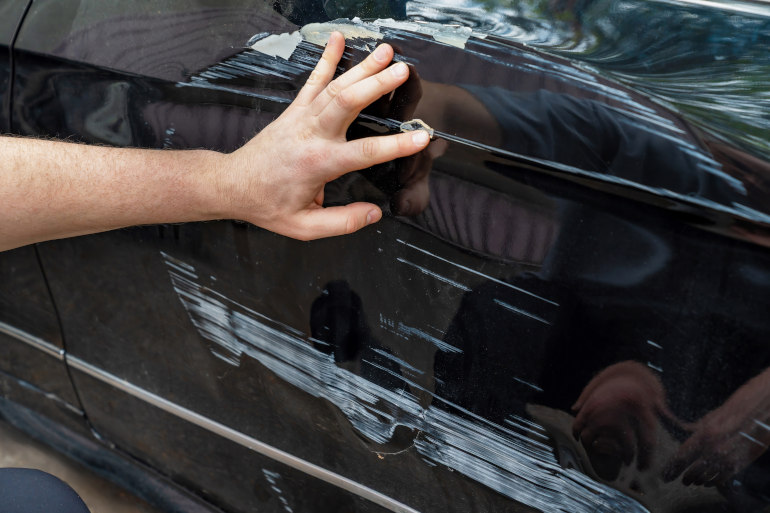
Category S is where things become more nuanced — and more relevant to most used car buyers. A Cat S write-off is a vehicle where the structural integrity has been compromised: think twisted chassis rails, deformed crumple zones, bent A-pillars, or a damaged subframe. However, while the insurer has decided that the repair costs outweigh the car's market value, the vehicle is not beyond professional repair.
Cat S cars can legally return to the road, but the DVLA must be notified and the vehicle re-registered before it can be driven again. The V5C logbook will be permanently marked with an 'S' to indicate salvage status, and any vehicle history check will flag it for life.
This makes Cat S the category that demands the most due diligence. Structural repairs carried out to a poor standard can leave a car that looks fine but behaves dangerously in a second collision, so it’s vital that you do your research when buying such a car. It’s always advisable to ask for any documented repair history, photos of the crash damage, and get an independent inspection to verify the integrity of any repairs.
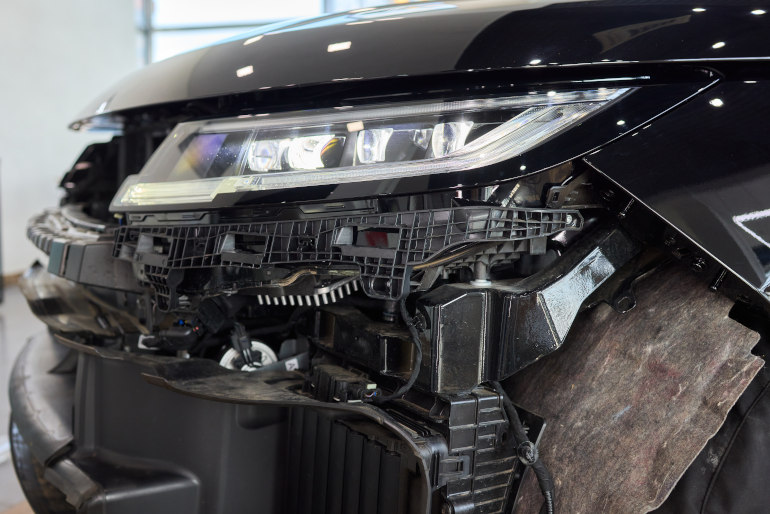
Category N: Non-Structural Damage, Repairable
Category N covers vehicles where the damage is significant and costly but doesn’t impact the car’s chassis or structural integrity. Examples of category N damage include badly dented or cut body panels, airbag deployment, electrical failures, and broken lighting assemblies. Particularly on cars with a lower market value, these seemingly minor issues can easily result in a Category N classification.
Unlike Cat S, a Cat N vehicle does not require re-registration with the DVLA before returning to the road though the insurer must still be informed and the write-off status will be permanently recorded against the vehicle. Cat N vehicles often represent a less risky buying proposition as their damage can be less safety critical. That said, insurers do note that even non-structural damage can affect components like steering geometry, suspension alignment, or braking systems, so there’s no automatic guarantee than a Cat N car is roadworthy.
The 2017 System Change: Why Cat C and Cat D Still Matter
But what about Categories C and D? You might have spotted vehicles advertised with these designations, and that’s because before October 2017 insurers used a different system. Prior to that date, there was a different four category system which used Cat A, B, C and D. While the most serious two categories remained (A and B), C and D were overhauled. Here’s what changed:
Category C (pre-October 2017)
Cat C cars are roughly equivalent to today's Cat S. It indicated that repair costs exceeded the vehicle's market value and that structural damage was often — though not always — involved. Like Cat S, Cat C vehicles could legally be repaired and returned to the road following DVLA notification and re-registration.
Category D (pre-October 2017)
Cat D was replaced by today's Cat N. It covered vehicles deemed uneconomical to repair, but without necessarily involving any structural damage. Category D was the mildest old classification and often involved surprisingly minor damage on older, lower-value cars.
While the Cat C and D terms are no longer used for newly damaged vehicles, any car that was given one of these titles will retain it for life. Their records will not be retrospectively updated to reflect the new system, so it’s good know what these older markers mean.
| Insurance damage category
| Nature of damage
|
|---|
| Category A
| - Severe structural, fire, or water. (Scrap only)
|
| Category B
| - Severe structural, fire, or water. (Can’t be repaired, but some parts may be reused)
|
| Category C (pre-2017)
| - Significant structural that can include fire or water. (Can be safely repaired and put back on the road)
|
| Category D (pre-2017)
| - Non-structural including cosmetic, electrical, etc. (Can be safely repaired and put back on the road)
|
| Category S
| - Significant structural that can include fire or water. (Can be repaired and safely put back on the road).
|
| Category N
| - Non-structural including cosmetic, electrical, etc. (Can be safely repaired and put back on the road)
|
Why are EVs different?
While EVs adhere to the same damage classifications as conventional combustion cars, they are often more frequently written-off by insurance companies. That’s because the current system wasn’t designed to accommodate the economics of electric vehicles.
So why is this? Firstly, the battery pack in a modern EV can account for between 30% and 50% of the vehicle's total value. This is important as even a relatively minor impact can damage an electric car’s battery, which can be enough to trigger a total replacement instead of a repair. This is one of the main reasons EV insurance premiums are often 25-50% greater than like-for-like petrol cars, according to figures from the Association of British Insurers.
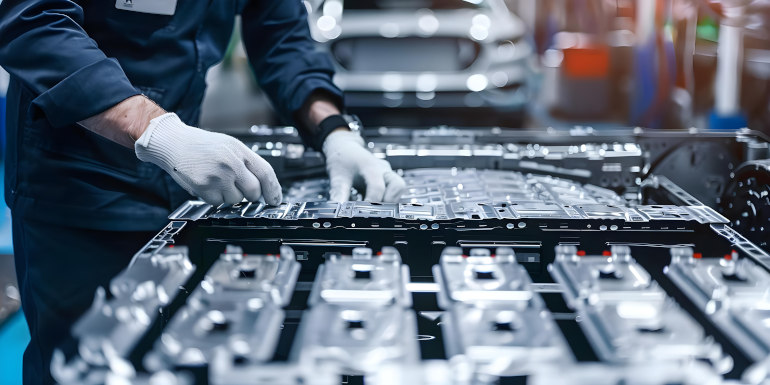
Further contributing to the problem, EVs often use specialised parts which are harder and more costly to source, and require specific qualified repairers to fit those components — driving labour prices up. Finally, damaged electric vehicles often require specialised storage to mitigate any further fire risk, adding cost and complexity to the repair process.
The result is a growing pattern of EVs being written off after accidents that would have produced a manageable Cat N or Cat S outcome on a petrol equivalent. A low-speed bump that might cost £1,500 to put right on a conventional car can quickly escalate to a total loss on an EV once battery diagnostics and potential replacement costs enter the equation.
This has a direct tyre implication too. EVs are significantly heavier than petrol equivalents due to their battery packs, and the instant torque they deliver accelerates tyre wear at a rate approximately 20–30% faster than on ICE vehicles. A written-off EV that has been hastily repaired and returned to the road may have had its suspension geometry or wheel alignment adjusted incorrectly, in turn causing greater or uneven tyre wear in the long run.
For this reason, if you're buying a Cat S or Cat N electric vehicle it’s worth checking the tyres are worn evenly across the entire contact patch.
How are Write-Off Decisions Made?
When your car is involved in an accident, your insurer will send an assessor to evaluate the damage. Their job is to calculate whether the estimated repair cost exceeds a certain percentage of the vehicle's pre-accident value, though the exact threshold varies between insurers.
If the car is deemed a total loss by the assessor, ownership legally transfers to the insurer, and you receive a settlement based on the vehicle's market value at the time of the accident. For Cat A and Cat B vehicles, you have no choice but to accept the settlement. For Cat S and Cat N vehicles, it's sometimes possible to buy the car back from the insurer at a reduced price. If you do opt to buy your car back, you'll need to factor in repair costs and how the new write-off title will affect its value when you come to sell.
Repairs on Cat S and Cat N vehicles should ideally follow manufacturer-approved methods or those endorsed by Thatcham Research, the UK's independent vehicle safety body funded by motor insurers. That said, a garage doesn't have to be on an insurer-approved network to carry out quality work. What matters most is that the work is performed to the right standard and fully documented.
Buying a Write-Off Car: Is It Worth It?
Buying a previously written-off car can be a good way of getting a newer or lower mileage example of the model you’re looking for within budget. That said, you must ensure all repairs were carried out to a high standard, and bear in mind that this lower price now reflects the car’s true value.
According to
car insurer First Central, previous write-offs are usually worth between 20 and 40% of their undamaged equivalents. So, it can be worth it if you understand the potential risks.
Pre-purchase Checklist for Insurance Write-offs
- Run a full vehicle history check. Services like HPI, the DVLA's own tools, and specialist providers search the Motor Insurance Anti-Fraud and Theft Register (MIAFTR) to surface any write-off markers, including legacy Cat C and Cat D entries.
- Check the V5C. The logbook of a written-off vehicle will be stamped with an 'S' to indicate salvage status.
- Commission an independent inspection. A qualified engineer can assess whether structural repairs have been carried out correctly.
- Review the full MOT history. The DVLA's free MOT history tool can reveal whether advisories or failures have pointed to ongoing structural or mechanical issues since a repair was carried out.
- Ask for documentation. Ideally, you want invoices, photographs, parts receipts, and a record of who carried out the repair and when.
- Check tyre condition and alignment. Collision damage — particularly front-end and corner impacts — can misalign wheels in ways that cause uneven, accelerated tyre wear. Even on a well-repaired Cat N car, it's worth checking tyre wear patterns for signs of toe, camber, or tracking issues before you buy.
UK Car Damage Categories: Frequently Asked Questions
What does Cat C mean on a car?
Cat C (Category C) was a UK insurance write-off classification used before October 2017. It indicated that repair costs exceeded the vehicle's market value and that structural damage was usually involved. It is the direct predecessor to today's Cat S category. Any vehicle written off as a Cat C before October 2017 will retain that marker permanently on its history record.
What does Cat S write-off mean?
A Cat S write-off is a vehicle where the structure — chassis, crumple zones, pillars — has been damaged in an accident to the point where an insurer considers repair uneconomical. Cat S vehicles can legally be repaired and returned to the road, but the DVLA must be notified, the car must be re-registered, and the Cat S status remains on the vehicle history forever.
Is it safe to buy a Cat N or Cat S car?
Both categories can represent sensible purchases if the repair work has been properly carried out and documented, and if the price reflects the write-off history. Cat N is generally lower risk, as it involves no structural damage. Cat S requires more careful scrutiny — an independent inspection by a qualified engineer is strongly advisable before buying.
What is the difference between Cat S and Cat N?
The key distinction is structural damage. Cat S involves damage to the car's structural components — the chassis, crumple zones, or main framework. Cat N covers non-structural damage: bodywork, electrics, airbags, mechanical components that don't form part of the structural skeleton. Cat S requires DVLA re-registration before the car can return to the road; Cat N does not.
Why are more cars being written off than before?
Modern cars are increasingly packed with sophisticated sensors, cameras, and driver assistance technology embedded in bumpers, windscreens, and bodywork. What looks like a minor scrape on the outside can trigger replacement costs for radar arrays, ADAS calibration, or structural adhesive-bonded panels that push repair bills above the write-off threshold.
Does a write-off affect insurance costs?
Yes. Cat S and Cat N vehicles typically attract higher insurance premiums, and some mainstream insurers may decline to cover them at all, requiring owners to use specialist providers. Expect premiums to be roughly 15–20% higher compared to an equivalent vehicle with no write-off marker.