Cold mornings, short journeys and a car full of electrics are exactly when a battery tends to give up. When it’s time for a new one, you’ll often find three options on offer: lead-acid, EFB and AGM. Pick the wrong one, and you could end up with a shorter battery life, warning lights or a start-stop system that stops working.
The short answer is to replace like for like and check your handbook first. Moving up a level (for example, EFB to AGM) is sometimes possible if the handbook or battery maker agrees, but don’t go down a level. We use ‘lead-acid’ to mean a conventional (or ‘standard’) battery, also called a flooded battery. AGM and EFB batteries are technically lead-acid batteries too, but they’re built differently.
What is the difference between AGM and EFB batteries?
AGM and EFB batteries are both designed for cars with start-stop systems, and AGM is the higher-spec, higher-cost option. Start-stop cars switch the engine off and on again at every set of lights, which puts much more strain on a battery than a conventional car does.
- AGM (absorbent glass mat): the electrolyte is held in glass fibre mats between the plates, so the battery is sealed and spill-resistant. It recharges quickly and copes well with heavy electrical demand and repeated starts. That’s why it’s often fitted to cars with more demanding start-stop systems, regenerative braking and lots of electrical equipment.
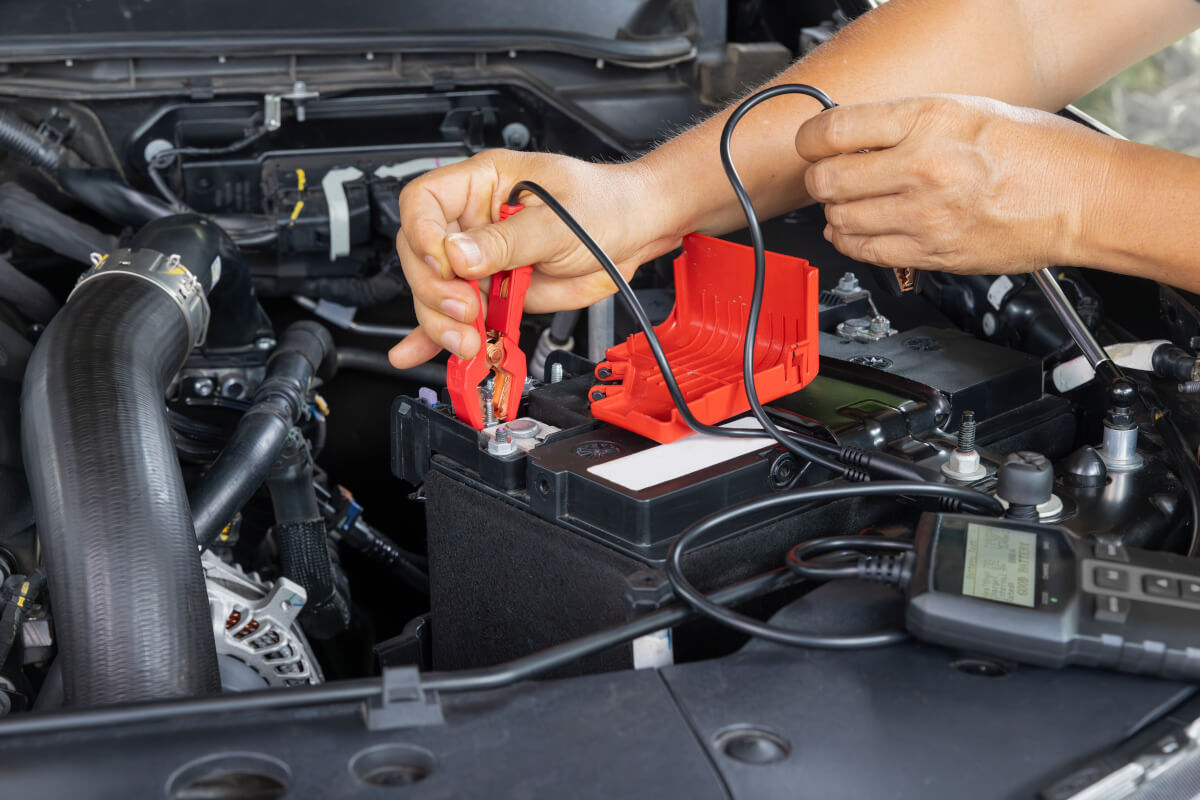
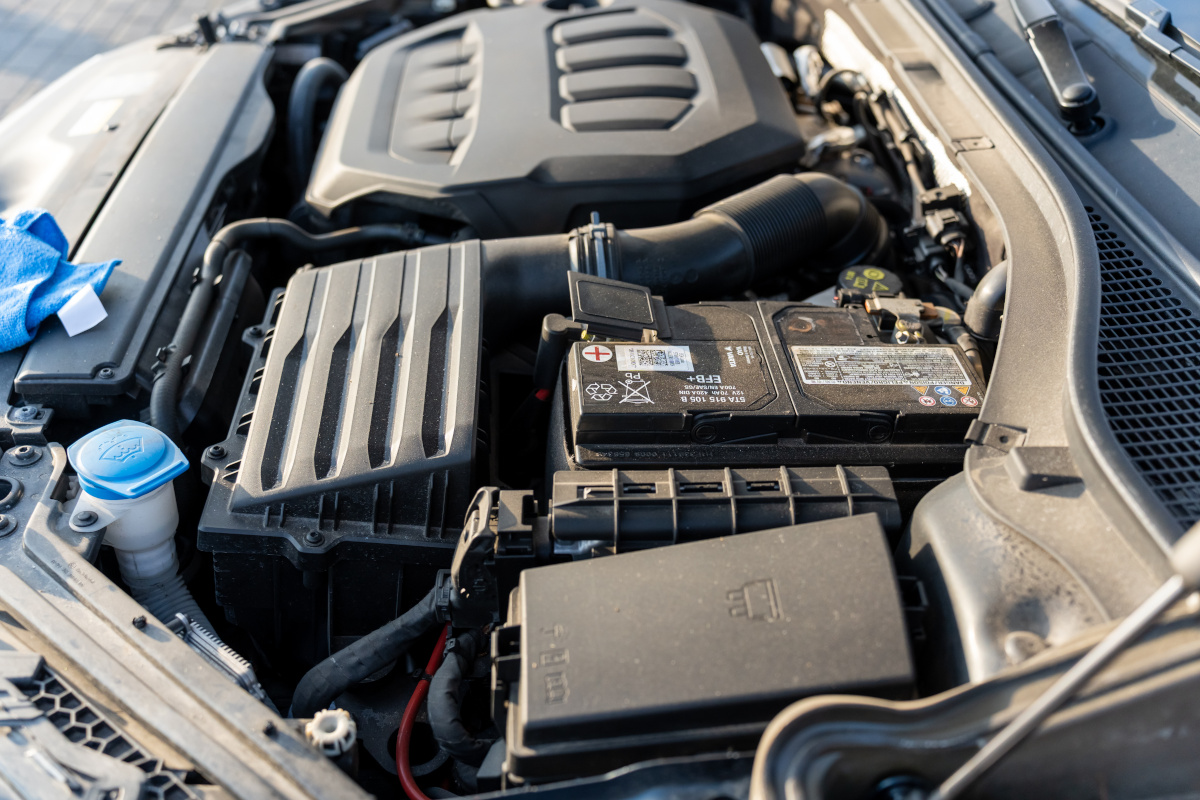
- EFB (enhanced flooded battery): an upgraded version of a conventional flooded battery, with a stronger internal construction to cope with frequent restarts. It still uses liquid electrolyte, and it’s typically used in cars with simpler, entry-level start-stop systems.
Here’s how the three types compare:
| Feature
| Lead-acid (flooded)
| EFB
| AGM
|
|---|
| Construction
| Liquid electrolyte
| Reinforced flooded design, still liquid electrolyte
| Electrolyte held in glass mats, sealed
|
| Typically used in
| Older cars without start-stop
| Cars with entry-level start-stop
| Cars with demanding start-stop, regenerative braking and lots of electrics
|
| Suits start-stop?
| No
| Yes
| Yes
|
| Charging
| Slowest to recharge
| Better charge acceptance than lead-acid
| Generally the best charge acceptance
|
| Relative cost
| Lowest
| Middle
| Highest
|
None of the three is ‘better’ in every case. The right one is whichever your car was designed to use, because the car’s charging system and start-stop software are set up around it.
How do AGM batteries differ from lead-acid (flooded) batteries?
A lead-acid battery is the traditional design and suits older cars without start-stop, while an AGM battery is built for heavier demands. ‘Standard’, ‘lead-acid’ and ‘flooded’ all describe the same thing: a conventional battery with liquid electrolyte.
Lead-acid batteries are the cheapest option and work well in cars without start-stop and with modest electrical demands. In a start-stop car, though, a conventional battery has to cope with constant restarts and frequent charging and discharging, which it isn’t designed for. It can wear out quickly, and the car may switch the start-stop system off altogether.
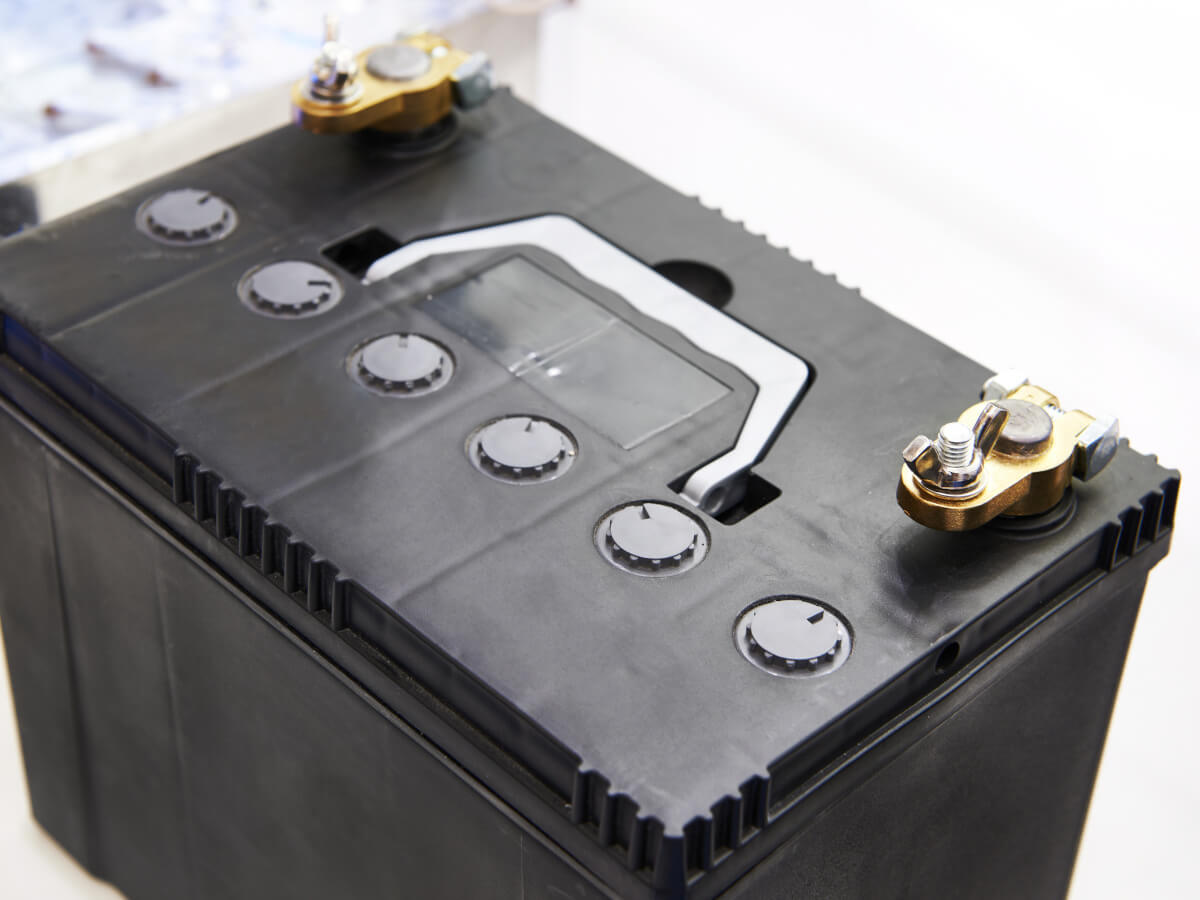
An AGM battery is sealed, spill-resistant and recharges faster, but it costs more.
Which type of battery does my car need?
Replace your battery like for like, with the same type the manufacturer fitted. That means matching the type as well as the size, capacity and terminal layout.
- Start-stop: cars with start-stop need an EFB or an AGM battery, depending on the model.
- No start-stop: older cars without start-stop usually take a conventional lead-acid battery.
- Heavy electrical demand: cars with regenerative braking or lots of electrical equipment often need an AGM battery.
- Hybrids and electric cars: these have a 12 V battery too, and it may be a different type. Check your handbook.
Your handbook is the best place to check. If you’re not sure, ask a garage.
How do I check which battery my car has?
Start with your handbook, which should list the battery type and specification. Then check the battery itself:
- Look for AGM or EFB: most AGM and EFB batteries say so on the label.
- Check whether your car has start-stop: if your car has it, it should have an EFB or AGM battery.
- Find the battery: it might be under the bonnet, but it can also be under a seat, in the boot or under the floor. Check the handbook before removing any covers.
- If you’re not sure, ask a garage: they can identify it and match a replacement.
Car batteries contain acid and can give off gas, so if you’re not comfortable working near one, leave it to a garage.
Can I swap one type of battery for another?
Sometimes, but the safe answer is to match what the car came with, and your handbook has the final word.
- EFB to AGM: this is often seen as an upgrade, because AGM is the higher-spec battery. Check with your handbook or the battery maker first, and ask whether the car needs coding.
- AGM to EFB or lead-acid: not advisable. A lower-spec battery may not cope with the car’s demands, which can shorten its life and affect start-stop.
- Lead-acid to AGM in a car without start-stop: possible, but it costs more and the car may not benefit. Check it’s suitable first.
Whichever type you choose, make sure the size, capacity and terminal layout match too.
What happens if I fit the wrong type of battery?
Fitting the wrong type of battery can shorten its life and cause problems with your car’s electrics. Depending on the car, you might see:
- A battery that wears out sooner than it should.
- A start-stop system that stops working, or warning lights on the dashboard.
- Charging problems, as the car’s charging system is set up for the battery type it was built with.
- Possible warranty issues. Check with the manufacturer or battery maker before fitting a different type.
Do AGM and EFB batteries need to be registered or coded?
Many modern cars do. These cars have a battery management system that monitors the battery and adjusts how it’s charged. When a new battery is fitted, the system may need to be told about it. This is called registering or coding the battery.
If it’s skipped, the car might not charge the new battery correctly, which can shorten its life or affect start-stop. Not every car needs it, so check your handbook. Registering a battery usually needs a diagnostic tool, so it’s often a job for a garage. Let them know which type of battery you’re fitting.
Which battery type copes best with cold UK weather?
No battery type is immune to the cold, and the best one is the type your car was designed to use, in good condition. Cold weather makes things harder in a few ways. A battery delivers less power when it’s cold, while the engine needs more to turn over. Heaters, lights and heated screens add to the load, and short trips don’t give the car time to recharge the battery.
AGM and EFB batteries are generally built to cope better with demanding use than conventional ones, but cold weather performance varies between models. Look at the battery’s cold cranking amps (CCA) rating, which shows how much power it can deliver for starting in cold conditions. Match it to what your car needs.
Watch for the warning signs:
- Slow or sluggish starting.
- Dim headlights or interior lights when you start the engine.
- Start-stop that stops working.
- The battery warning light on the dashboard.
- Needing a jump start.
If you spot any of these, get the battery tested before the cold snap arrives.
How long do AGM, EFB and lead-acid batteries last?
How long a car battery lasts depends on the type, its quality and how you use the car. AGM and EFB batteries are built for heavier use than conventional ones. Whatever the type, a battery wears out faster with lots of short journeys, extreme temperatures, heavy electrical loads and long spells of sitting unused.
Are AGM batteries worth the extra cost?
If your car was built for an AGM battery, yes. A cheaper type isn’t a good idea. If your car came with a conventional lead-acid battery and has no start-stop, an AGM usually isn’t necessary.
The pros of AGM
- Designed for heavy electrical demand and frequent restarts.
- Sealed and spill-resistant.
- Recharges quickly.
The cons of AGM
- Costs more than EFB or lead-acid.
- Needs a charger suited to AGM batteries.
- May need registering or coding when it’s fitted.
As always, match the battery to your car.
Keep your car winter-ready with Blackcircles.com
Whichever battery your car has, it pays to check it before winter bites. Match the type to your handbook, don’t swap to a lower spec, and have the battery tested if the car is struggling to start.
If you’re not sure about your battery, a service is a good time to ask your garage about it. You can book a
car service with Blackcircles.com, including
EV service and
hybrid service options, at a local garage.
While you’re getting ready for winter, check your tyres too. Cold, wet roads put grip to the test, so look at your tread depth and pressures, and consider
winter tyres if the weather turns rough. Find tyres from leading brands at Blackcircles.com, with fitting at a garage near you.
Need new car tyres?
Enter your registration and postcode and we’ll show you the best tyres for your vehicle
AGM vs EFB battery FAQs
What is the difference between AGM and EFB batteries?
Both are built for cars with start-stop. AGM batteries hold the electrolyte in glass mats, so they’re sealed and recharge quickly, and they cost more. EFB batteries are an upgraded flooded design for simpler start-stop systems.
Is an AGM battery better than an EFB battery?
AGM is the higher-spec battery, but better depends on your car. Use the type it was designed for, as its charging system and start-stop are set up around it.
Can I put an AGM battery in a car that came with an EFB?
It’s often seen as an upgrade, but check your handbook or the battery maker first. The car may need coding.
Can I fit a lead-acid battery in a start-stop car?
It isn’t advisable. A conventional battery isn’t designed for constant restarts, so it can wear out quickly and the start-stop system may stop working.
How do I know if my car battery is AGM or EFB?
Check your handbook first, then the label on the battery, which usually says AGM or EFB. If you’re still not sure, ask a garage.
Do I need to code or register a new AGM battery?
Many modern cars do, so the car charges the new battery correctly. Check your handbook. It usually needs a diagnostic tool, so it’s often a garage job.
Do AGM and EFB batteries need a special charger?
Use a charger that’s suitable for the battery type. Check the charger and battery instructions before you connect anything.
How long does an AGM battery last compared with EFB and lead-acid?
There’s no single figure, as it depends on the battery’s make and range, how you drive, the climate and the electrical load. AGM and EFB batteries are built for heavier use than lead-acid, so check the manufacturer’s stated life and warranty for the one you’re buying.
Are AGM batteries worth the extra money?
If your car was built for AGM, yes, as a cheaper type can cause problems. If it came with a conventional battery and has no start-stop, you probably don’t need one.
Which type of car battery is best in cold weather?
There’s no single winner. The best one is the type your car was designed for, in good condition. Check the cold cranking amps (CCA) rating and get your battery tested before the cold snap.