
The journey of a tyre, from raw material to end-of-life, is increasingly being viewed through a lens of sustainability. Manufacturers are actively investing in innovative ways to reduce their environmental impact. But what can we do as drivers to improve the sustainability of our cars’ tyres and what happens when the rubber needs replacing?
Here we dig into the three key stages of a tyre lifecycle:
1. Crafting a greener footprint: the science behind sustainable tyre development
The first stage to improve tyres’ sustainability seems obvious: it’s in the creation. Leading manufacturers are committing to greener practices, focusing on a circular approach that benefits us all. This involves looking at how tyres are made and used, focusing on sustainability from start to finish.
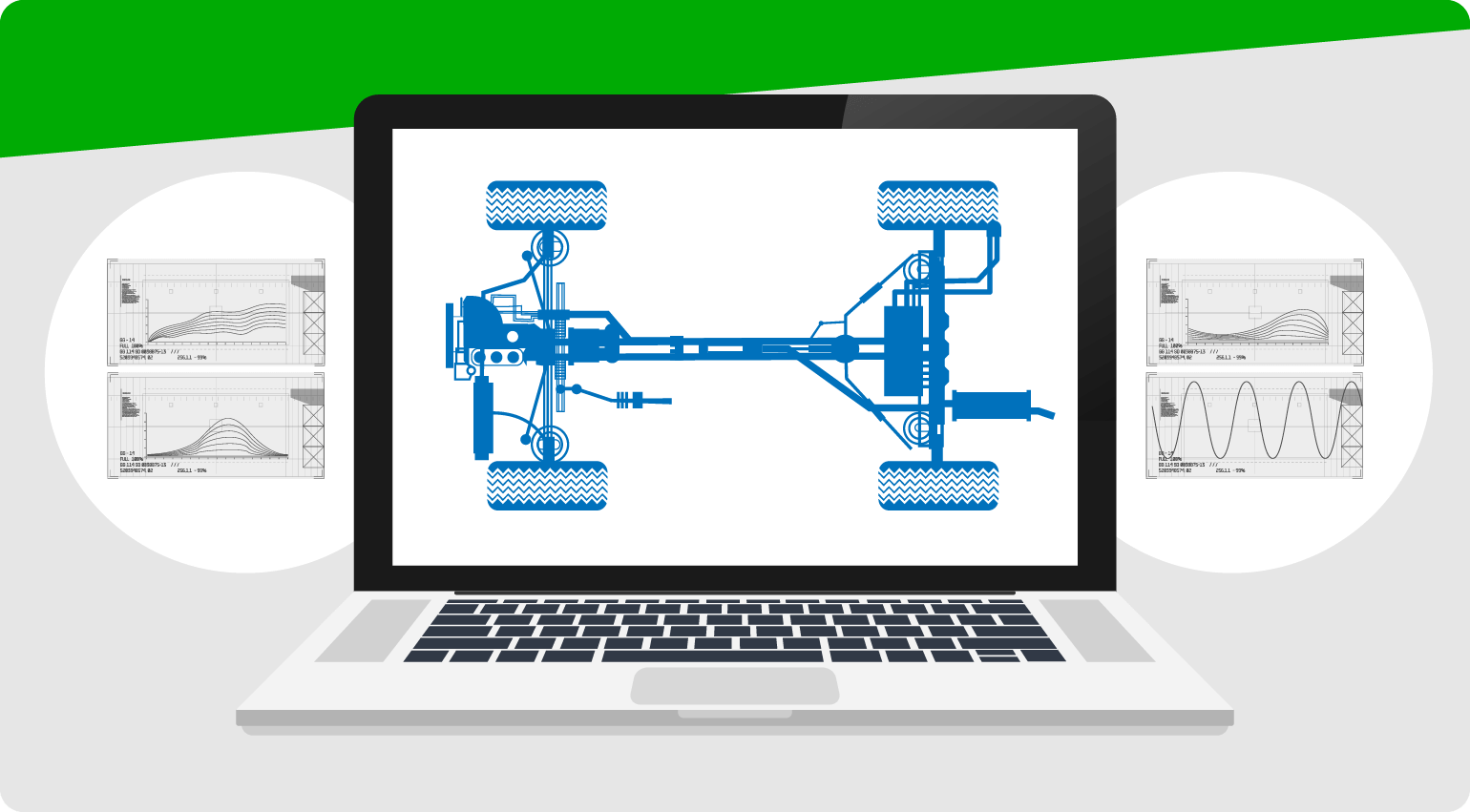
Greener ingredients for a smoother ride
There's a real effort to use more sustainable raw materials in tyre production. This means ambitious targets for incorporating recycled, bio-based, and renewable content into new tyres. When new material use is unavoidable, some manufacturers are turning to innovations like blockchain-based sustainable natural rubber. This technology allows them to track where the rubber is sourced and record its entire journey. Part of this initiative includes reducing pesticide use and many are aiming to use FSC-certified natural rubber.
Reducing waste, boosting efficiency
Beyond the materials themselves, there's a focus on cutting down waste and improving energy efficiency throughout the manufacturing process. Many companies are actively working to decrease their greenhouse gas emissions and water usage.
Innovation for a better tomorrow
These commitments are underpinned by significant investment in research and development. This includes developing tyres with reduced rolling resistance, which contributes to better fuel efficiency.
Manufacturers are exploring advanced technologies to manage end-of-life tyres more effectively, and researching ways to minimise tyre and road wear particles (TRWP).
The ultimate aim is to create a circular system where materials are reused and resources are conserved, building a more sustainable future for all road users, which is guided and supported by the European Corporate Sustainability Directive and Science Based Targets Initiative.
2. On the road: driving sustainably for your wallet and the planet
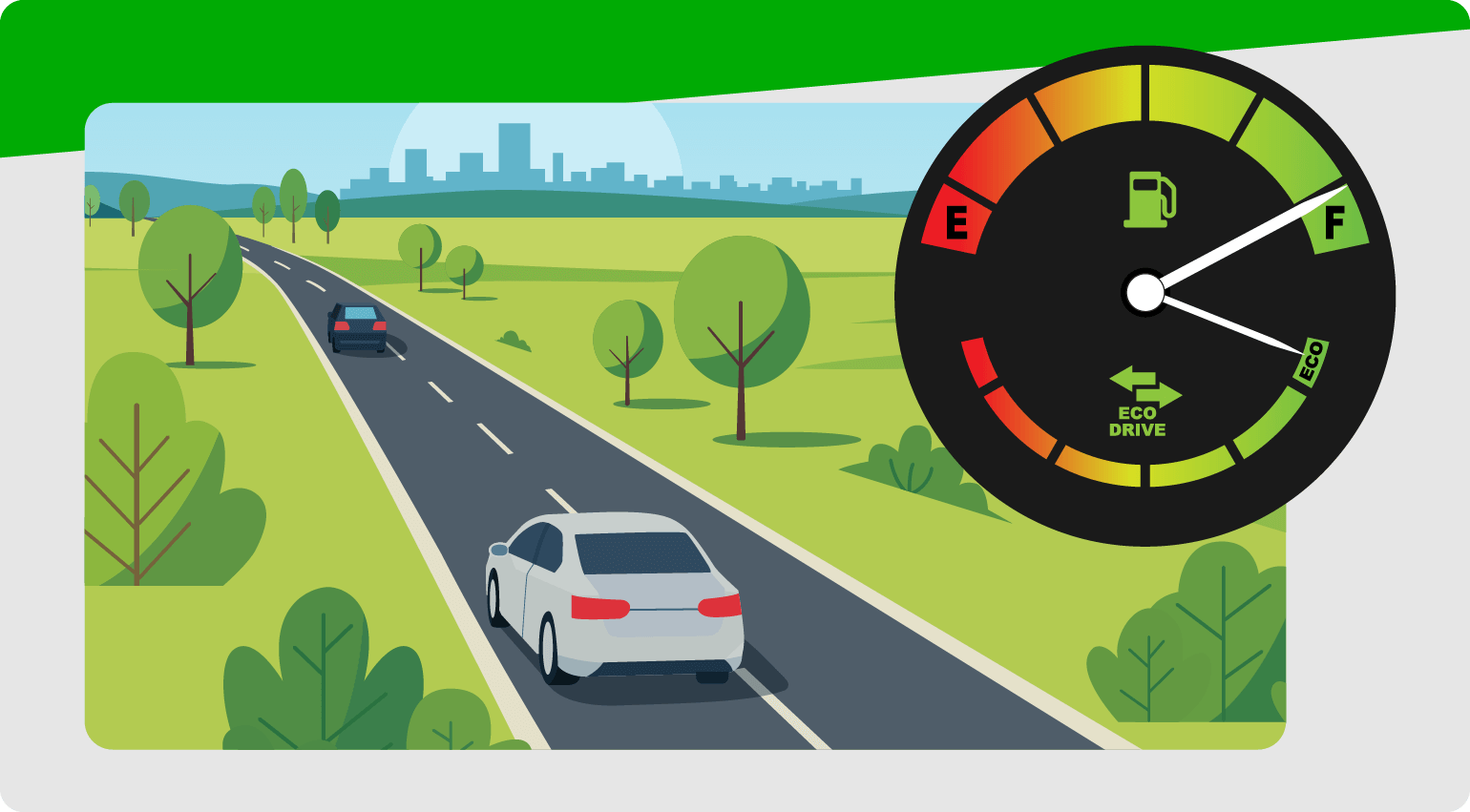
Drivers have a surprising amount of influence over a tyres' lifespan and environmental impact. It's during this ‘in-use’ phase, the long middle act of a tyre's life, that the most significant environmental footprint is made, influenced by everything from your initial tyre choice to how you maintain them, and your driving style.
How tyres grip the road (and why it matters)
Every tyre connects with the road through a contact patch about the size of your palm. As the tread digs in and the rubber flexes to mould to the road's surface, it uses energy. This is what we call rolling resistance. Lower rolling resistance means less energy is needed to keep moving, which translates to better fuel or electricity efficiency.
The gradual grind: how tyres wear
Tyre wear is largely a process of abrasion (think of it like fine sandpaper rubbing away at the tread). Tiny fragments, known as particulates, are shaved off every time you accelerate, brake, or corner. The harsher these inputs, the more slip, heat, and wear occur. Extreme temperatures and environmental elements can speed up the abrasive process, as can the driving surface, and impacts with potholes or kerbs. Running on under-inflated tyres also contributes to overheating the sidewalls, hastening the tyre’s demise.
Driving sustainable choices
So how can drivers influence tyre wear? Firstly, driving style can have a huge impact. Smooth acceleration, gentle braking, and precise steering will not only extend your tyres' life but also save you money on fuel or charging.
Next, a quick monthly check — of tread depth or for signs of wear, cracks and bulges — can make a big difference to both your safety and your tyres' longevity. Catching any issues early can save your tyres' tread, save you money, and keep your tyres inworking order for longer, reducing waste.

Then, when it comes time to choose new tyres, look out for tyres with lower rolling resistance — via
the UK/EU tyre label — which means less energy and less abrasion.
3. Closing the loop: revolutionising tyre recycling
It's a question many drivers ponder: once your tyres have seen better days, where do they go? It turns out, these trusty companions are far from finished when their tread meets the legal minimum (1.6mm) or suffer irreparable damage.
From worn out to wonderful : the tyre recycling lifecycle
The UK tyre industry is quite advanced when it comes to managing products at their end-of-life, with around 88% of old tyres being collected and a majority of those being recovered. This is an impressive figure, as tyres are complex things, made up of 200 different materials including rubber, steel, and textiles. This makes them tricky to recycle.
A tale of two tyres: from landfill fears to circularity
Not so long ago, old tyres often ended up in landfill sites. This posed environmental concerns, taking up valuable space and even posing risks of fire and land destabilisation. However, legislation introduced in 1999 effectively banned the landfilling of whole tyres from 2003 and shredded tyres from 2006.
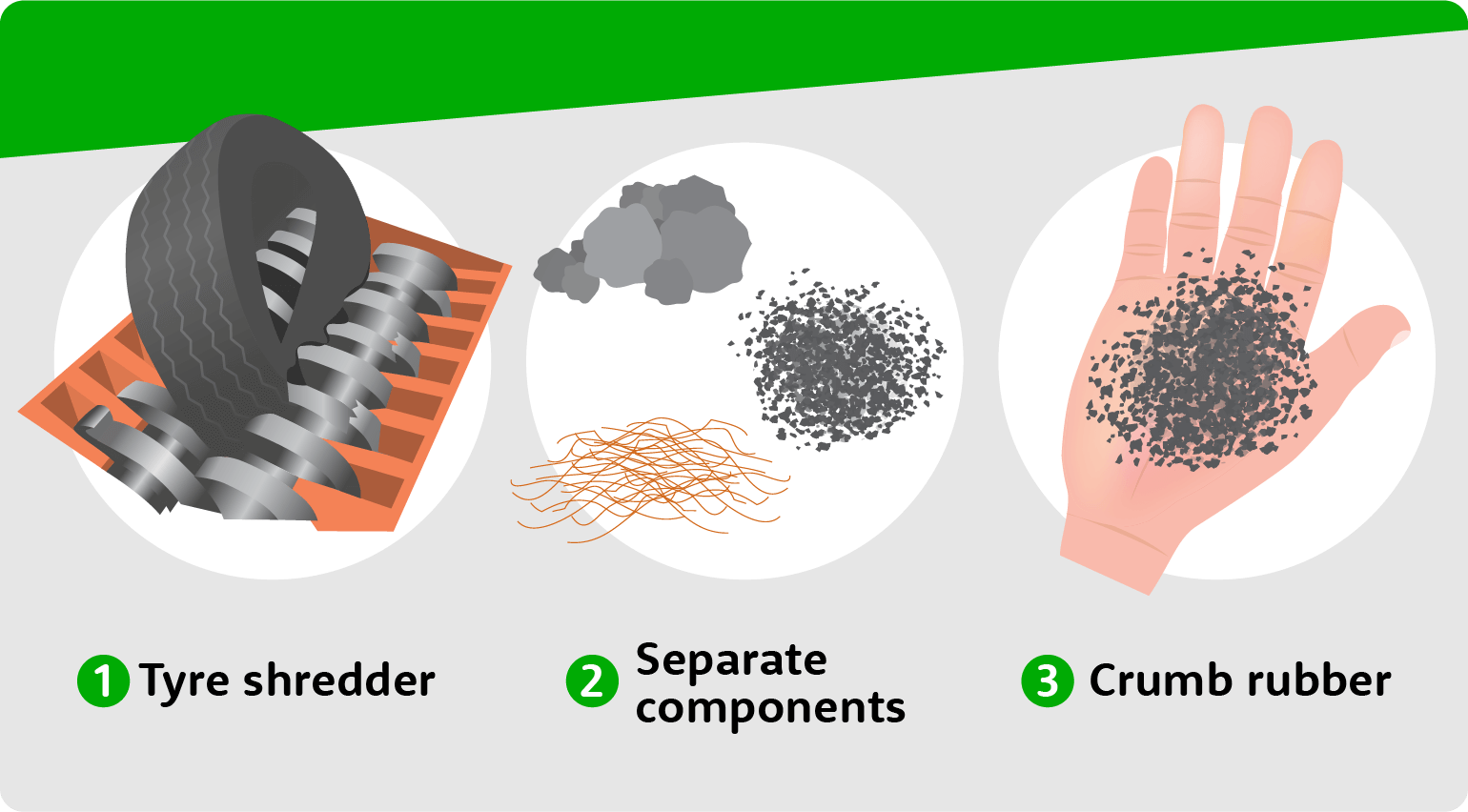
Today, the focus is on full circular economy recycling. This means that not only the rubber, but also the metal and fibre content within the tyre are separated and recycled. Research suggests that recycling four tyres can save up to 323 lbs of carbon dioxide.
Giving tyres a new lease of life
So, what happens to these recycled materials? They're incredibly valuable and find their way into a surprising array of new uses:
- Re-treading: Some tyres that still have enough structural integrity are given a new lease of life by adding new tread. This is particularly common for truck and bus tyres, with around half of these tyres in the UK being re-treaded.
- Re-use in construction: The rubber from recycled tyres can be incorporated into materials for civil engineering projects (think road surfaces, soundproofing walls, or bridge foundations).
- Energy recovery: Through a process called pyrolysis, old tyres can be used to generate gas and oil. These can then be used as fuel in industries like cement kilns and paper mills, helping to reduce the reliance on fossil fuels.
- Crumb rubber: This is where the rubber is shredded and ground down into a fine material known as ‘ crumb rubber’. This versatile material is then used in all sorts of products, from playground flooring and carpet underlay to speed bumps and running tracks. It's even used in rubberised asphalt for roads, which trials have shown can make surfaces quieter.
So, there you have it, the whole tyre lifecycle. It seems there’s some circularity in those black circles and that old tyres can be the unsung heroes of sustainability.