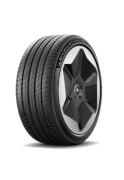
If you have made the switch from an ICE car to an
electric car, one of the first things you may have noticed is the road noise. Without the drone of an engine, this is no longer so easily masked.
This can, in turn, lead to the question - which tyres are the quietest?
In a nutshell, and based on the independent testing – the answer is
Michelin e.Primacy.
This is based on the fact that the tyre has finished first for noise in three separate independent tests across three years, three sizes and three publications.
It is easily the most consistent quiet tyre we can point to with evidence rather than just relying on the marketing material that is produced by a tyre manufacturer.
There is a caveat though, and a longer answer. This is because almost every ‘quietest tyre’ guide has ranked tyres using a number that has nothing to do with how quiet your cabin is.
The Decibel Figure On A Tyre Label Isn't Cabin Noise
This is the single most important thing to understand before you buy. And it isn't a matter of opinion. You will find this piece of information in writing on both the UK government website and Michelin's own site.
The tyre label must be displayed with the tyre's external noise level in decibels.
The quantity being measured is called "rolling noise". The GOV.UK site makes it clear that this is an environmental issue. It states that "the lower the rolling noise, the lower the impact your vehicle will have on overall environmental noise levels."
Similarly, Michelin says exactly the same thing on its own engineering pages.
So what this means, is that the decibel number given to a tyre on the label is measured from the point of view of a pedestrian – and is measured and reported on ultimately for the benefit of people standing near the road.
I am not claiming that it is not a fully legitimate and useful figure, as road traffic noise is a mapped public-health issue in the UK.
But it is not the number that tells you whether your motorway drive will be a peaceful one of not.
What Makes A Tyre Quiet
1. The tread pattern
The tread pattern is something that is applicable to all tyres. Regardless of category or size. As if a manufacturer designs a tread pattern that makes use of blocks with an identical width – the blocks will come into contact with the surface at regular intervals. A regular interval is a frequency. Therefore, it can have a large impact on the noise that is created.
Tyre designers get around this – or try to – by making sure that the blocks of a tread pattern come in differing widths. Without compromising on the tyre's performance.
When designing tyres, Michelin use a simulation tool called Piano Noise Reduction. This helps them to work out an effective way to arrange the blocks in regards to sound and noise creation.
Continental does something conceptually similar with its Silent Pattern design on the EcoContact 7 and 7 S. They have been tuned specifically for the frequencies produced at around 50 km/h.
2. Acoustic foam
You may see a number of tyres come with acoustic foam as a means to reduce the noise levels created by a tyre when rolling.
In essence this is a strip of polyurethane foam that has been bonded to the inside of the tyre. This works by absorbing the cavity resonance described above before it can travel through the suspension into the cabin.
Each manufacturer has a different name for this type of technology:
When clarifying the noise reduction of their Acoustic Technology, Michelin states that is a reduction in perceived interior noise of approximately 20%. Based on an internal Michelin measurement taken in 2020 on
245/45 R19 fitted to a Kia Cadenza.
In Michelin's own wording "results may vary according to vehicle, tyre range and size, speed and road conditions".
Two important caveats on foam. Firstly, foam is developed per vehicle. Second: acoustic foam does not improve the decibel figure on the label. Instead, it can in fact worsen the results.
The foam targets cavity resonance inside the tyre. The label recordings however, measure pass-by noise. These are very different problems.
Look at what that does to Michelin's own range:
Michelin range
Acoustic foam?
Label noise
Primacy 5 Energy, 205/60 R16
No
68 dB, class A
e.Primacy 2
No
69–70 dB
Primacy 5 Energy Acoustic, 215/50 R19
Yes
70 dB, class B
e.Primacy Acoustic
Yes
70–72 dB
Pilot Sport EV Acoustic
Yes
72 dB, class B
Pilot Sport EV Acoustic BLE1 (Tesla fitment)
Yes
73 dB
So in regards to the labelling score, the foam-lined tyres are the louder ones.
That isn't a fault in the tyres or an error in the labels. It's the clearest possible demonstration that the two numbers measure different things. If you shop on label decibels alone, you will systematically avoid the tyres engineered to quieten the interior of the cabin. Perhaps the thing that really matters to you when trying to enhance your EV driving experience.
3. Construction
Finally, the construction of the tyre has a big effect on the noise levels. Things like the sidewall stiffness, the belt package and the casing design affect the amount of vibration that is transferred to the wheel hub. Rather than being absorbed by the tyre.
Of the 3 areas, this is perhaps the least visible. With no label or marketing figure readily available to capture or display this information.
The Quietest Tyres For Electric Vehicles
We've ranked these on measured cabin noise from independent testing where it exists, then on label performance, then on owner feedback.
Prices are fully fitted, correct at time of writing.
Tyre
Independent noise record
Label noise
Michelin e.Primacy
1st for noise in three separate tests
70 dB typical (69–70 dB on e.Primacy 2)
Hankook iON Evo Sound Absorber
Led interior noise at 68.6 dB in one EV test; won another on its foam layer
68–69 dB, class A
Michelin Primacy 5 Energy
Not yet independently noise-tested
68–69 dB, class A in smaller sizes; 72 dB, class B in larger
Continental AllSeasonContact 2
Joint quietest in Auto Bild's 2026 EV all-season test, 71.1 dB
Varies by size
Goodyear Vector 4Seasons Gen 3
Joint quietest in the same test, 71.1 dB
Varies by size
Michelin Pilot Sport EV Acoustic
Not independently noise-tested
72 dB, class B
Michelin e.Primacy
EV approved tyres: electric vehicle (EV) tyres are a category of car tyre that has been developed by several manufacturers to meet the specific requirements of an electric vehicle.
Get more mileage out of your car with the Michelin e.Primacy. This summer road tyre is a popular choice of OEMs for electric, hybrid, and low fuel consumption vehicles. Say goodbye to energy waste and hello to efficiency.
If you want the tyre with the strongest independent evidence behind it, this is it.
Not because Michelin markets the e.Primacy on quiet - it doesn't, it markets it on efficiency - but because it keeps winning the noise measurement anyway.
Three results, three publications, three sizes, three years:
1st of 3 for noise in the 2026
Tesla Model 3 EV tyre test, in 235/45 R18, on both the smooth and the coarse surface - 68.9 dB and 81.8 dB, quietest in test in each.
1st of 6 for noise at 70.5 dB in Auto Motor und Sport's 2025 sustainability test, where it also recorded the best rolling resistance in the test at 5.7 kg/t against a worst of 10.4.
1st of 10 for noise at 71.9 dB in a 2023 test of EV tyres against ultra-high-performance rivals.
Hankook iON Evo Sound Absorber
Best to be straightforward about this one, because you'd find it in thirty seconds anyway - on the EU label, in the size an EV driver actually buys, Hankook beats Michelin.
The iON Evo Sound Absorber grades 68 to 69 dB with an A noise class, A for wet grip and A to B for fuel efficiency across 18 to 21 inch sizes.
In 235/45 R18 - the size the Tesla Model 3 test ran - it's 69 dB class A.
It has independent results behind it too. Tyre Reviews records the iON Evo winning one test on the strength of a foam layer that "completely eliminated hollow tyre echoes and significantly reduced interior cabin noise".
Michelin Primacy 5 Energy
Latest Model
EV approved tyres: electric vehicle (EV) tyres are a category of car tyre that has been developed by several manufacturers to meet the specific requirements of an electric vehicle.
This is Michelin's efficiency flagship, and in the smaller sizes it's the quietest thing in our Michelin range on paper. With a 68 dB with an A noise class in 205/60 R16 and 69 dB class A in 225/45 R17.
Michelin describes it as reaching the highest level of European labelling on exterior noise, with an "optimised construction [that] helps limit vibrations".
Michelin Pilot Sport EV Acoustic
Michelin's positioning is specific: compared with the Pilot Sport 5 or Pilot Sport 4 SUV, the Pilot Sport EV "proposes low rolling resistance to maximize range, immediate grip to meet intense demands from the transmission and noise reduction by using MICHELIN Acoustic technology."
It could be positioned as the performance-EV tyre that keeps cabin noise in check, rather than as the quietest tyre we sell.
It grades 72 dB class B on the label, and owner comfort scores of 7.1 out of 10 sit below the e.Primacy's 8.2. If your priority is silence rather than cornering, the Primacy family is the better answer.
What To Check Before You Buy
Check the label for your exact size, not the range. As the Primacy 5 Energy shows, the same tyre range can grade A for noise in one size and B in another. The number that matters is the one on the tyre you're actually buying.
Compare decibels within your own size only. Width and extra-load construction change the legal limit by up to 5 dB. A bigger tyre with a higher number isn't necessarily a noisier design.
Look up your car's original-equipment marking. If your EV came on an Acoustic, Sound Absorber or ContiSilent tyre, the foam was tuned for your vehicle's frequencies. Fitting the same version again gets you the full benefit; fitting a version developed for a different car doesn't.
Don't be put off by a foam tyre showing a higher label decibel figure. That's expected, for the reasons above.
Remember that quiet fades. Tyre noise generally increases as tread wears, so a tyre that holds its behaviour towards the wear limit is worth more than one that's quiet only when new.
Frequently Asked Questions
What are the quietest tyres for an electric car?
On measured cabin noise from independent testing, the Michelin e.Primacy has the strongest record - first for noise in three separate tests across three years. On the EU label, the Hankook iON Evo Sound Absorber has the best rating in the category at 68–69 dB with an A noise class.
Does the decibel number on a tyre label tell me how quiet the cabin will be?
No. GOV.UK's tyre labelling guidance states that the label shows the tyre's external noise level and specifically not any tyre noise heard inside the vehicle. It's a pass-by measurement intended to reduce environmental noise.
Are electric car tyres noisier than normal tyres?
No. Michelin's position is that you simply hear them more. This is because an electric motor produces far less noise of its own to mask the tyre rolling noise.
Does acoustic foam in a tyre work?
It targets cavity resonance. That is the air vibrating inside the tyre. Michelin says approximately 20% less perceived interior noise, Continental up to 9 dB for ContiSilent. Both figures are manufacturer measurements taken under specific conditions. The foam is developed for a particular vehicle's frequencies, so it works best on the car it was designed for.
Why do my new tyres sound louder than my old ones if the label says they're quieter?
Most often because the sizes differ. The legal noise limit rises with tyre width and rises by another 1 dB for extra load and reinforced tyres, which most EVs use. Comparing label figures across two different sizes doesn't tell you much.
Does an A noise rating mean a quiet cabin?
Not directly. The A to C noise class is set relative to the legal limit for external rolling noise at that tyre width. It's a good indicator of a well-designed tread pattern, but it says nothing about cavity resonance or how much noise reaches you.
Do I need EV-specific tyres for a quieter ride?
Not necessarily. Some of the quietest options here - including the Michelin e.Primacy and Primacy 5 Energy - are efficiency-focused touring tyres rather than dedicated EV ranges. They're rated as suitable for electric vehicles.
PayPal Credit and PayPal Pay in 3 are trading names of PayPal UK Ltd, 76 Upper Ground, London, SE1 9PZ. Terms and conditions apply. Credit subject to status and approval, 18+ UK residents only. PayPal Credit and PayPal Pay in 3 are a form of credit, so carefully consider whether the purchase is affordable and how you will make the repayments. PayPal Pay in 3 is a credit agreement. See product terms for more details and FAQs. Learn more about PayPal Credit.Learn more about PayPal Pay in 3.


![System.Func`2[BlackCircles.Interfaces.IECommerceModuleData,System.String]](https://images.blackcircles.com/search/feature-ev.svg)