
Join the conversation
We love to hear from our customers. Connect with us today and let’s start a conversation.
...searching
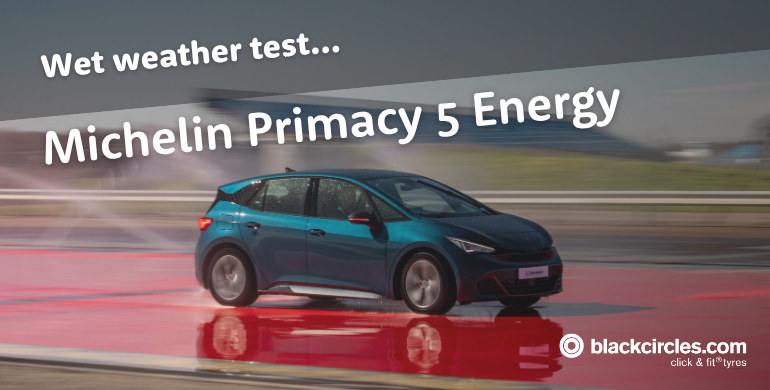
Michelin recently unveiled the new
Primacy 5 Energy, its latest premium summer tyre designed to raise the bar when it comes to everyday driving confidence. As the first Michelin summer tyre to boast a rare triple-A rating for wet grip, rolling resistance and noise, it promises a compelling mix of safety, efficiency and comfort. Add in claims of class-leading longevity and tangible benefits for both combustion and electric vehicles, and it’s clear Michelin is targeting drivers who want more from every mile.
But headline claims only tell part of the story. To see how those wet-weather credentials translate to the real world, we headed to the Porsche Experience Centre, Silverstone, where through a series of controlled tests — including aquaplaning simulations and low-grip handling exercises — we put the Primacy 5 Energy through its paces on soaked tarmac.
Here’s what we discovered.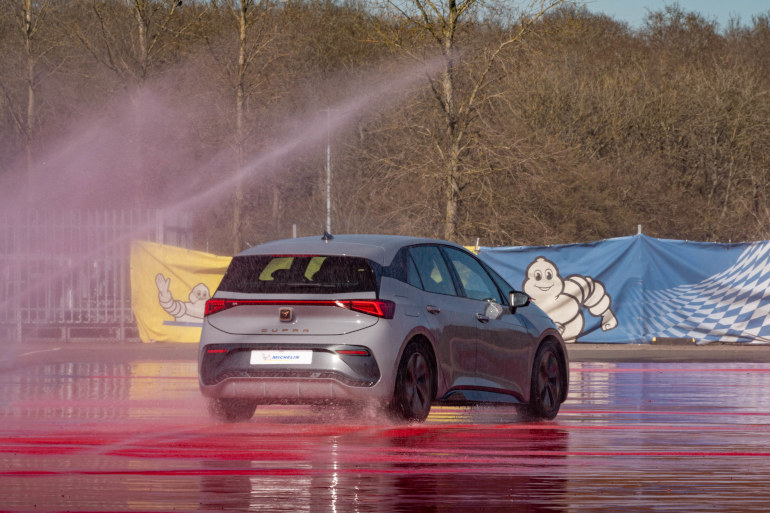
The new Primacy 5 Energy might not be the first Michelin tyre you think of when it comes to wet-weather performance. The brand’s all-season offerings — the
CrossClimate range, in particular — have built a reputation for all-conditions confidence. But Michelin is keen to prove that its new, efficiency-focused Primacy 5 Energy can do the business when the heavens open, not just when conditions are dry and predictable.
To put that claim to the test, we headed to the Porsche Experience Centre, where a fleet of
Cupra Born EVs awaited on a purpose-built low-grip handling circuit. It’s a fitting pairing: as a fully electric hatchback, the Born places unique demands on its tyres. Instant torque, rear-wheel drive, and the constant search for efficiency make it an ideal real-world test bed for a tyre that promises both low rolling resistance and strong wet grip. If a tyre can maintain composure here, it’s a good sign it’ll handle the pressures of modern EV driving.
So, how do you test the extremes of a tyre’s wet grip in a controlled way? With a kickplate, of course. This deceptively simple but highly revealing device is designed to simulate a sudden loss of traction by physically throwing the rear of the car sideways as it passes over a threshold. This unsettling effect then induces the sort of snap oversteer moment you might encounter on a soaked surface. From there, it’s down to the tyres to recover grip and the driver to gather it all back up.
First, we conducted the test with all the Cupra’s traction and stability aids fully engaged — the same way most people are likely to drive every day. And, as we crossed the threshold at a speed of 20 mph, the kickplate did its job and forced the Cupra’s back tyres to temporarily break traction. However, almost immediately and with little corrective steering lock applied, the Primacy 5’s A-rated wet compound regained grip with help from the Cupra’s traction system grabbing the brakes of individual wheels. All in all, despite the test being designed to simulate a dangerous scenario, the Cupra and Primacy combination manages to effortlessly deescalate the situation.
Next, we tried upping the speed slightly and dialling back the car’s traction aids to better assess the tyre’s role. As expected, the Cupra achieved a greater initial slip angle, though the slide proved just as easy and predictable to control thanks to the Michelin’s strong wet grip reserves.
Finally, to truly expose any potential weaknesses in the tyre’s wet limit handling, we completed the test with the car’s traction control fully deactivated. However, despite the Cupra’s short wheelbase, instant torque, and rear-wheel drive — characteristics which could exacerbate snap oversteer — we were able to reach the bottom of the track without spinning or losing control.
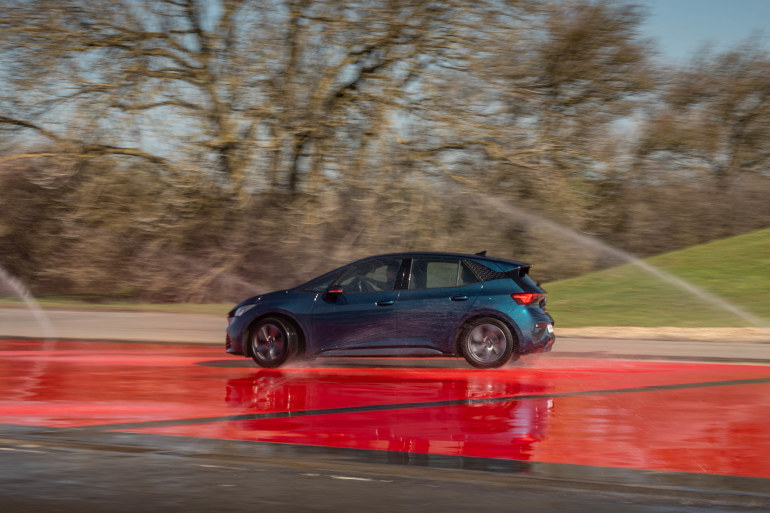
Though our testing was primarily aimed at assessing the Primacy Energy’s wet weather handling in extreme conditions, we were also able to get a feel for the new tyre’s 8% improved wet braking distances.
Hitting the brakes hard at the end of the low-traction surface, we induced a full ABS stop and the Cupra pulled up remarkably quickly, and with little fuss. Equally, the Primacy Energy’s design meant that we were able to retain steering control while the brakes were applied. In the real world, this could make the difference between hitting an obstacle and avoiding it.
What’s more, external testing shows that the Primacy 5 Energy retains this enhanced wet braking performance over time, thanks in part to its Energy Passive 2.0 technology. Ultimately, this means the tyre retains its wet braking performance even when worn down to 2mm, delivering safety levels comparable to when new.
Unsurprisingly, several car manufacturers have been keen to utilise the new Primacy 5 Energy’s breadth of abilities by fitting the tyre as standard.
Take the Kia EV5, for example. As a fully electric SUV, it demands low rolling resistance to maximise range, but also strong wet grip to manage its weight and instant torque. A tyre that can balance efficiency with predictable traction is essential here, making the Primacy 5 Energy a natural OE fitment.
Equally, the Primacy 5 Energy’s standard fitment on
BMW’s X1 and
X2 makes perfect sense. Both models bring a more dynamic edge, with sharper handling and greater driver engagement, so the Michelin’s ability to deliver strong wet grip without dulling the driving experience is key.
Michelin’s latest Primacy 5 Energy sets out to prove that efficiency and wet-weather performance don’t have to be mutually exclusive — and, based on our time at Silverstone, it delivers on that promise. What stands out most isn’t just the outright grip, but the way the tyre behaves predictably at the limit, even when provoked by the kickplate on a sodden surface.
This performance doesn’t fade with time, either. Michelin’s testing indicates that the Primacy 5 Energy continues to deliver its wet braking capability right down to 2mm of tread, maintaining a level of safety comparable to a new tyre. In the real world, that means you aren’t just getting strong wet performance on day one, but consistent confidence throughout the tyre’s lifespan.
Combine that with its triple-A credentials, and the Primacy 5 Energy makes a compelling case for itself as a modern, all-round premium tyre. For everyday drivers, it’s a reminder that choosing the right rubber can make a tangible difference when conditions are at their worst.
Ready to get more from your EV? Feel the difference with Michelin Primacy 5 Energy tyres today.

We love to hear from our customers. Connect with us today and let’s start a conversation.