
Join the conversation
We love to hear from our customers. Connect with us today and let’s start a conversation.
...searching


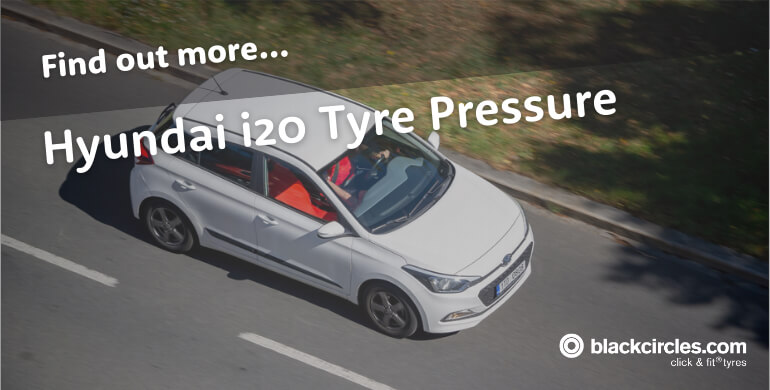
The Hyundai i20 has been a popular choice on UK roads for many years.
Since 2015, the i20 range has expanded to include multiple trims, wheel sizes, and sportier variants. Including the N Line and CUV-style models.
With these different configurations, knowing the correct tyre pressure for your specific i20 can sometimes be confusing.
Tyre pressures can vary depending on wheel size and trim level.
To make things easier, we’ve compiled the recommended tyre pressure data directly from Hyundai owner handbooks. The table covers models from 2015 to the present day (as of 10/02/2026).
 List of Hyundai i20 Tyre Pressures
The table below shows the recommended cold tyre inflation pressures for the Hyundai i20.
All figures are intended for normal UK driving conditions and standard vehicle load unless otherwise stated.
We recommend checking the owner’s manual or contacting Hyundai directly.
| Years | Tyre Size | Normal Load (Front) | Normal Load (Rear) | Maximum Load (Front) | Maximum Load (Rear) |
|---|---|---|---|---|---|
| 2015–Present | 185/65 R15 | 235 kPa (2.35 bar, 34 psi) | 215 kPa (2.15 bar, 31 psi) | 240 kPa (2.4 bar, 35 psi) | 250 kPa (2.5 bar, 36 psi) |
| 2015–2019 | 185/65 R15 (Europe Pack) | 250 kPa (2.5 bar, 36 psi) | 230 kPa (2.3 bar, 33 psi) | 250 kPa (2.5 bar, 36 psi) | 250 kPa (2.5 bar, 36 psi) |
| 2015–2019 | 185/65 R15 (ECO Pack) | 260 kPa (2.6 bar, 38 psi) | 260 kPa (2.6 bar, 38 psi) | 260 kPa (2.6 bar, 38 psi) | 260 kPa (2.6 bar, 38 psi) |
| 2020–Present | 185/65 R15 (ECO Pack) | 250 kPa (2.5 bar, 36 psi) | 230 kPa (2.3 bar, 33 psi) | 250 kPa (2.5 bar, 36 psi) | 250 kPa (2.5 bar, 36 psi) |
| 2015–Present | 195/55 R16 | 235 kPa (2.35 bar, 34 psi) | 215 kPa (2.15 bar, 31 psi) | 240 kPa (2.4 bar, 35 psi) | 260 kPa (2.6 bar, 38 psi) |
| 2015–2019 | 205/45 R17 | 235 kPa (2.35 bar, 34 psi) | 215 kPa (2.15 bar, 31 psi) | 240 kPa (2.4 bar, 35 psi) | 260 kPa (2.6 bar, 38 psi) |
| 2020–Present | 215/45 R17 (N Line) | 235 kPa (2.35 bar, 34 psi) | 215 kPa (2.15 bar, 31 psi) | 240 kPa (2.4 bar, 35 psi) | 260 kPa (2.6 bar, 38 psi) |
| 2020–Present | 205/55 R17 (CUV) | 235 kPa (2.35 bar, 34 psi) | 215 kPa (2.15 bar, 31 psi) | 240 kPa (2.4 bar, 35 psi) | 260 kPa (2.6 bar, 38 psi) |
| 2015–Present | T125/80 D15 (Spare) | 420 kPa (4.2 bar, 60 psi) | 420 kPa (4.2 bar, 60 psi) | 420 kPa (4.2 bar, 60 psi) | 420 kPa (4.2 bar, 60 psi) |
| 2020–Present | T125/80 D16 (CUV Spare) | 420 kPa (4.2 bar, 60 psi) | 420 kPa (4.2 bar, 60 psi) | 420 kPa (4.2 bar, 60 psi) | 420 kPa (4.2 bar, 60 psi) |
Please note:The information provided in this article is intended for reference purposes only. Tyre pressures can vary depending on wheel size, trim level, load, and driving conditions. Always refer to your vehicle’s official handbook or consult Hyundai directly for the most accurate specifications. We accept no responsibility for any discrepancies or incorrect use of this information.
Always remember to check your tyres when they are cold for the most accurate pressure readings.
Checking your Hyundai i20’s tyre pressure regularly is essential, particularly before long journeys or periods of heavier use.
Incorrect tyre pressures can have a noticeable impact on:
Under-inflated tyres tend to wear more quickly on the outer edges.
While over-inflated tyres can reduce grip and comfort.
Keeping your tyres inflated to the correct pressure helps ensure safer, more efficient driving.

We love to hear from our customers. Connect with us today and let’s start a conversation.