

Join the conversation
We love to hear from our customers. Connect with us today and let’s start a conversation.
...searching
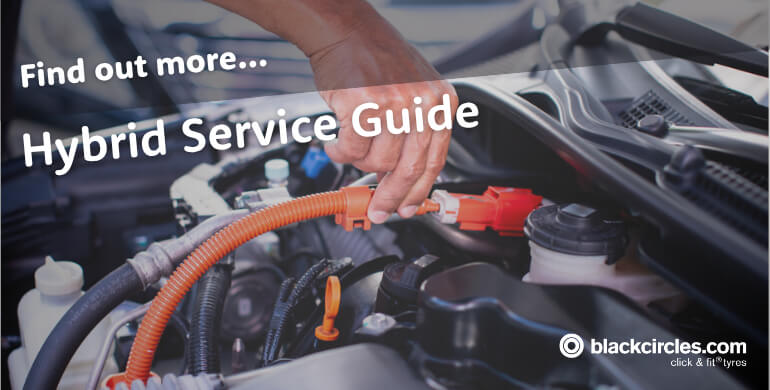
Hybrid cars are becoming increasingly popular - and for good reason. They offer the fuel-saving, low-emission benefits of electric vehicles, but without the range anxiety that sometimes comes with going fully electric.
But as more drivers make the switch, a new question arises: how do you maintain a hybrid properly?
If you're unsure how a hybrid service differs from a standard one, or whether your local garage is even equipped to handle it, you're not alone.
We will have a look at what’s checked, how often you need it, and why hybrid servicing matters.
On the surface, hybrid cars look like any other petrol or diesel model. But under the bonnet, they’re doing quite a bit more.
A hybrid system typically includes a combustion engine, one or more electric motors, a high-voltage battery, and a host of specialised electronics.
That dual setup means hybrid servicing isn’t just a checklist of traditional tasks.
They’ll still need oil changes, brake inspections and tyre checks, but there’s also a range of hybrid-specific components that will need attention.
A good hybrid service will include all the routine checks you'd expect in a standard car service, like:
But there are several extras too. These include:
Battery Health Check
The high-voltage battery is central to your hybrid’s performance. A technician will run diagnostic tests to assess battery capacity, voltage levels and charging efficiency. For plug-in hybrids, they’ll also check the external charging port and cables.
Inverter Coolant Inspection
Hybrids use inverter coolant to keep their electric powertrain cool, separate from your engine coolant. During servicing, this is checked for levels and any signs of leaks.
High-Voltage System Inspection
Hybrid cars run on systems operating at significantly higher voltages than regular vehicles. Cables, insulation, connectors - all are inspected for wear, corrosion or safety risks.
Regenerative Braking Check
Because hybrids often rely on regenerative braking (which recovers energy when slowing down), their brakes can behave differently. Pads might last longer, but they can also suffer from binding or corrosion due to lower use - so a proper check is essential.
Most hybrids follow the same general schedule as petrol or diesel cars - usually every 12 months or 12,000 miles, whichever comes first.
However, if you drive frequently or mostly in stop-start traffic (where the electric motor is more active), it’s worth considering interim services every 6 months. These can help spot issues early, especially with brake components or battery cooling systems.
Always follow your manufacturer’s guidance, as different models may have specific requirements.
At Blackcircles.com, we offer three types of hybrid service: Interim, Full, and Major.
Each one is tailored to suit different levels of usage, vehicle age, and service history.
So, whether you're driving short daily commutes or clocking up longer motorway miles, there's an option to match your needs.
| Service Item | Interim | Full | Major |
|---|---|---|---|
| Engine Area | |||
| Check for visible oil leaks | ✔️ | ✔️ | ✔️ |
| Replace oil, oil filter & sump plug washer (if applicable) | ✔️ | ✔️ | ✔️ |
| Check inverter coolant | ✔️ | ✔️ | ✔️ |
| Check condition & tension of fan / alternator | – | ✔️ | ✔️ |
| Check condition & tension of auxiliary belts | – | ✔️ | ✔️ |
| Check timing belt schedule & report as required | – | ✔️ | ✔️ |
| Inspect radiator and radiator cap | – | – | ✔️ |
| Check coolant hoses | – | – | ✔️ |
| Inspect expansion bottle, tank and cap | – | – | ✔️ |
| Replace air filter | – | ✔️ | ✔️ |
| Inspect Fuel Filter & Caps | – | – | ✔️ |
| Check fuel filter replacement schedule & report* | – | – | ✔️ |
| Electrical Components Of Vehicle | |||
| Inspect battery charge and terminals | ✔️ | ✔️ | ✔️ |
| Check spark plug schedule & report as required | – | – | ✔️ |
| Check horn operation | ✔️ | ✔️ | ✔️ |
| Inspect interior and exterior lights | – | ✔️ | ✔️ |
| Inspect warning lights | – | ✔️ | ✔️ |
| Inspect ignition leads, coils & distributor cap (if applicable) | – | ✔️ | ✔️ |
| EV Motor Check | |||
| Visual check of high voltage cables & connectors | – | – | ✔️ |
| Charging point & cable check | – | – | ✔️ |
| Hybrid health diagnostic | – | – | ✔️ |
| Steering & Suspension | |||
| Check power steering & top up reservoir as required | ✔️ | ✔️ | ✔️ |
| Check steering components for wear and corrosion | ✔️ | ✔️ | ✔️ |
| Check condition of steering rack gaiters | ✔️ | ✔️ | ✔️ |
| Inspect wheel bearings | – | ✔️ | ✔️ |
| Inspect shock absorbers | – | ✔️ | ✔️ |
| Inspect suspension | – | ✔️ | ✔️ |
| Drive System | |||
| Inspect driveshaft, joints, gaiters and boots | – | ✔️ | ✔️ |
| Check & top up clutch & axle oil | – | ✔️ | ✔️ |
| Inspect clutch operation | – | – | ✔️ |
| Check transmission | – | – | ✔️ |
| Vehicle Interior / Exterior | |||
| Inspect vehicle windscreen | ✔️ | ✔️ | ✔️ |
| Check windscreen washers, wipers, & function | ✔️ | ✔️ | ✔️ |
| Top up windscreen wash as required | ✔️ | ✔️ | ✔️ |
| Inspect number plate | ✔️ | ✔️ | ✔️ |
| Inspect mirrors (interior and exterior) | ✔️ | ✔️ | ✔️ |
| Inspect exhaust system & catalysts as appropriate | ✔️ | ✔️ | ✔️ |
| Lubricate door hinges, bonnet catch & locks | – | ✔️ | ✔️ |
| Check pollen filter schedule & report | – | – | ✔️ |
| Inspect seatbelts front & rear | – | ✔️ | ✔️ |
| Inspect Fuel cap & fuel lines | – | – | ✔️ |
| Check tyre tread depth | ✔️ | ✔️ | ✔️ |
| Check tyre pressures | ✔️ | ✔️ | ✔️ |
| Check tyres for uneven wear | ✔️ | ✔️ | ✔️ |
| Check tyre age | ✔️ | ✔️ | ✔️ |
| Check spare tyre | ✔️ | ✔️ | ✔️ |
| Inspect TPMS valves (if applicable) | – | ✔️ | ✔️ |
| Inspect TPMS warning light / sensor (if applicable) | – | ✔️ | ✔️ |
| Brakes | |||
| Check brake pads for wear or damage | ✔️ | ✔️ | ✔️ |
| Check brake shoes for wear or damage | – | ✔️ | ✔️ |
| Check brake discs / drums for cracks & corrosion | – | ✔️ | ✔️ |
| Test and report brake fluid boiling point | ✔️ | ✔️ | ✔️ |
| Check brake fluid & replacement schedule & report* | ✔️ | ✔️ | ✔️ |
| Check calipers for leaks and security | – | ✔️ | ✔️ |
| Inspect operation of wheel cylinders & report links | – | ✔️ | ✔️ |
| Inspect brake hydraulic system | – | ✔️ | ✔️ |
| Inspect handbrake | – | ✔️ | ✔️ |
| Inspect ABS warning light | ✔️ | ✔️ | ✔️ |
| Final Checks | |||
| Road Test | ✔️ | ✔️ | ✔️ |
| Reset vehicle service light as appropriate | ✔️ | ✔️ | ✔️ |
| Update service book (if applicable) | ✔️ | ✔️ | ✔️ |
Absolutely. Hybrids are built for efficiency, but they’re still machines - and like any machine, they need care. Regular servicing protects not just your warranty or resale value, but your car’s long-term performance.
If you're unsure whether your last service covered the hybrid system properly, or you’re due for one soon, it’s worth speaking with a qualified technician. Ask if they’re trained for hybrid servicing. It’s a simple question - but an important one.
Hybrid cars might be the future, but looking after them well? That’s still very much in your hands.


We love to hear from our customers. Connect with us today and let’s start a conversation.