
Join the conversation
We love to hear from our customers. Connect with us today and let’s start a conversation.
...searching


With the new Formula 1 season only a few weeks away, we are set to see Formula 1 will enter a completely new technical era in 2026.
With some of the biggest regulation changes the sport has seen in quite some time.
The FIA’s new rules will, in part, reshape how F1 cars look. As well as how they generate performance, and how the drivers race.
The 2026 Formula 1 regulations are set to introduce smaller, lighter cars, active aerodynamics, a 50% electric power split, and 100% sustainable fuel.
The rules have been made, according to the FIA, to improve racing, reduce drag, increase efficiency, and make F1 power units more relevant to road cars.
Will that be the case? Only time will tell.
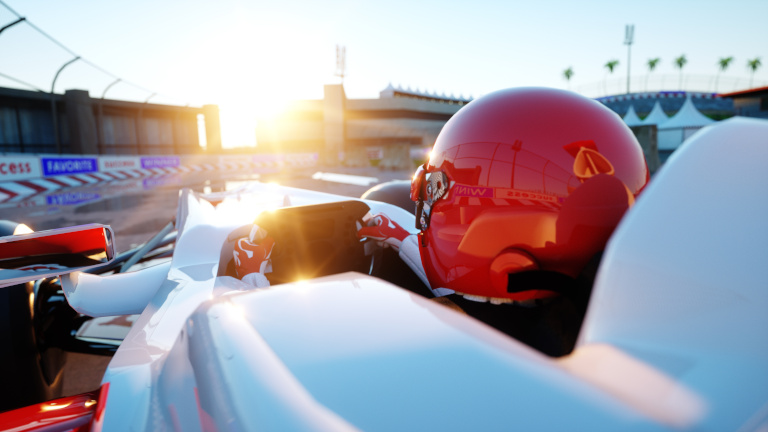
One of the most noticeable changes in the new 2026 F1 regulations is the physical size of the cars.
For years, Formula 1 cars have grown longer, wider and heavier. These latest updates to the rules reverse that trend.
Cars will now be shorter, narrower and lighter. There is set to be a 30kg reduction in the minimum weight. And the maximum wheelbase is reduced. Interestingly the tyre widths have also been narrowed at both the front and rear.
All of these changes have been made in an effort to enhance the agility and make the cars better suited to tighter circuits.
The aim of the FIA is to create Formula 1 cars that feel more responsive and more demanding. Hopefully adding to the excitement levels.
Aerodynamics are being fundamentally reworked for 2026.
The complex ground-effect tunnels that dominated the 2022–2025 era are being scaled back.
Floors will be flatter and diffusers less aggressive. The overall downforce will also be reduced by around 30%.
All of this adding up to drag that will be cut dramatically. In a bid to improve efficiency and straight-line performance.
Expect to see in 2026 front and rear wings that are simpler. With fewer elements.
The rear beam wing is removed entirely, while the front wing is narrower and more tightly regulated.
The Drag Reduction System (DRS) will be removed in 2026. It is to be replaced with a new active aerodynamics system.
Both the front and rear wings will be able to change shape, depending on track conditions.
In corners the cars run in a high-downforce configuration known as Z-mode. On straights, drivers can activate X-mode – which flattens the wings to reduce drag.
Active aero will be available to all drivers on every lap. Not just when following another car.
However, its use is restricted to straight-line running and cannot be deployed through corners.
To maintain overtaking opportunities, the 2026 regulations introduce Manual Override. You may have heard it referred to as Overtake Mode.
What this means, is when a driver is within one second of the car ahead, they gain access to additional electrical energy deployment.
Instead of opening a rear wing flap, the advantage now comes from extra hybrid power.
The chasing car can deploy significantly more electrical power at high speeds, while the leading car’s deployment tapers off beyond a certain threshold.
This creates a more natural overtaking dynamic that rewards timing, positioning and driver skill.
The power unit changes for 2026 are among the most significant in F1 history.
The 1.6-litre V6 turbo hybrid remains. However, its role is reduced.
Internal combustion engine output is set to drop substantially. While electric power nearly triples.
The result is an almost equal 50-50 split between petrol and electric energy.
The MGU-H is removed entirely, reducing cost, complexity and weight.
In its place, a far more powerful MGU-K recovers energy primarily through braking, with total energy recovery per lap doubling.
These changes make F1 engines more efficient, more road-relevant and more attractive to manufacturers.
From 2026, all Formula 1 cars will run on 100% advanced sustainable fuel.
This fuel is produced using non-food biomass, municipal waste and carbon-capture technologies.
It is fully compatible with internal combustion engines and does not rely on new fossil carbon sources.
| Feature | 2025 F1 Regulations | 2026 F1 Regulations | What’s Changing |
|---|---|---|---|
| Minimum Car Weight | 798 kg | 768 kg | Cars are 30 kg lighter |
| Maximum Wheelbase | 3600 mm | 3400 mm | Shorter cars |
| Maximum Width | 2000 mm | 1900 mm | Narrower cars |
| Front Tyre Width | 305 mm | 280 mm | Reduced rolling resistance |
| Rear Tyre Width | 405 mm | 375 mm | Lower drag and weight |
| DRS | Yes | No | Removed entirely |
| Power Split | ~80/20 | ~50/50 | Major electrification |
| Fuel Type | E10 blend | 100% sustainable | Fossil-free fuel |
The 2026 Formula 1 regulations represent a complete reset.
Cars will be smaller, lighter and more demanding to drive.
Racing should be closer, overtaking more natural, and strategy more complex.
With new manufacturers, new teams and a new generation of cars, 2026 marks the beginning of Formula 1’s next chapter.

We love to hear from our customers. Connect with us today and let’s start a conversation.