


Continental SportContact 7
The Continental Sport Contact 7 is a high performance tyre developed to deliver a safe and high end performance on both wet and dry surfaces.
Price from
Find your size113.99to452.46
...searching


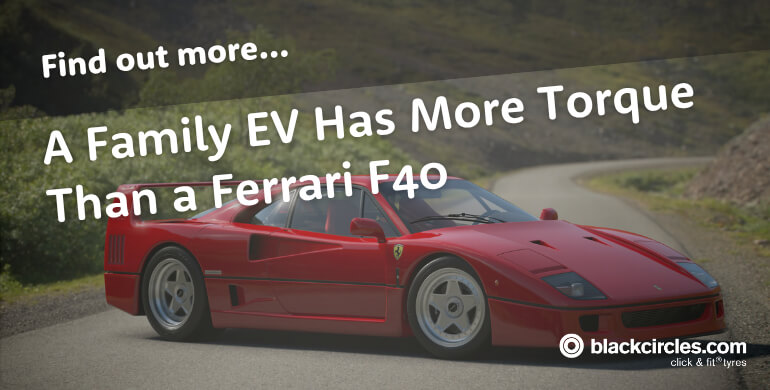
What if we told you that a modern electric family car produces more torque than one of the most famous supercars ever made?
It sounds unlikely, but it’s a comparison Continental highlighted during its Born to Outperform event in Spain.
On one side is the legendary Ferrari F40, a twin-turbocharged supercar that became an icon of the 1980s.

On the other is the Volkswagen ID.7 GTX, an electric family car designed for everyday driving.
And when it comes to their quoted torque figures, the Volkswagen comes out on top.
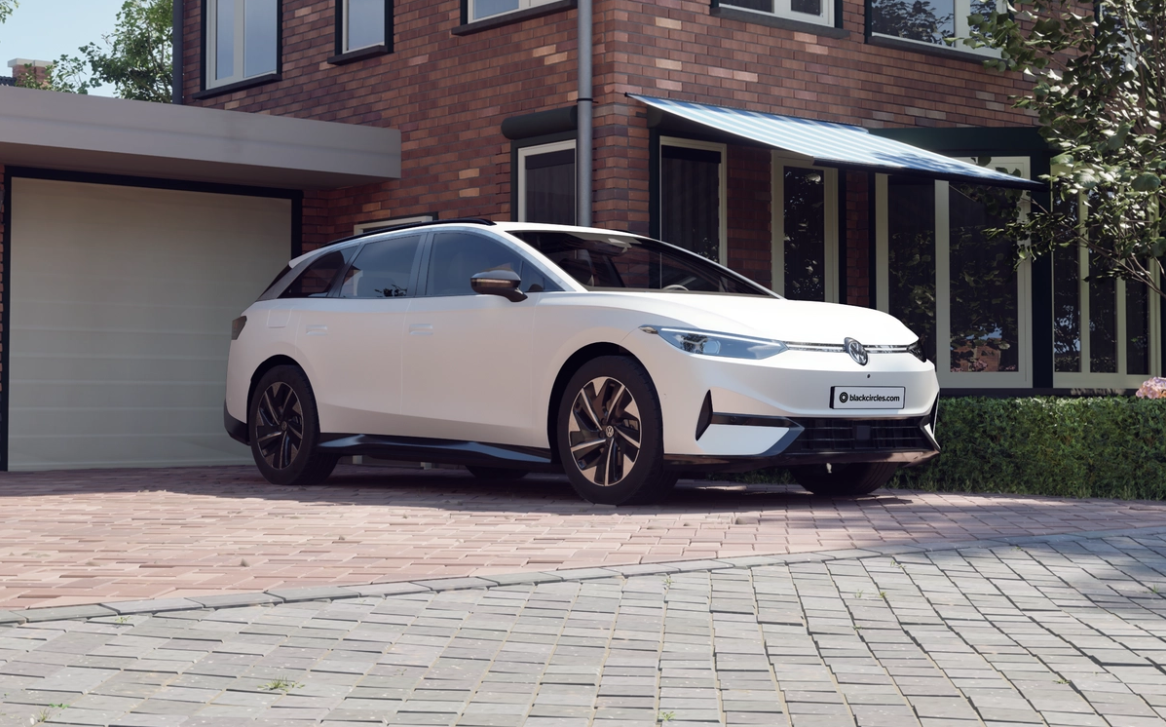
| Vehicle | Maximum quoted torque |
|---|---|
| Volkswagen ID.7 GTX | 679 Nm |
| Ferrari F40 | 577 Nm |
That’s 102 Nm more torque from the Volkswagen.
Of course, that doesn’t make the Volkswagen ID.7 GTX faster than the Ferrari F40. They’re very different vehicles, and torque alone doesn’t determine acceleration or outright performance.
But the comparison highlights something Continental believe is becoming increasingly important for tyre development.
Modern cars are getting heavier, more powerful and increasingly electrified, placing new demands on the tyres fitted to them.
Torque is the twisting force produced by a car’s engine or electric motor.
It’s one of the factors that helps determine how strongly a car can accelerate, particularly when pulling away or accelerating at lower speeds.
In a petrol or diesel car, the engine generally needs to reach a certain speed to produce maximum torque.
Electric motors work differently. They can deliver strong torque from very low motor speeds, giving many EVs an immediate response when the driver presses the accelerator.
It’s one reason even ordinary electric cars can feel surprisingly quick.
But all that acceleration force has to reach the road somehow.
And the only points of contact between the vehicle and the road are its tyres.
When a car accelerates, its tyres have to transfer driving force to the road without losing traction.
The stronger the acceleration, the greater the forces the tyres may need to manage.
For an electric vehicle, substantial torque can be available almost immediately.
That doesn’t mean an EV is constantly putting its tyres under maximum strain. Modern traction-control systems regulate how much driving force reaches the road, and driving style makes a significant difference.
But it does mean that tyre manufacturers need to account for the way electric cars deliver their performance.
This is one of the reasons Continental are highlighting how ultra-high-performance tyre technology is becoming relevant to a wider range of vehicles.
A modern family car can now deliver acceleration and torque figures that would once have seemed extraordinary.
And with electric vehicles becoming more common, these demands are increasingly relevant to tyre manufacturers.

According to figures shared by Continental, electric vehicles accounted for 8% of new vehicle registrations in Europe in 2020, rising to 18% in 2025.
The same figures forecast that EVs could account for approximately 51% of new registrations by 2030.
For manufacturers such as Continental, this highlights why developing tyres suited to the characteristics of electric vehicles is becoming increasingly important.
Potentially, particularly if a driver frequently accelerates hard.
When a car accelerates, the tyres transmit driving force through their contact patches with the road. Strong acceleration can increase the forces acting on the tread, contributing to wear over time.
However, high torque doesn’t automatically mean shorter tyre life.
Driving style, vehicle weight, tyre compound, wheel alignment and tyre pressures all influence how quickly tyres wear.
For EV drivers, smooth acceleration and choosing tyres suited to their vehicle can help manage wear.
The way cars deliver power is only part of the story.
Continental have also highlighted how vehicle weight has increased over time.
According to figures presented by the manufacturer, cars have become approximately 25% heavier since 2000.
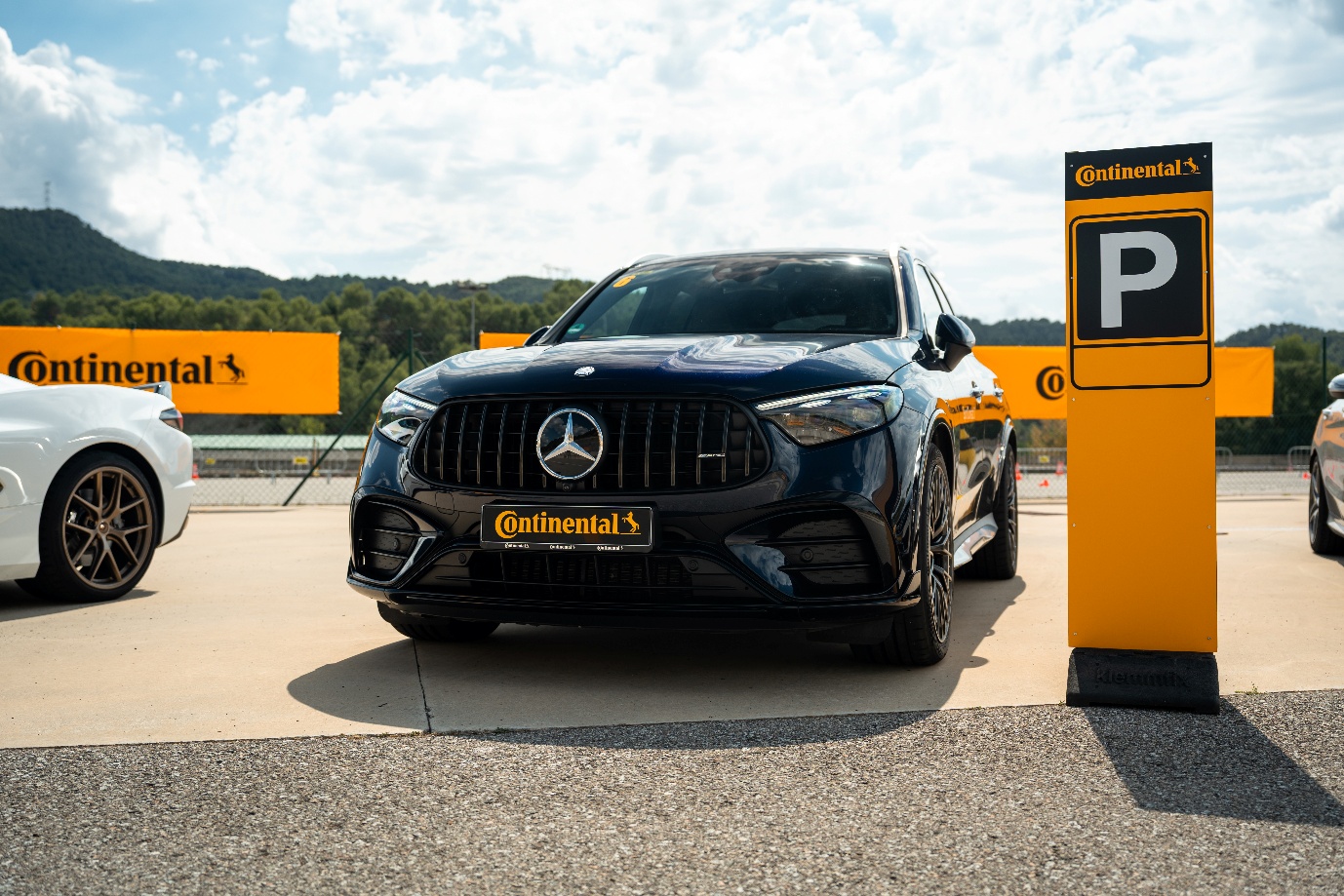
There are several reasons for this, including larger vehicle designs, additional equipment and the growing popularity of SUVs.
Electric vehicles can add another challenge because their battery packs contribute considerable weight.
A heavier vehicle places greater demands on its tyres during braking, acceleration and cornering.
When braking, for example, more vehicle mass means more energy needs to be dissipated to bring the car to a stop from the same speed.
During cornering, the tyres also have to manage the forces involved in changing the direction of that mass.
So, a tyre fitted to a modern electric family car might need to cope with both substantial torque and a relatively heavy vehicle.
That’s a demanding combination.
Continental have highlighted how demand for ultra-high-performance (UHP) tyres has grown as modern vehicles have become heavier, more powerful and increasingly electrified.
According to figures presented by Continental, UHP tyres accounted for approximately 11% of its referenced EMEA market in 2016, rising to 32% in 2025.
That growth reflects changing vehicle requirements.
Larger wheels, heavier SUVs and powerful electric cars all place greater demands on tyre performance.
UHP tyres are no longer relevant only to sports cars and high-performance coupés.
Modern SUVs, electric saloons and family cars may also require tyres capable of managing substantial loads and driving forces.
The challenge is delivering that performance alongside the comfort and durability drivers expect.
If modern cars are heavier and produce more torque, wouldn’t the solution simply be to make tyres with more grip?
Unfortunately, it’s not quite that straightforward.
This is one of the challenges Continental face when developing tyres for modern vehicles.
Drivers want strong grip and reliable braking, but they also expect tyres to last, remain comfortable and help keep running costs down.
For electric vehicles, rolling resistance and noise can be particularly important.
Reducing rolling resistance can help improve efficiency and potentially extend an EV’s driving range, while managing tyre noise can contribute to a quieter cabin.
But improving efficiency must be balanced against other important characteristics, including braking and handling.
It’s why modern tyre development involves much more than simply maximising grip.
As cars become heavier, more powerful and increasingly electrified, tyre manufacturers face the challenge of meeting several different performance requirements at once.
Continental’s SportContact range is one example of its focus on high-performance driving, with the SportContact 7 developed to deliver grip, handling and braking performance.
But the wider challenge goes beyond sports cars.
Modern family vehicles also need tyres capable of supporting greater loads, managing strong acceleration and delivering the efficiency and comfort drivers expect.
For Continental, this means developing tyres around the demands of today’s vehicles rather than treating performance, durability and efficiency as separate priorities.
Not necessarily. Electric vehicles don’t automatically require tyres specifically marketed for EVs.
What matters is choosing tyres that meet the vehicle manufacturer’s specifications, including the correct size, load rating and speed rating.
For electric cars, characteristics such as rolling resistance, noise, wet grip and durability can be particularly important.
Some heavier EVs may also require reinforced tyres with higher load capacities, such as XL or HL tyres, depending on the vehicle’s requirements.
The right tyre depends on the car and how it’s used, rather than whether it carries an EV-specific label.
You don’t need to own a Volkswagen ID.7 GTX or a Ferrari F40 for any of this to matter.
Whether you drive an electric family car, a petrol SUV or a conventional hatchback, your tyres need to manage acceleration, braking, cornering and vehicle weight.
That’s why choosing the correct tyre specification is important.
When replacing tyres, check the recommended size, load rating and speed rating, alongside characteristics such as wet grip, efficiency and noise.
And maintaining the correct tyre pressures remains one of the simplest ways to help your tyres perform as intended.
The F40 might still be the more exciting car of the two, but Continental’s comparison with the ID.7 GTX highlights just how much everyday vehicle performance has changed.
The demands once associated with supercars are increasingly becoming part of everyday driving – and Continental are developing tyre technology to meet them.

We love to hear from our customers. Connect with us today and let’s start a conversation.
