If your engine management light (EML) has come on, you might be wondering whether you can keep driving, what’s causing it, and if it means your car will fail its MOT.
This article will take a look at what the engine management light means. In particular the common causes and what you should do next if that light comes on.
What is the engine management light?
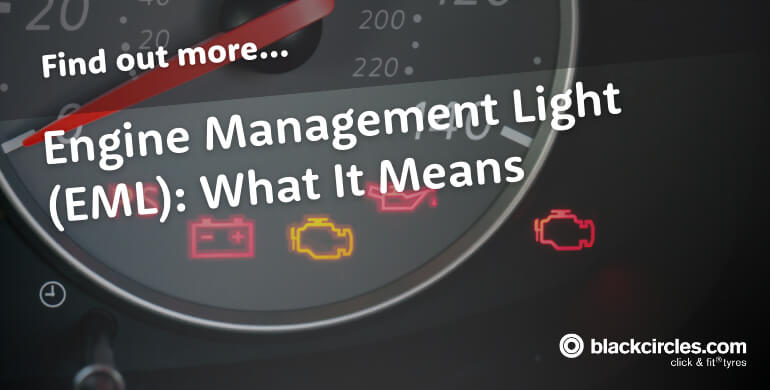
The EML - sometimes called the check engine light or engine warning light - is a dashboard symbol that looks like the outline of an engine.
It’s controlled by your car’s engine control unit (ECU), which uses sensors to monitor performance and emissions. If a fault is detected, the ECU switches the light on.
What does each type of engine management light mean?
Light Type
Meaning
Action to Take
Solid amber
A minor fault, often linked to emissions
Book a diagnostic soon - okay to drive short distances.
Flashing amber
More serious fault (e.g. misfire, catalytic converter risk)
Stop driving as soon as possible - risk of damage.
Solid red
Critical engine fault
Pull over safely straight away. Switch off the engine and call breakdown assistance.
Is it safe to drive with the engine management light on?
Solid amber: Usually safe to continue driving carefully but get your car checked sooner rather than later.
Flashing amber: Best to stop as soon as possible. Continuing to drive can cause expensive damage.
Red: Do not drive. Stop immediately in a safe place and call for assistance.
What causes the engine management light to come on?
Oxygen sensor fault: Monitors fuel/air mix. If faulty, it can affect emissions and fuel economy.
Catalytic converter issues: A damaged or clogged converter can trigger the EML and lead to poor performance.
Diesel particulate filter (DPF) blockage: Common in modern diesels. If blocked, it can cause the EML to illuminate.
Mass airflow sensor fault: Measures air entering the engine. Faults can upset the fuel-air mix.
Ignition system problems: Faulty spark plugs or coils can trigger the EML, often with rough running or misfires.
Loose fuel cap: Surprisingly common - vapour leaks can cause the ECU to switch on the warning light.
Blocked fuel pump: Can reduce fuel flow, causing loss of power and warning light activation.
Clutch/gearbox issues: Sensor faults or slipping clutches can activate the EML.
General sensor failures: Modern cars rely on many sensors. A faulty reading can trigger the light.
Estimated repair costs
Spark plugs: £50–£150
Mass airflow sensor: £200–£400
Catalytic converter: £600+
DPF replacement: £1,000+
Does an engine management light mean MOT failure?
Yes - if the engine management light stays on, it’s classed as a major fault and will result in an MOT failure.
Exceptions:
Petrol cars registered before 1 July 2003
Diesels registered before 1 July 2008
How to reset the engine management light
Switch the car off, wait a few minutes, and restart - sometimes clears temporary faults.
Check obvious causes (loose fuel cap, dipstick not secured).
If the fault persists, an OBD-II scanner can read and clear codes, but the light will return unless the issue is fixed.
Best practice: have a mechanic diagnose and repair the problem.
Engine Management Light FAQs
Will the EML reset itself?
Yes, if the fault is temporary. But if it returns, there’s likely an ongoing issue.
Can low oil trigger the EML?
Not usually. Low oil has its own warning light, but it’s still a serious problem.
Why does the EML come on and my car loses power?
The ECU may put your car into “limp mode” to protect the engine. This reduces power but allows you to reach a garage safely.
Can I remove the EML permanently?
No - only fixing the fault will clear the light. Resetting without repair risks long-term damage.
Paying attention to your engine management light helps prevent costly repairs and ensures your car remains safe and roadworthy.
PayPal Credit and PayPal Pay in 3 are trading names of PayPal UK Ltd, 76 Upper Ground, London, SE1 9PZ. Terms and conditions apply. Credit subject to status and approval, 18+ UK residents only. PayPal Credit and PayPal Pay in 3 are a form of credit, so carefully consider whether the purchase is affordable and how you will make the repayments. PayPal Pay in 3 is a credit agreement. See product terms for more details and FAQs. Learn more about PayPal Credit.Learn more about PayPal Pay in 3.