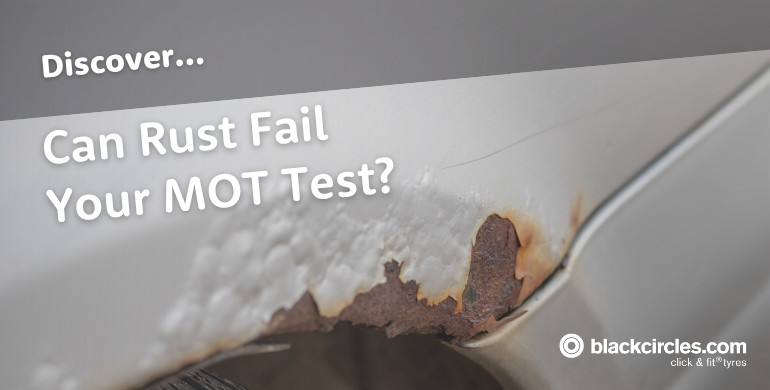
Rust on your vehicle occurs due to iron reacting with oxygen and water, eventually leading to corrosion.
Factors like poor vehicle maintenance, climate, driving behaviour, and more contribute to rusting on cars.
While rust might just seem like a visual impairment, this vehicle fault can actually lead to MOT failure.
So, how does it lead to your
MOT test failing? How can you avoid this? That’ll be explored in this article today.
What Is Rust?
Rust is a type of corrosion that occurs when iron and steel start to deteriorate due to oxidation – the chemical reaction between iron, oxygen, and water that produces hydrated iron (III) oxide (commonly known as rust).
Over time, this weakens the metal, causing flaking, pitting, and structural degradation.
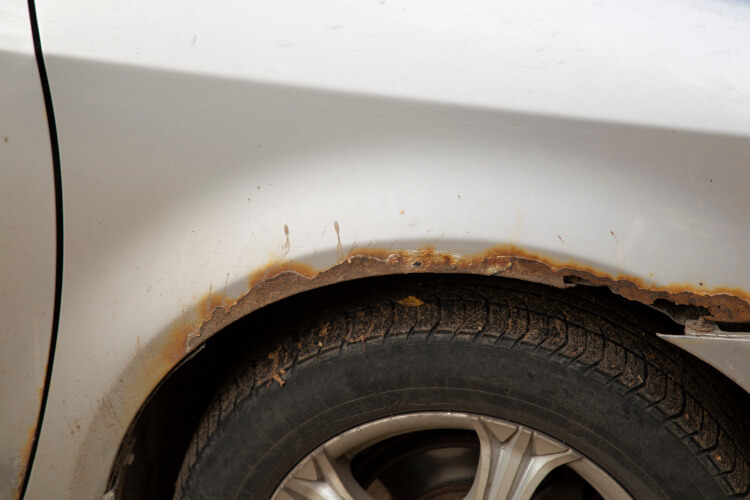
Rust is particularly common on older cars, especially in areas that see harsh weather, road salt, or poor drainage.
How Can Rust Fail My MOT?
During your MOT test, the examiner checks not only your car’s visible panels but also key structural components underneath.
The concern isn’t cosmetic rust – it’s when corrosion affects the integrity or safety of your vehicle’s structure.
According to the official MOT inspection guidelines, rust or corrosion can cause an MOT failure if it:
- Affects a “load-bearing” or structural area, such as the chassis, sills, suspension mounts, or seat belt anchor points.
- Weakens prescribed areas, defined as sections within 30cm of critical components like brakes, steering, or seat belt mountings.
- Reduces the rigidity of the car’s structure, risking steering or braking stability.
- Creates sharp edges or projections that could injure pedestrians or other road users.
If your vehicle falls into either
“major” or “dangerous” category, it will fail the MOT.
Driving with a dangerous defect is illegal and could result in a fine of up to £2,500, penalty points, or even a driving ban.

Where MOT Testers Check for Rust
Testers pay close attention to several key areas where corrosion commonly causes issues:
- Chassis and subframe – These are crucial load-bearing sections that support the vehicle’s weight and suspension.
- Suspension and steering mounts – Any corrosion near these components risks affecting handling and control.
- Seat belt anchor points – Rust near the seat belt mounts can compromise passenger safety.
- Brake line mounts and floorpan – Corrosion around these can affect braking performance and MOT safety standards.
- Body mounts, sills and jacking points – Rust here can prevent safe lifting and weaken structural integrity.
Even smaller areas like bumpers, mirror housings, and undertrays are checked for insecurity or detachment risk.
If rust makes these parts loose or dangerously sharp, the vehicle could still fail under body and interior checks.

How to Avoid Corrosion on Your Car
Rust prevention is largely about regular maintenance and early intervention.
Once corrosion takes hold, it’s harder (and more expensive) to reverse.
Here’s how to reduce the risk:
- Keep your car clean: Wash the underbody and wheel arches regularly, especially after driving on salted roads in winter.
- Repair paint chips quickly: Exposed metal is vulnerable to oxidation, so touch up damaged paintwork as soon as possible.
- Check for trapped moisture: Ensure drainage holes around doors, boot, and sills are clear so water can escape.
- Apply underseal or rust protection coatings: Professional treatments can significantly slow down corrosion on high-risk areas.
- Inspect key areas annually: During routine servicing, ask your mechanic to check underbody corrosion points and sills.
Catching rust early is the best way to prevent MOT issues later – especially if you live in coastal areas or frequently drive on gritted roads.

Final Thoughts: Rust and MOT Failure
Rust may seem harmless at first glance, but left unchecked, it can threaten your car’s structure, safety, and ultimately your MOT pass.
Cosmetic rust isn’t an issue – but when corrosion affects vital components like the chassis, sills, or suspension mounts, it becomes a serious safety concern.
By keeping your car clean, regularly serviced, and addressing small rust patches early, you can greatly reduce the risk of an MOT failure.
If you suspect corrosion might cause issues before your test, it’s worth booking a pre-MOT inspection or service to catch and fix the problem before it becomes costly.
Remember: you can book your next MOT and/or service through Blackcircles.com online today.
FAQs:
How much does it cost to repair rust before an MOT?
The cost depends heavily on where the rust is and how far it has progressed. Minor surface rust treated early with sanding and filler is relatively inexpensive. Welding in new metal to replace badly corroded sills, chassis sections, or floor pans is significantly more costly and the bill can rise quickly on older vehicles where rust has spread. Getting a pre-MOT inspection is the best way to understand the scope of any work required before committing to repairs.
Is it worth repairing a rusty car that has failed its MOT?
This depends on the age, value, and overall condition of the vehicle. If the rust is limited to one or two areas and the rest of the car is in good shape, repair is often worthwhile. However, if corrosion is widespread across multiple structural areas, the cost of welding and remedial work can quickly exceed the car's market value. A trusted mechanic can give you an honest assessment of whether the repairs are economically viable.
Are some cars more prone to rust than others?
Yes. Older vehicles manufactured before modern galvanisation and anti-corrosion treatments became standard are generally more susceptible to rust. Certain makes and models also have known weak points, such as sills, wheel arches, or floor pans, that are particularly prone to corrosion. Cars regularly used in coastal areas or on heavily salted winter roads will also tend to rust more quickly regardless of age.
Can I use a rust converter or DIY treatment to fix corrosion before my MOT?
DIY rust treatments and converters can be effective for minor surface rust on non-structural panels, helping to stabilise early corrosion and prevent it from spreading. However, they are not a substitute for professional welding when structural components are affected. An MOT tester will assess the integrity of the metal, not just its appearance, so a surface treatment alone will not resolve a failure caused by weakened load-bearing areas.
Can aluminium panels rust?
Aluminium does not rust in the traditional sense, as rust is specific to iron and steel. However, aluminium can corrode through a process called oxidation, which produces a dull, chalky white residue on the surface. While this form of corrosion is generally less structurally damaging than rust, it can still cause issues if it affects load-bearing components or creates sharp edges. Many modern vehicles use aluminium body panels partly for this reason, though the steel chassis and structural elements underneath remain vulnerable to conventional rust.