Much like snowflakes, no two Scottish winters are ever the same. One morning the Central Belt is simply cold and damp, while drivers on the A9 or around Aberdeenshire are dealing with snow, slush and frozen back roads.
So whether winter tyres are worth it is a loaded question and depends on where you live and where you drive. For some Scottish drivers, they're a sensible safety upgrade. For others, a good all-season tyre does most of the job for less hassle.
The short answer: if you live or regularly drive in the Highlands, the north-east or on rural, hilly or ungritted roads, winter tyres are usually worth it. If you mostly drive in and around Edinburgh, Glasgow and the rest of the Central Belt, all-season tyres are often the better-value choice.
Are winter tyres worth it in Scotland?
It depends on where you live and drive.
The real split in Scotland is between two types of winter driving:
- Highlands, rural and higher ground: longer cold spells, more frequent snow and ice, and roads that may not be gritted before you set off. This is where winter tyres earn their keep.
- The Central Belt: lying snow is less frequent at low level, but cold, wet and frosty mornings are common. Dedicated winter tyres help, but you may only use their full ability on a handful of days.
How often does Scotland actually get snow?
According to the Met Office, Scotland averages 23 days a year with snow lying on the ground, compared with 13 days for the UK as a whole (1991 – 2020 averages). Most of that is on higher ground. Snow falls on around 76 days a year at the
Cairngorm chairlift weather station and 66 days in Aviemore (1981 – 2010 averages), while low-lying towns and cities see far fewer.
It's worth knowing that you will hear winter tyres called 'snow tyres', but they're designed for more than snow. Their tread compound and pattern are built for every element of the whole cold season, including wet roads near freezing, slush and frost.
If you decide dedicated winter tyres suit your driving, one that does the trick is the
Michelin Alpin 7. It won Autožurnál's
2025 winter tyre test on a VW Tiguan and was rated 'exemplary'
by Auto Bild Sportscars, so it's a strong pick whether you drive a family hatchback or an SUV.
What difference do winter tyres make on snow, ice and cold roads?
Winter tyres use a softer compound, with more natural rubber and silica, that stays flexible as temperatures fall. Summer tyres harden in the cold and lose grip. Winter tyres also have deeper grooves and lots of small slits (sipes) that bite into snow and help clear water and slush.
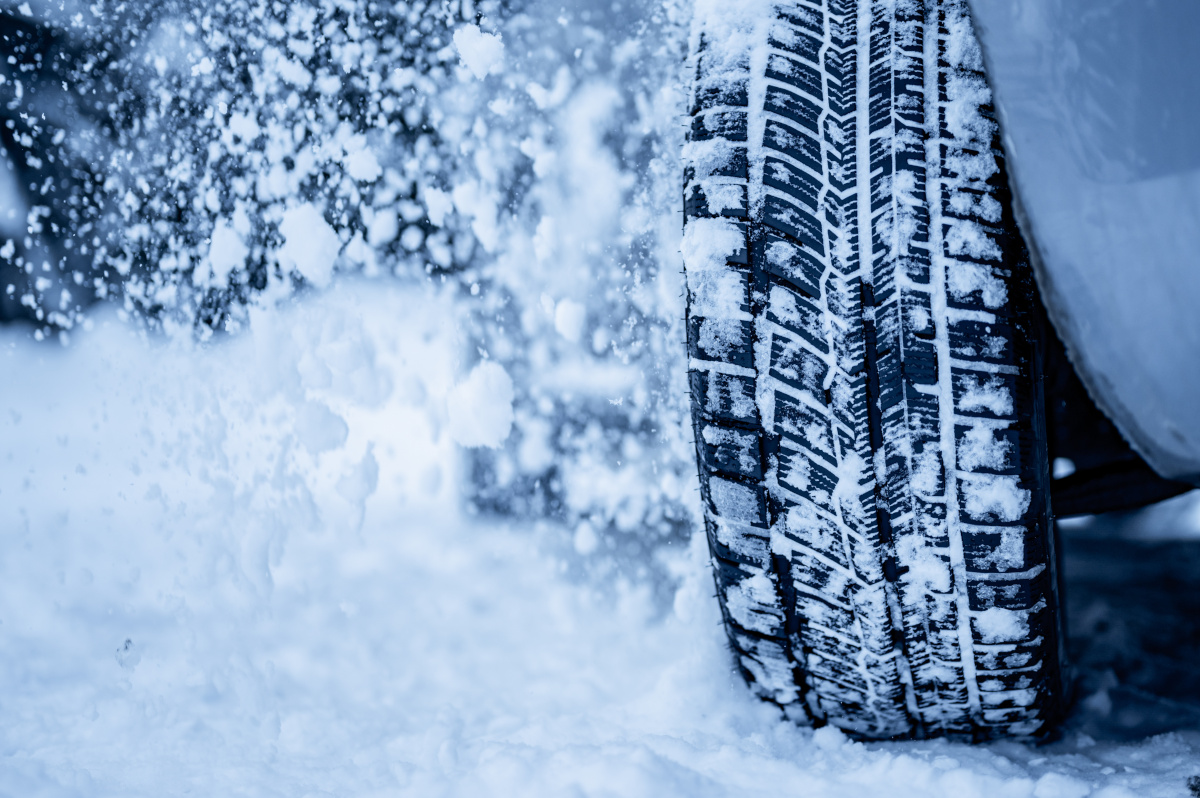
On snow, the gap is huge. In Auto Bild's
2025 winter tyre braking test, the summer reference tyre needed 51.1 metres to stop from 50 km/h (31 mph) on snow. The best winter tyre stopped in 27.1 metres, close to half the distance.
Winter tyres do have limits, though:
- On cold but dry or wet roads, a good summer tyre can still stop shorter than a winter tyre.
In Auto Express's 2025 test, the summer tyre out-braked even the best winter tyre in both the cold wet and the dry tests. Winter tyres pull ahead as conditions get closer to freezing and turn to sleet, snow and ice.
- On black ice, no road tyre gives you dependable grip. Winter tyres can shorten your stopping distance, but
the Highway Code warns that stopping distances in icy and snowy weather can be ten times greater than on dry roads, and that tyres make almost no noise on ice. In Tyre Reviews'
2024/25 test on a prepared ice surface, braking from 25 km/h (16 mph), the reference winter tyre stopped in 9.5 metres. The summer tyre needed 32.2 metres, more than three times as far. Slowing down and leaving a much bigger gap matters more than any tyre.
Do you need winter tyres in the Highlands or on rural roads?
If you live in or around Inverness, Aberdeen or anywhere on higher ground, winter tyres are worth serious thought.
Rural and Highland driving tends to combine the conditions winter tyres are built for:
- Longer cold spells, so the tyres spend more of the winter in their ideal temperature range.
- Hills and single-track roads, where traction to pull away and grip to stop on a slope make a real difference.
- Roads that are gritted later or not at all, particularly minor roads and farm access routes, which often sit lower on gritting priority lists than trunk roads.
- Longer journeys with fewer alternatives, where getting stuck or turning back is a bigger problem than in town.
For drivers in Aberdeen and the wider north-east, and anyone regularly heading up the A9 towards Inverness, a set of dedicated winter tyres is often the safest choice from autumn to spring.
Do 4x4s and SUVs need winter tyres?
Four-wheel drive helps you pull away on snow, but it doesn't help you steer or stop. That still comes down to your tyres.
In a
Tyre Reviews test, a front-wheel-drive BMW X1 on winter tyres outperformed a four-wheel-drive X1 on summer tyres in the snow.
Heavy SUVs on wide, sporty tyres can struggle even more in snow. If you drive a 4x4 or SUV in the Highlands or on rural roads, winter tyres, or at least 3PMSF-marked all-season tyres, are what let the four-wheel drive do its job.
Are winter tyres worth it in the Central Belt?
For many drivers in Edinburgh and Glasgow, it's a closer call.
Low-lying parts of the Central Belt see snow less often, and main roads are often treated more quickly than those in the Highlands. That means dedicated winter tyres may only make a big difference on a few days each year, while you still pay for a second set, the changeovers and storage.
Consider winter tyres in the Central Belt if you:
- live on a hill, in a rural village or on a road that isn't gritted
- commute early in the morning or late at night, when frost and ice are most likely
- regularly drive north into the Highlands for work, family or skiing
- want the best possible grip on snowy days rather than staying at home
If none of those apply, an all-season tyre with the 3PMSF marking is often the more practical option.
Only drive occasionally in winter? Then the case for winter tyres is weaker still. Scotland's lying snow is mostly on higher ground. If you can wait out the worst days at home, a 3PMSF-marked all-season tyre will cover the cold, wet and frosty days in between, without the cost of a second set. The exception is if the trips you do make can't wait, such as early shifts or caring for someone, and take you onto untreated or hilly roads.
Are all-season tyres a good alternative?
For many Scottish drivers, yes.
All-season tyres sit between summer and winter tyres. They use a compound that copes with a wider temperature range, so you can keep them on all year with no changeovers or storage.
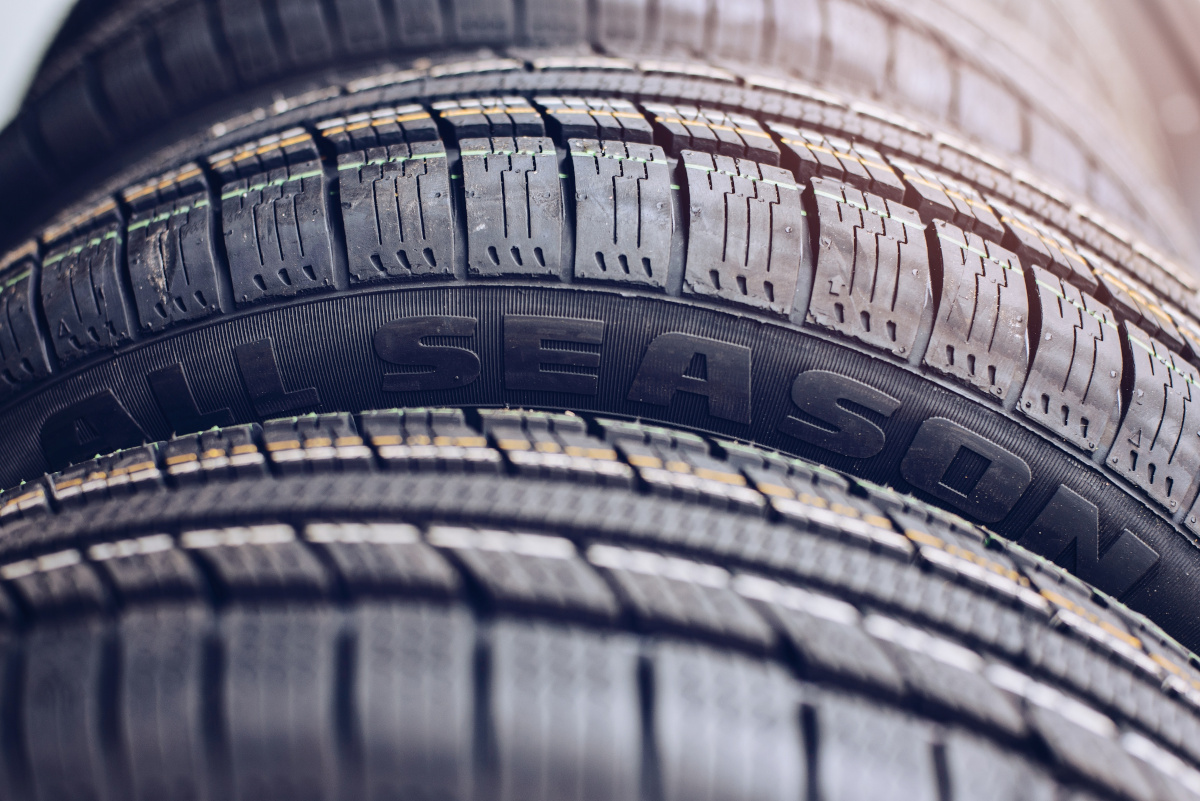
When shopping, look for the 3PMSF marking (three-peak mountain snowflake) on the sidewall. It shows the tyre has passed a recognised snow performance test, which sets it apart from older 'M+S' (mud and snow) all-season designs that carry no tested snow rating.
Here's how the three tyre types compare for Scottish winter driving:
| Feature
| Summer
| All-season (3PMSF)
| Winter
|
|---|
| Best suited to
| Warmer months
| Year-round use where winters are mild
| October to March, or longer on high ground
|
| Snow and ice
| Poor
| Good
| Best
|
| Warm, dry roads
| Best
| Good
| Weakest
|
| 3PMSF marking
| No
| Yes (check the sidewall)
| Yes
|
| Second set, changeovers and storage
| Not needed
| Not needed
| Needed, with changeovers twice a year
|
All-season tyres suit:
- city and Central Belt drivers who see snow occasionally
- drivers who want one set of tyres all year
- anyone without space to store a second set
One all-season tyre that does the trick for Scottish winters is the
Michelin CrossClimate 3. It carries the 3PMSF marking, and Tyre Reviews' write-up of
Auto Bild's 2025 all-season test singled it out as the strongest tyre on snow, with cold-weather grip close to a dedicated winter tyre.
Dedicated winter tyres still win if you regularly drive in snow and ice, live in the Highlands or on high ground, or simply want the strongest possible winter grip.
For a closer look at how the two compare, read our guide to
all-season tyres vs winter tyres.
What are the best winter tyres for Scotland?
The best winter tyre for you depends on your car, your budget and how often you actually drive in snow, but independent test results are the most reliable guide. Whichever tier you choose, check the tyre carries the 3PMSF marking.
- Premium: Michelin, Continental, Bridgestone, Pirelli and Dunlop. These are the strongest choice if you regularly face snow and ice or cover high winter mileage.
- Mid-range: brands such as Uniroyal, Kumho, Vredestein and Falken. A good balance of price and performance for occasional winter driving.
- Budget: the cheapest winter tyres, from brands such as Tomket and Nankang. Results vary more between models at this end of the market, so check independent tests before you buy.
Alongside the Michelin Alpin 7, another premium pick is the
Continental WinterContact TS 870, which
won Auto Express's 2025 winter tyre test in the popular
225/45 R17 size.
How much do winter tyres cost?
The cost of running winter tyres goes beyond the tyres themselves. Budget for:
- a second set of tyres for your car's size
- fitting and changeovers, usually twice a year, in autumn and spring
- storage, at home or with a garage
- an optional second set of wheels, which can make changeovers quicker and cheaper
There's a saving too. While your winter tyres are on, your summer tyres aren't wearing, so they last longer. Over several years, much of the extra cost is spread across both sets, not added on top.
Prices vary widely by tyre size, brand and model. Enter your registration on Blackcircles.com to see fully fitted prices for your car.
Should you buy a second set of wheels?
Fitting your winter tyres to their own set of wheels, often cheaper steel wheels, turns each changeover into a quick wheel swap rather than removing and refitting tyres on the same rims. That usually makes changeovers quicker and cheaper, and helps protect your alloys from winter road salt.
Make sure any extra wheels match your car's specification, and check with your insurer before fitting different wheels, as winter tyre commitments don't always extend to wheels.
How to store winter tyres
Storing your off-season set properly helps it last. Michelin recommend:
- Clean them first: wash the tyres with water, dry them thoroughly and remove any stones from the tread.
- Keep them indoors: somewhere clean, cool, dry and well ventilated, away from direct sunlight and heat sources.
- On wheels: stand them upright, hang them up or stack them, no more than two high.
- Without wheels: stand them upright rather than stacking or hanging them.
If you don't have space at home, some garages and tyre specialists offer seasonal storage, sometimes called a tyre hotel.
When should you fit and remove winter tyres?
TyreSafe, the UK tyre safety charity, recommend fitting winter tyres between October and March. They point to 7°C as the temperature below which winter tyres start to outperform summer tyres.
In practice, many Scottish drivers fit them in October or early November and swap back once spring settles, usually March or April. If you're further north or on higher ground, you may want them on earlier and off later.
Can you leave winter tyres on all year? There's no law against it, but it isn't ideal. The soft compound wears faster in warmer weather, and you lose the sharper dry and wet grip of a summer tyre. If you want one set all year, an all-season tyre is the better choice.
Get winter or all-season tyres fitted in Scotland with Blackcircles.com
Whether you're in the Highlands or the Central Belt, you can buy winter or all-season tyres online and choose a local fitting garage or mobile fitting at a time that suits you.
We have fitting partners across Scotland, including:
Or book
mobile tyre fitting and have them fitted at home or work.
Browse our full ranges of
winter tyres and
all-season tyres. Popular options include the
Michelin Alpin 7 for dedicated winter grip and the
Michelin CrossClimate 3 as a 3PMSF-marked all-season tyre.
Need new winter tyres?
Enter your registration and postcode and we’ll show you the best winter tyres for your vehicle
Winter tyres in Scotland FAQs
Are winter tyres worth it in Scotland?
They're usually worth it if you live or regularly drive in the Highlands, the north-east or on rural, hilly or ungritted roads. In the Central Belt, many drivers get better value from 3PMSF-marked all-season tyres.
Does a 4x4 need winter tyres?
Four-wheel drive improves traction when pulling away, but it doesn't help you brake or steer on snow and ice. Independent tests show a 4x4 on summer tyres stops far further on snow than one on winter tyres.
Are all-season tyres good enough for Scottish winters?
For most Central Belt and city driving, a 3PMSF-marked all-season tyre is a good compromise. If you regularly face snow and ice, dedicated winter tyres give more grip.
Can I leave winter tyres on all year?
You can, but it isn't recommended. They wear faster in warm weather and give less grip than summer tyres on warm, dry roads. All-season tyres are the better choice for a single year-round set.
When should I fit winter tyres?
TyreSafe recommend October to March. In Scotland, many drivers fit them in October or early November and switch back in March or April.
Is it illegal to drive without winter tyres in the UK?
No. There's no legal requirement to fit winter tyres in the UK. Whatever tyres you use must still have at least 1.6 mm of tread across the central three-quarters, or you could face a fine of up to £2,500 and three penalty points per tyre.
Will winter tyres affect my car insurance?
Fitting winter tyres shouldn't push your premium up. Insurers signed up to the Association of British Insurers' winter tyre commitment don't charge extra, as long as the tyres meet your car manufacturer's specifications. Some insurers ask to be told when you fit them, so check your policy.
Do winter tyres help on black ice?
They can improve grip and shorten stopping distances compared with summer tyres, but no road tyre gives dependable grip on black ice. In one independent test, a summer tyre took more than three times as far to stop on ice as a winter tyre. Drive slowly, leaving a bigger gap.
How much do winter tyres cost?
It depends on your tyre size, brand and model. As well as the tyres, factor in fitting, twice-yearly changeovers and storage. Enter your registration on Blackcircles.com for fully fitted prices.
Where can I get winter tyres fitted in Scotland?
Blackcircles.com have fitting garages across Scotland, including in Aberdeen, Edinburgh, Glasgow and Dundee, plus mobile fitting at home or work.