×
There's still time...
Up to 15% off selected All Season tyres
Tyres  /  Tyre NewsHelp and Advice  / 5 Tips for Keeping You & Your Family Safe on the Road

5 Tips for Keeping You & Your Family Safe on the Road

5 Tips for Keeping You & Your Family Safe on the Road

Having a family comes with great responsibility, no matter the size.

The first thing that comes to mind when taking care of your family may be to provide comfort or create lasting memories together, but undoubtedly one of the first priorities is to keep your family safe – this includes when driving.

Let’s explore 5 crucial tips and practices when driving with your family to ensure everyone has a safe and comforting journey.

5 Best Practices for Safe Driving

1. Secure Your Seatbelts at All Times

2. Keep to Speed Limits

3. Maintain a Safe Stopping Distance

4. Tyre Maintenance

5. Plan Your Journey

1. Secure Your Seatbelts at All Times

Firstly, making sure everyone in your vehicle is strapped up with a seatbelt is crucial in keeping your family safe.

Seatbelts provide strong protection in case of a crash/emergency, as long as you wear it correctly.

To wear a seatbelt correctly, make sure it lies flat across your chest and shoulder without twisting, and that the lap belt sits over your hips rather than your stomach.

A couple getting in a car putting on seatbelts

Any adult driving a vehicle is responsible for making sure children under 14 years of age are wearing a seatbelt – failure to do so will end up in a fine of up to £500.

The safety of everyone in the car is maximised the second your seatbelts are fastened and secured.
 

2. Keep to Speed Limits

Ensuring you drive within the speed limit for the road you’re on greatly enhances your safety while driving.
The UK has a wide range of speed limits for different driving locations:

These limits outlined are for passenger cars and motorcycles, with restrictions on speed varying between different vehicle types.

Please remember that speed limit rules are there not to be broken – keeping to these restrictions not only keeps everyone in your vehicle as protected as possible, but also keeps surrounding road users safe by reducing the risk of an accident.

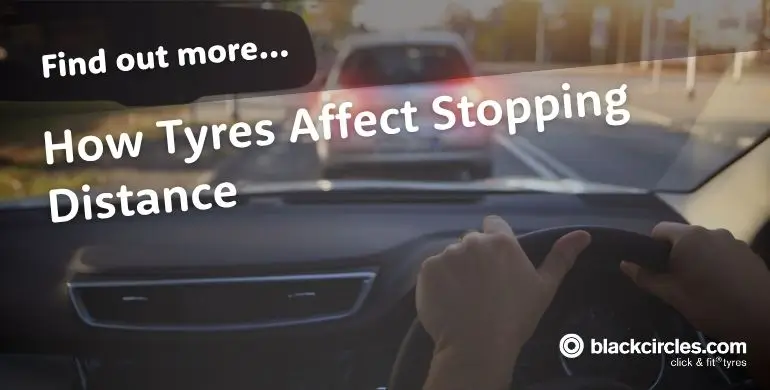
3. Maintain a Safe Stopping Distance

Stopping distance refers to the time it takes to stop your vehicle while driving.

This is usually worked out by the following formula:

Thinking Distance + Braking Distance = Stopping Distance

Understanding how these distances work together is essential for maintaining a safe gap between your car and the vehicle ahead.

Family in car

Thinking Distance

Thinking distance is the distance your car travels in the time it takes for you to react and press the brake pedal.

It depends on your reaction time, which can be affected by factors such as tiredness, distraction, and speed.

Speed Thinking Distance
20 mph 6 m (20 ft)
30 mph 9 m (29 ft)
40 mph 12 m (39 ft)
50 mph 15 m (49 ft)
60 mph 18 m (59 ft)
70 mph 21 m (69 ft)

The faster you’re driving, the greater your thinking distance will be.
 

Braking Distance

Braking distance is the distance your vehicle travels after the brakes are applied until it comes to a complete stop.

Speed Braking Distance
20 mph 6 m (20 ft)
30 mph 14 m (46 ft)
40 mph 24 m (79 ft)
50 mph 38 m (125 ft)
60 mph 55 m (180 ft)
70 mph 75 m (246 ft)

It can be influenced by speed, road conditions, tyre quality, weather, and the efficiency of your brakes.
 

Correct Stopping Distances

With the formula for stopping distances already outlined (Thinking Distance + Braking Distance = Stopping Distance) along with the thinking and braking distances, we can now start to understand the stopping distance for every 10mph relevant to speed limits in the UK:

Speed Thinking + Braking Distance Stopping Distance
20 mph 6 m (20 ft) + 6 m (20 ft) 12 m (40 ft)
30 mph 9 m (29 ft) + 14 m (46 ft) 23 m (75 ft)
40 mph 12 m (39 ft) + 24 m (79 ft) 36 m (118 ft)
50 mph 15 m (49 ft) + 38 m (125 ft) 53 m (174 ft)
60 mph 18 m (59 ft) + 55 m (180 ft) 73 m (240 ft)
70 mph 21 m (69 ft) + 75 m (246 ft) 96 m (315 ft)

By keeping to these stopping distances, you further enhance your families’ safety, as if you’re an appropriate distance behind a vehicle, the more chance you have of reacting to any sudden actions in front of you.
 

4. Tyre Maintenance

In the spirit of Tyre Safety Month (which is underway at the time of writing), the importance of your tyres when it comes to safety on the road should not go understated.

Your tyres are the foundation of your vehicle, meaning keeping on top of them is crucial in ensuring as much safety as possible while driving.

The founders of Tyre Safety Month, TyreSafe, use an excellent acronym for one of their most prominent tyre safety awareness campaigns: Air Pressure, Condition, Tread Depth (ACT).

These three aspects of ACT are vital in keeping your tyres maintained.

TyreSafe ACT campaign

Air Pressure

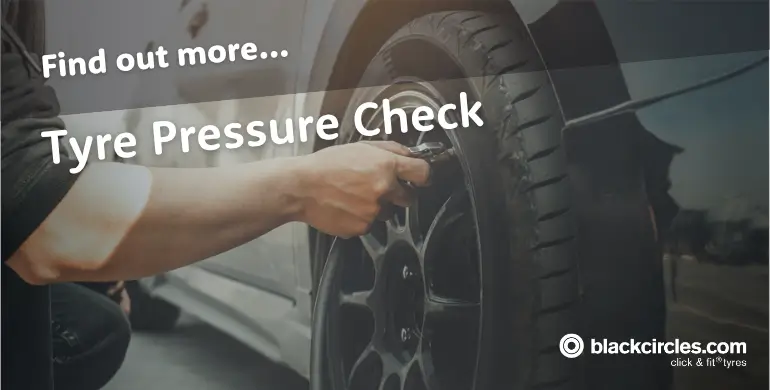
Maintaining the correct tyre pressure is essential for safety, fuel efficiency, and tyre longevity.

Underinflated tyres can increase stopping distances, reduce handling performance, and cause uneven wear – while overinflated tyres may reduce grip and ride comfort.

Checking your tyre pressure regularly helps your tyres perform as intended and prevents unnecessary repairs or replacements.

Read tyre pressure guide

Condition

Inspecting your tyres for cuts, bulges, or embedded objects is vital to avoid blowouts and keep your journey smooth and safe.

Damage can develop gradually and often goes unnoticed until it becomes serious.

A quick visual check can help identify early warning signs and prevent dangerous situations on the road.

Understand damaged tyre sidewall

Tread Depth

Your tyre tread is what keeps your car firmly gripped to the road, especially in wet or slippery conditions.

Worn treads significantly increase braking distances and the risk of aquaplaning.

Ensuring your tyres are above the legal minimum tread depth of 1.6mm helps maintain traction, improves braking, and keeps your vehicle road legal.

Learn how to check tyre tread depth

5. Plan Your Journey

Nothing’s worse than being stressed behind the wheel because of a wrong turn or unsure directions – to avoid this from happening, make sure to plan your journey before setting out.

Planning ahead not only helps you stay calm and focused, but also allows you to account for rest stops, fuel, and any potential delays.

Checking the weather and traffic conditions before leaving can also make a big difference to your journey’s safety and comfort.

Heading to somewhere you’re unfamiliar with? Set up any routes on your chosen satnav device before you leave so you know where to go whilst driving.
A well-prepared trip ensures your family arrives safely and stress-free, no matter the distance.

Safe Tips, Safer Trips

While these practices are just a few of many you should be looking to abide by while driving, following these 5 tips can make all the difference in keeping you and your family safe every time you travel.

From fastening seatbelts to maintaining your tyres, each step plays a vital role in reducing risks and ensuring peace of mind on the road.

Safe driving isn’t just about reaching your destination – it’s about protecting the people who matter most along the way.

Buy new tyres at Blackcircles.com
Want exclusive motoring news?

Subscribe to our newsletter for the latest EV, Performance, SUV & 4x4 content

Join our mailing listSign up
Back to news

Join the conversation

We love to hear from our customers. Connect with us today and let’s start a conversation.

PayPal
Representative Example: Purchase rate: 23.9% p.a. (variable). Representative: 23.9% APR (variable). Assumed Credit Limit: £1,200

PayPal Credit and PayPal Pay in 3 are trading names of PayPal UK Ltd, 5 Fleet Place, London, United Kingdom, EC4M 7RD. Terms and conditions apply. Credit subject to status and approval, 18+ UK residents only. PayPal Credit and PayPal Pay in 3 are a form of credit, so carefully consider whether the purchase is affordable and how you will make the repayments. PayPal Pay in 3 is not regulated by the FCA. See product terms for more details and FAQs. Learn more about PayPal Credit.  Learn more about PayPal Pay in 3.