Still got it: 5 cars that changed the world
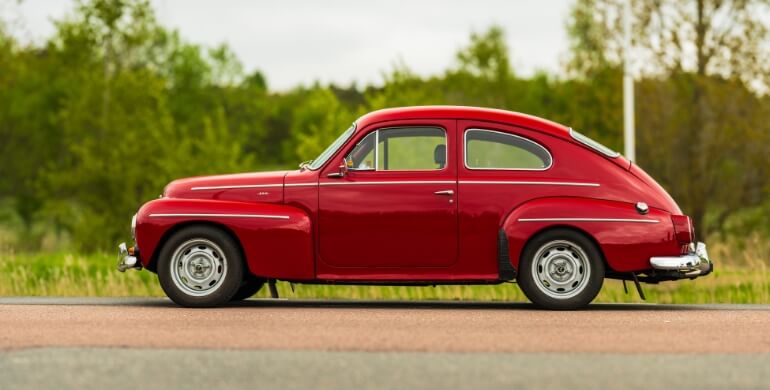
Forget the fastest or best-looking cars of all time, we’re looking at the blueprints which underpin the cars on our roads today. Buckle up (spoiler alert!) for our top five cars that changed the world.
Iconic cars come and go. Perhaps they built their names by being the fastest, the best looking, or even the cheapest of their era, but none of these accolades can guarantee that they won’t simply fade into the history books.
However, some cars are more than that; some cars changed the world. Rather than just moving people from A to B, these innovators introduced features which we rely on today, often without even realising.
Here are our top five groundbreaking models which prove that true innovation can stand the test of time.
1. Volvo PV544 (1959)
Need new performance tyres?
Enter your registration and postcode and we’ll show you the best tyres for your car
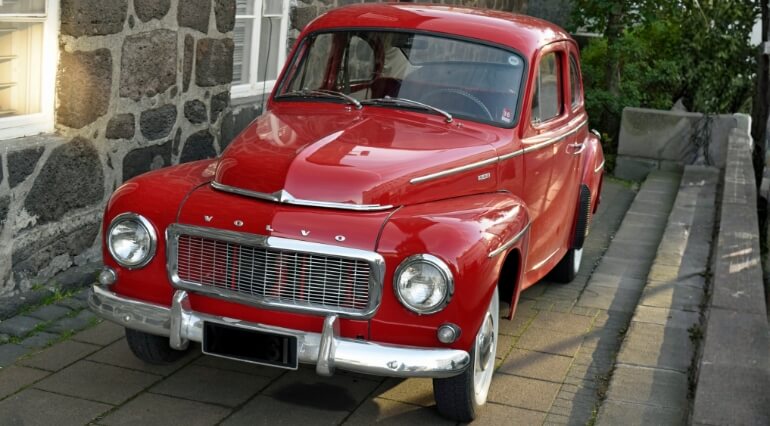
For many, Volvo is synonymous with automotive safety, and not without good reason. Before 1959, seatbelts were generally cumbersome and ineffective two-point affairs — if cars had them at all. Then came the PV544, alongside the brand’s Amazon model. Volvo engineer Nils Bohlin developed the simple yet revolutionary three-point seatbelt, which made its debut in these cars and, in an unprecedented move, released the patent rights for free.
You can make a very strong case that this decision has saved millions of lives across the globe since. This technology remains so effective that, every car, van, and lorry now uses a three-point belt based on the design found in the Volvo PV544. It remains the essential first step in occupant safety, nearly 70 years later. Simple, universally applicable, and here to stay: a restrained bit of genius we’d say…
2. Lancia Lambda (1922)
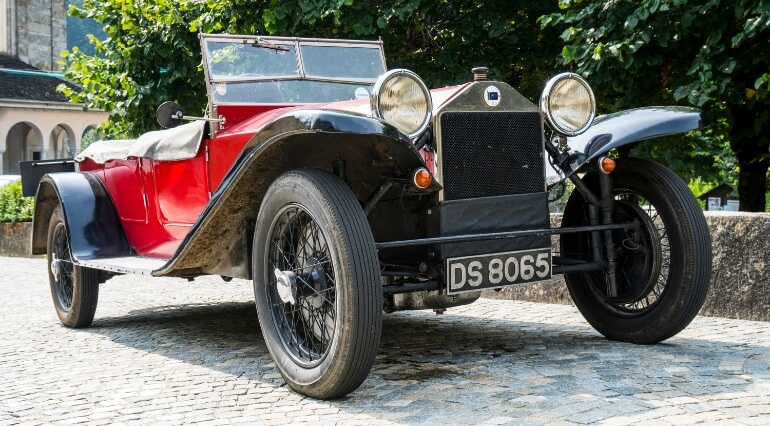
It’s time to strip things right back to their foundations. When the Lancia Lambda first took to the road, most cars were still built like carriages: a separate body bolted onto a heavy frame. But Lancia dared to rethink the entire process, pioneering the monocoque structure.
This monocoque integrated the floor, roof (if chosen), and pillars into one single, load-bearing unit. This revolutionary concept made the Lambda lighter, stiffer, and stronger than its contemporaries, while allowing a lower centre of gravity, improving handling and ride comfort. Every modern passenger car, from small hatchbacks to large SUVs, is built using this fundamental structural principle. In short, the Lambda gave backbones to the cars on the road today.
3. Mercedes-Benz S-Class W116 (1978)
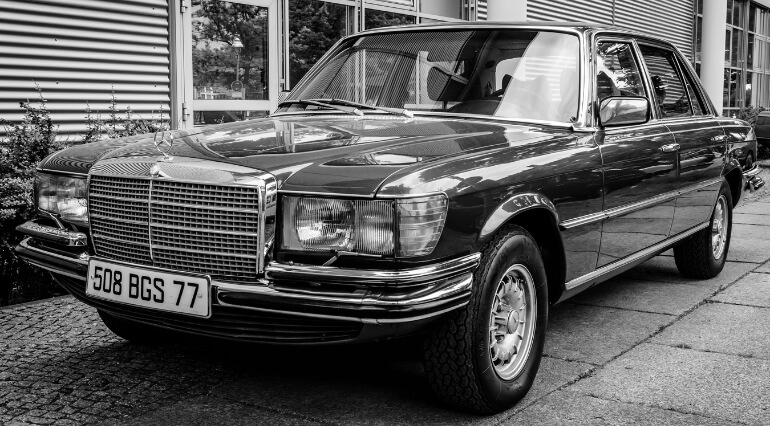
Although many manufacturers (including Dunlop, Ford, and Chrysler) had experimented with rudimentary anti-lock braking systems (ABS), by the late 1970s hitting the brakes hard on a wet or slippery road still brought the risk of locking the wheels and losing steering control. However, in 1978, Mercedes-Benz is widely credited with putting a stop to this with the W116 S-Class: the first successful production car to popularise the electronic anti-lock braking system.
Developed in collaboration with Bosch, this ABS used sensors to monitor wheel speed, pulsing the brakes thousands of times per minute to maintain traction, allowing for steering around obstacles even under maximum braking. This went a long way to standardising the notion of ‘active safety’ — the car assisting the driver before an accident happens — which we are familiar with today. ABS is now a mandatory feature worldwide and is the core component required for all modern driver aids.
4. Saab 99 Turbo (1978)
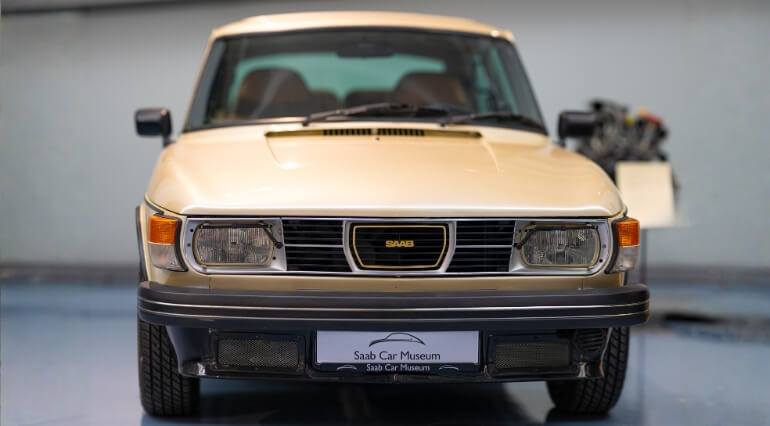
As with the previous entry’s smart-stopping tech, turbochargers existed before the 99, typically in commercial vehicles or high-performance racers. But it was Saab that brought reliable, mass-market turbos to the everyday petrol driver.
The 99 Turbo showed that you didn't need a huge, heavy engine to unlock powerful performance. By forcing air into a smaller engine, Saab proved it could deliver six-cylinder power with four-cylinder efficiency — bringing nippy acceleration without sacrificing fuel economy. Today, this innovation is all around us, with manufacturers using it to meet emissions targets and deliver performance from increasingly compact engines.
5. Toyota Prius (1997)
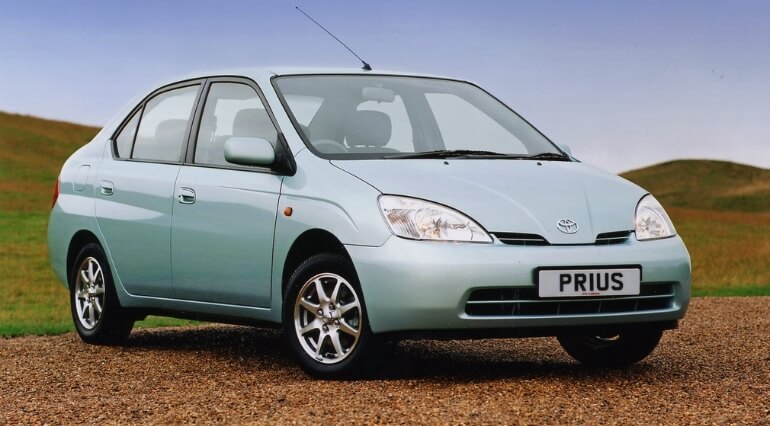
Controversial? Maybe. But it can’t be denied that first-generation Toyota Prius paved the way for a huge number of cars on the road today, introducing the world to the seamless, mass-market hybrid drivetrain — the first to truly catch on. And while the electric motor often takes centre stage, the technology that has truly stood the test of time is the Toyota’s Regenerative Braking.
In a traditional car, every time you brake, energy is wasted as heat. However, the Prius was engineered to use its electric motor to slow down, converting that energy back into electricity which recharged its battery. This ability to recapture energy which would otherwise be lost has since extended beyond hybrid cars, becoming a fundamental part of today’s EVs. Oh, and a bonus fact: the Prius also popularised stop/start systems, shutting the engine down when idling for even more efficiency.
These five cars innovated the way we engineer, structure, power, and stop our vehicles today. In some ways, the greatest inventions become so ingrained in everyday life, that we forget they were ever special, so consider this our shout-out to cars which changed the world.
Which of these five game-changers do you think has had the biggest impact on cars today?
Image credits: Adobe Stock
