
Join the conversation
We love to hear from our customers. Connect with us today and let’s start a conversation.
...searching
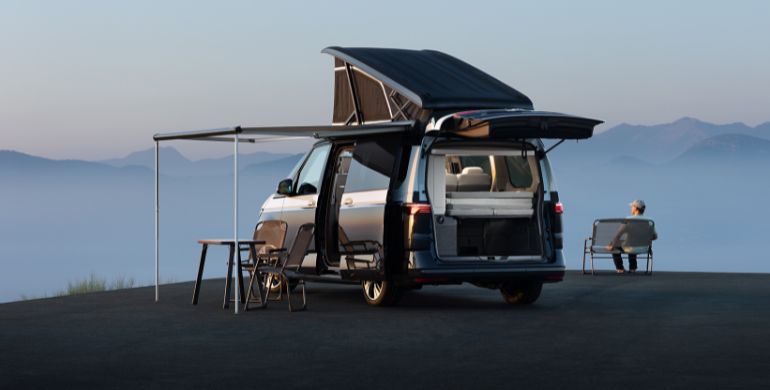
VW’s plan to give the T7 Multivan the California treatment shows it has an eye on the future, but remains grounded in reality.
You may have raised your eyebrows at Volkswagen’s use of the word concept here, and rest assured you’re not the only one. VW released the first California in 2003, and are teasing some new features in this latest iteration, set to materialise later this year.
Based on the solid foundations of the very real T7 Multivan (MPV), the Concept will carry over much of the same versatility offered by its hard-working cousin. This includes the powertrains, with petrol and diesel offerings present, but most eye-catchingly, the 1.4-litre petrol engine with plug-in hybrid available.
At the time of announcement, this was a unique offering, but Ford have swiftly followed suit with a hybrid Transit Custom Nugget now on the way. With campers already accustomed to plugging in at campsites, perhaps the improved range and efficiency with every charge just makes too much sense to ignore?
Camping and the environment inevitably go hand-in-hand, and though a hybrid model may be seen as an eco-baby step, this could be a sensible move from VW. It’ll allay campers' fears of range anxiety en-route to remote spots and bridge the gap for those not ready to fully commit to the EV world (like when the ID Buzz is inevitably “California’d” into a campervan).
Spotted on a set of hard-wearing Bridgestone tyres during its announcement, we’d expect range to be even less of a concern with this combination. We imagine it’ll be paired with Turanza ER300, designed for optimal performance throughout long journeys in any conditions.
Enter your registration and postcode and we’ll show you the best tyres for your vehicle
So, it has the legs to get you to your favourite camping spot, but then what? VW have aimed for the sweet-spot of indoor comfort, without shutting out all of nature’s external goodies.
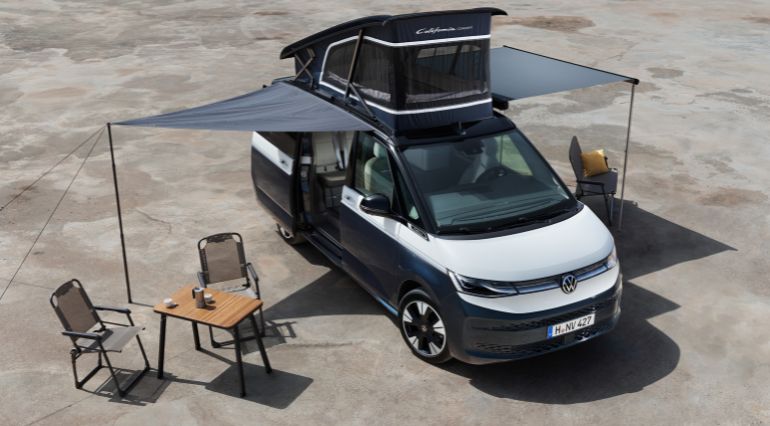
Dubbed the “Three Zone Concept”, Volkswagen have created a cohesive link between the campervan’s exterior (zone one on the right, zone three on the left – think US road sides) and the inside area (zone two — we agree, slightly confusing). How have they created this link? Well, by adding sliding doors on both sides. This may not sound revolutionary, but this makes the California Concept the first VW camper to leave the factory with more than one sliding side door.
Exit to the right from the inner lounge, and you can access the outdoor living space with an angular sun sail to shelter you from the elements — perfect for putting the camper’s pop-out table and comfy camping chairs to use.
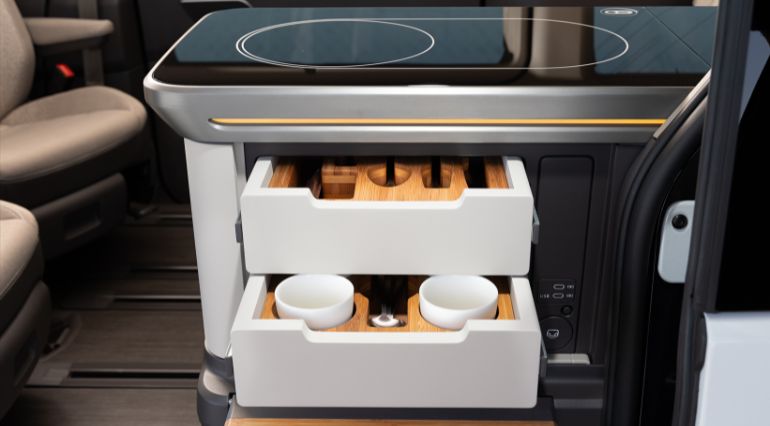
However, the new left-hand door leads to the area which sets the Concept apart from its California 6.1 predecessor. Here, the kitchen/dining area has been cleverly configured to be accessible from both inside and out. By using an extendable kitchen worktop with induction hob, double sided drawers, and a parallel running pull-out fridge they’ve made an airline service trolley, but better. Between this functionality, and the larger awning overhead, even the most temperamental barbeque season should pose no issues.
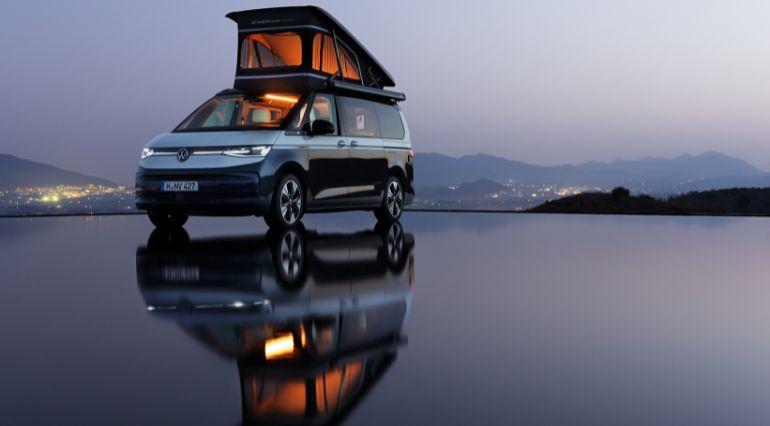
The interconnected zones contain ambient lighting, allowing for moods to be set in each from the built-in tablet and partnering smart-phone app — meaning you can switch the vibe without leaving your camping chair. This same system also controls the Concept’s pop-up roof (a staple of the range), can tweak the heating levels, and monitor power and water.
Longer and wider than the previous California, VW have put the Concept’s MPV skeleton to good use, creating an adaptable interior (or zone 2 if you’ve been paying attention) for when you need a break from the great outdoors.
The two front seats rotate 180-degrees to create an indoor hangout area perfect for lounging and mealtimes, and the bench-style rear seats from the California 6.1 have been replaced with individual units. This allows for the rear seats to be removed entirely, making space for bikes and surfboards, or to be folded flat to make a double bed, accompanying the bed found in the 2.0m tall pop-up roof area.
Several clever new storage nooks can be found throughout, including under the rear seats/bed, and surrounding the fancy kitchen worktop we mentioned earlier. There is even room for a removable toilet behind the rear seats for those looking to swerve campsite facilities.
This flexible interior also offers a practical option beyond weekend camping trips, with plenty of room for four people and a weekly food shop (surfboards unfortunately will need to be left at home). The sliding doors on either side also provide safe entry and exit from the pavement for all passengers.
So, the California Concept looks like a forward-thinking option, which hasn’t got too far ahead of itself to forget about practicality. But what do you think? Have VW found the perfect middle ground?
Hero image credit: Stellantis
We love to hear from our customers. Connect with us today and let’s start a conversation.