
Join the conversation
We love to hear from our customers. Connect with us today and let’s start a conversation.
...searching
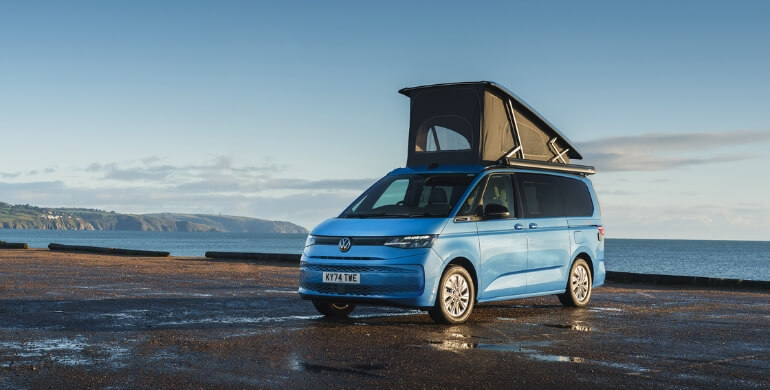
Volkswagen’s first plug-in hybrid campervan, the California eHybrid 4MOTION, is on the market. But is this truly a sign of things to come?
Mirroring trends across the wider automotive industry, electrification is steadily extending into the campervan market, and Volkswagen has now officially joined this movement.
Now, the addition of a plug-in hybrid (PHEV) option may be VW’s first foray into electrified California campers, but it now follows a somewhat beaten path — look no further than Bedeo’s range-extended models or
Ford’s promise-fulfilling PHEV Nugget.
But does this guarantee the new model’s success? Well, you could certainly argue that hybrid campers are yet to make the impact some might have expected. Add on to this that the long awaited — yet controversial — all-electric
ID. Buzz California camper is yet to materialise with rumours citing an unprepared market, and you’d be forgiven for meeting this release with a touch of scepticism.
So, can the ever-popular California make the breakthrough as a Hybrid campervan, and is it a glimpse into the future?
Enter your registration and postcode and we’ll show you the best tyres for your vehicle
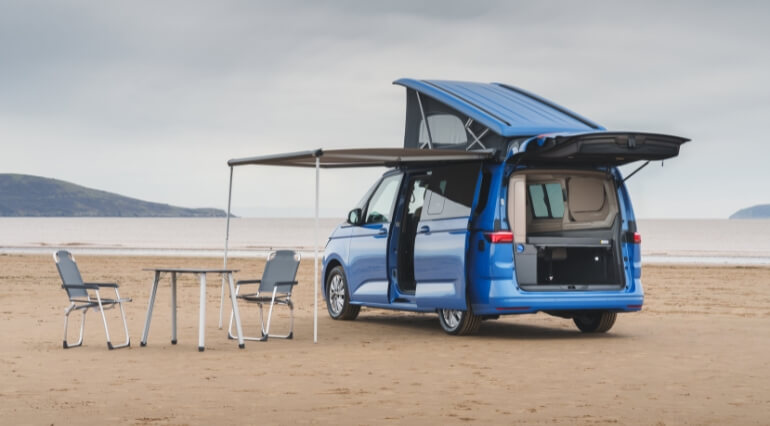
The California eHybrid 4MOTION combines a 1.5-litre TSI petrol engine with a 19.7 kwh battery and electric motor, creating an output of 242 hp. While this provides a handy 1,600 kg towing capability — enough to haul anything from camping equipment to small boats — the star of the show is the 54 miles of pure-electric range which this powertrain adds to the camper’s arsenal.
We haven’t yet got hold of a weighted figure to compare with the
bite-sized Nugget’s 176.6 mpg when in hybrid form, but with the California offering almost 20 miles more in electric range, the initial signs are positive. And we’ve said it before: despite the caveats of additional battery weight, and the standard concerns around charging infrastructure, hybrid campers make a lot of sense from this angle.
Are you a nomadic van-lifer looking for a bit of off-grid escapism? The security of boosted range can help make this a more peaceful affair with no fear of being stranded. Are you a weekend campsite goer hoping to access facilities during your trip? Plugging in may well already be part of the routine, and extra mileage could seamlessly become part of this.
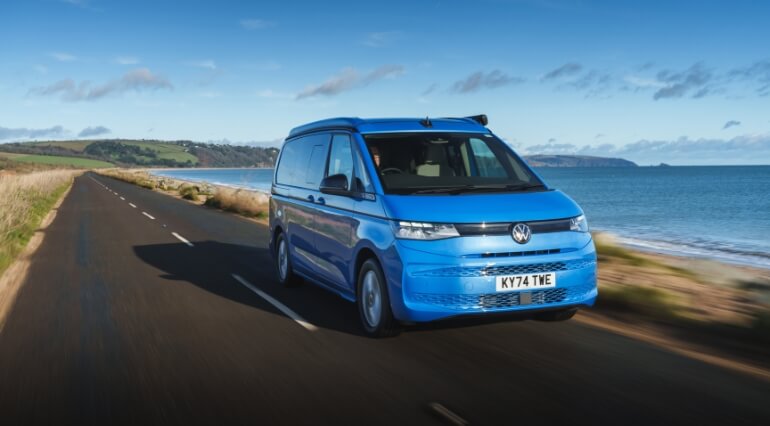
Some more good news: ticking the hybrid box on the order sheet does not limit your choice of trim. As with the petrol and diesel powered Californias, the eHybrid is available from the entry level ‘Beach’ spec all the way up to the feature-rich premium ‘Coast’ and ‘Ocean’ editions. This means there is access to the full scope of VW’s three-zone concept ( see our full breakdown for more details), and the versatility which it brings.
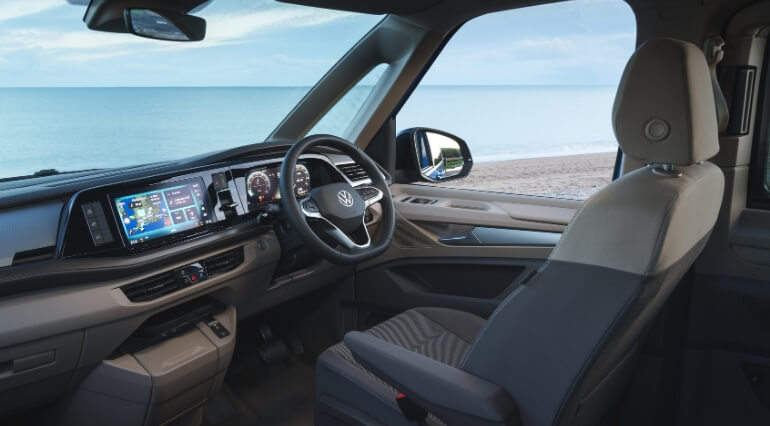
As a quick taster of what this entails, the healthily stacked standard equipment list includes: alloy wheels, a leather steering wheel with paddle shifters, a kitchenette, a mobile phone interface with touring app, no less than six USB-C ports, voice controls, multiple camping heaters, and ambient lighting. Not bad, huh?
Well, there’s a catch to this: the price. Last year, when the standard California’s £63,000 price tag was announced, a significant 73% of you (our audience) responded negatively, questioning whether it was truly worth such a hefty figure. And if you fell into this category, please brace yourself now.
For the new eHybrid versions, the prices climb even higher: starting at an even chunkier £71,295 for the California Beach, £78,495 for the California Coast, and £85,395 for the California Ocean. Of course, this is a premium offering — now with added juice — but when we’re looking at camper which arguably needs to make a breakthrough to prove its viability to the market, this cost has to be considered.
So, what are your thoughts? It’s certainly packed with features and appears capable at a glance. But can the new electrified VW California truly shake up the market and become the future of campervans? And will this be a stepping stone to all-electric campers in the future?
We love to hear from our customers. Connect with us today and let’s start a conversation.