Fog lights are often overlooked by drivers – until they’re needed in a sudden misty morning or dense fog bank.
But what many motorists don’t realise is that faulty fog lights can also cause your car to fail its
MOT test.
In this guide, we’ll break down when fog lights are checked, which ones are mandatory, and how a small issue with them could mean the difference between a pass and a fail.
What Are Fog Lights?
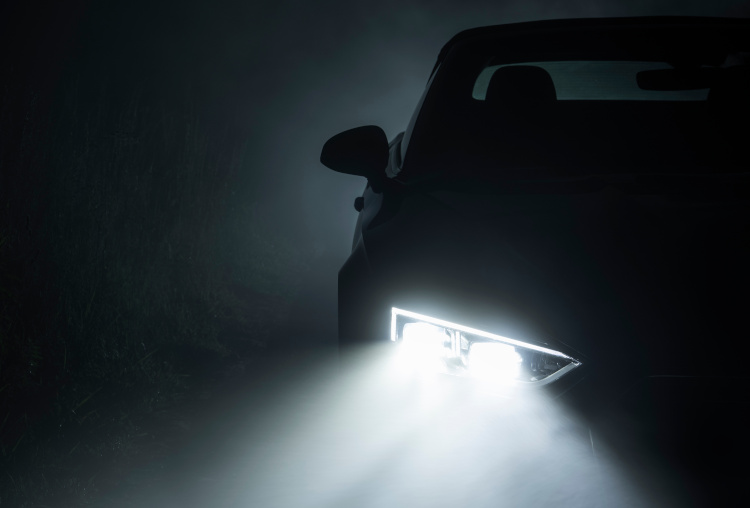
Fog lights are specialised vehicle lights designed to improve visibility during poor weather conditions, particularly in thick fog, heavy rain, or snow.
Unlike standard headlights, fog lights are mounted lower on the vehicle and emit a wide, flat beam that cuts beneath the fog layer, reducing glare and helping you see the road ahead.
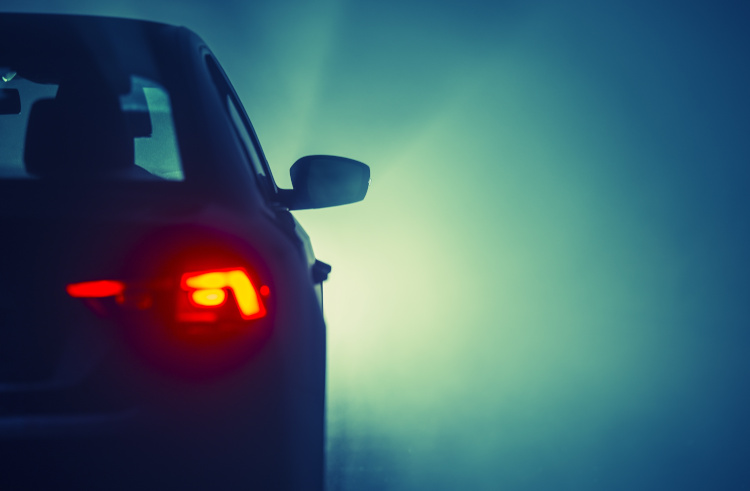
Rear fog lights, on the other hand, are bright red lamps that alert drivers behind you to your presence when visibility drops sharply.
Both types enhance safety but are typically used in limited conditions.
Are Fog Lights a Legal Requirement?
Rear fog lights are a mandatory safety feature on most vehicles. Since April 1, 1980, all cars are required to have at least one rear fog lamp fitted on the centre or offside (driver’s side) of the vehicle.
Front fog lights, on the other hand, are a bit more complicated. They’re not required by law, and are only inspected during an MOT if your vehicle was first registered on or after 1 March 2018 – and only if they are actually fitted.
So if you have a car built before 2018 with front fog lights, they’re not included in the MOT test. But if your newer car has them, and they’re faulty, it could be grounds for a fail.
When Do Fog Lights Cause an MOT Failure?
MOT testers inspect fog lights under
Section 4.5 of the MOT inspection manual.
Here’s what they’re checking for – and how each issue is categorised:
1. Rear Fog Light Not Working
Result: Major defect & MOT fail
If your rear fog light doesn’t illuminate, it’s a major safety concern and an automatic fail. This check only applies to the mandatory fog light, so if your car has two rear fog lights and only the nearside one (left) isn’t working, it won’t necessarily fail – but the offside one must function correctly.
2. Front Fog Lights Faulty (for post-2018 vehicles)
Result: Major defect & MOT fail
For vehicles first used on or after 1 March 2018, fitted front fog lamps must work. If one is inoperative or more than half of a multi-source fog light (e.g. LED arrays) fails, that’s enough to fail the test.
3. Lens or Light Colour Issues
Result: Minor or Major, depending on severity
If the lens is cracked but the light output remains unaffected, it’s marked as a minor defect. But if the crack or damage affects the light beam’s visibility or colour – for example, a rear fog emits anything other than a steady red light, or a front fog shows something other than white – it’s a major defect.
4. Insecure or Loose Fog Light Housing
Result: Major defect & MOT fail
Even if the fog light works, if it’s likely to fall off or is hanging loosely, it’s enough to fail the test.
5. Faulty Switch or Tell-Tale Light
Result: Major defect & MOT fail
Fog light switches must be securely mounted, operable from the driver's seat, and function as expected. For rear fog lights, there must also be a functioning dashboard warning light to indicate when it’s switched on. If this warning light doesn’t come on, or the switch doesn’t operate the light, it’s a major fault.

Does It Matter If I Don’t Use My Fog Lights?
Even if you’ve rarely used your fog lights, they must still work if your car falls under the criteria for inspection.
That’s especially true for rear fog lights, which are there to help other drivers see you in poor visibility. It’s not about how often you use them – it’s about whether they’re ready when needed.
How Can I Check My Fog Lights Before the MOT?
You don’t need to be a mechanic to spot an issue. Here are a few things you can do:
- Turn on your lights and test both the front and rear fog lamps
- Check the dashboard for the fog lamp warning light (usually amber for front, red for rear)
- Inspect the lenses for cracks, clouding, or missing covers
- Wiggle the housing to ensure the units are securely attached
If your front fogs aren’t working, but your car is from before 2018, they may not need to be functional – but check with a garage to be sure.

Final Thoughts
Faulty fog lights may seem like a minor issue – especially in summer months – but they’re treated seriously during an MOT test.
For most vehicles, especially post-1980 builds, a broken or missing rear fog light is a guaranteed fail.
And for newer cars (post-2018), front fogs can also land you in hot water if they’re fitted but don’t work.
If in doubt, have your lighting system inspected before your MOT. A simple bulb replacement, wiring check, or lens fix could be all it takes to avoid the hassle of a failed test – and keep your car safely visible on foggy roads.
If your MOT or
service is due, book easily through
Blackcircles.com – with trusted UK
garages, upfront pricing, and appointments that fit around your schedule.
Fog lights: Frequently Asked Questions
Why are my fog lights not working?
If neither fog light is working, the issue is often a blown fuse or a faulty relay. However, if only one has failed, it’s more commonly down to a blown bulb. A good first step is to check the relevant fuse using your owner’s manual for guidance. After that, look for any damaged, corroded, or loose wiring. In some cases, the problem may also come from a defective switch or a failing relay preventing the lights from activating.
How do I check fog lights are working?
You can confirm whether your fog lights are active by checking the dashboard display. The front fog light icon is usually shown in green and looks like a headlamp emitting beams through a wavy line, while the rear fog light symbol is the same design but displayed in amber or orange. In most cars, fog lights only function when the main headlights are switched on, and they are typically operated using a separate control such as a switch, rotary dial, or stalk on the lighting controls.
When should you use fog lights uk?
In the UK, fog lights should only be used when visibility drops significantly, typically to less than 100 metres (328 feet), which is about the length of a football pitch. Under Highway Code Rule 226, they must be turned off as soon as conditions improve, as leaving them on can dazzle other drivers and may even reduce visibility by reflecting in rain or fog and masking your brake lights.
Can I use fog lights when not foggy?
Using fog lights when visibility isn’t severely reduced — typically below 100 metres — is unlawful in the UK and can cause glare that disturbs or temporarily blinds other road users.